Introduction: The Critical Role of the DIR in PWDVA Proceedings
The Domestic Incident Report under PWDVA serves as the foundational document in domestic violence litigation. For legal practitioners, understanding its proper drafting and filing is essential. The Protection of Women from Domestic Violence Act, 2005, provides a unique civil remedy. However, it also carries criminal consequences for breach. Therefore, accuracy in the initial documentation can determine the success of your client’s case.
A Domestic Incident Report (DIR) is filed in Form I under the PWDVA Rules, 2006. It documents incidents of domestic violence comprehensively. Furthermore, the DIR carries significant evidentiary value in subsequent proceedings before the Magistrate. Additionally, it forms the basis for securing urgent interim reliefs for aggrieved women.
Why Accurate DIR Drafting Matters
Many PWDVA applications fail at the interim relief stage due to poorly drafted DIRs. Vague allegations, missing details, and inadequate documentation weaken the case substantially. Consequently, lawyers must ensure the DIR captures all relevant details precisely. A well-drafted DIR establishes the foundation for protection orders, residence orders, and monetary relief.
Who Can File and Who is an ‘Aggrieved Person’?
Understanding the Legal Definition
Section 2(a) of the PWDVA defines an “aggrieved person” broadly. Any woman who is or has been in a domestic relationship can file. Therefore, the Act covers wives, former wives, live-in partners, mothers, sisters, and widows. The definition intentionally extends protection to women in various familial and relationship contexts.
Importantly, the aggrieved person need not necessarily be the wife. For example, a mother facing violence from her son can also qualify. Similarly, a sister facing abuse from her brother falls within the protective umbrella. The key requirement is the existence of a “domestic relationship.”
The Concept of Shared Household
The definition of “shared household” under Section 2(s) has generated significant litigation. The Supreme Court in S.R. Batra v. Sudershan Batra (2016) 3 SCC 531 clarified crucial aspects. Specifically, the Court held that a shared household includes property where the aggrieved person lived with the respondent in a domestic relationship. However, it must be owned or tenanted by the respondent.
This judgment narrowed the earlier expansive interpretation. Nevertheless, subsequent decisions have clarified that even temporary residence can qualify. For lawyers, establishing the shared household element is critical for residence orders under Section 19.
Filing on Behalf of Minors and Incapacitated Persons
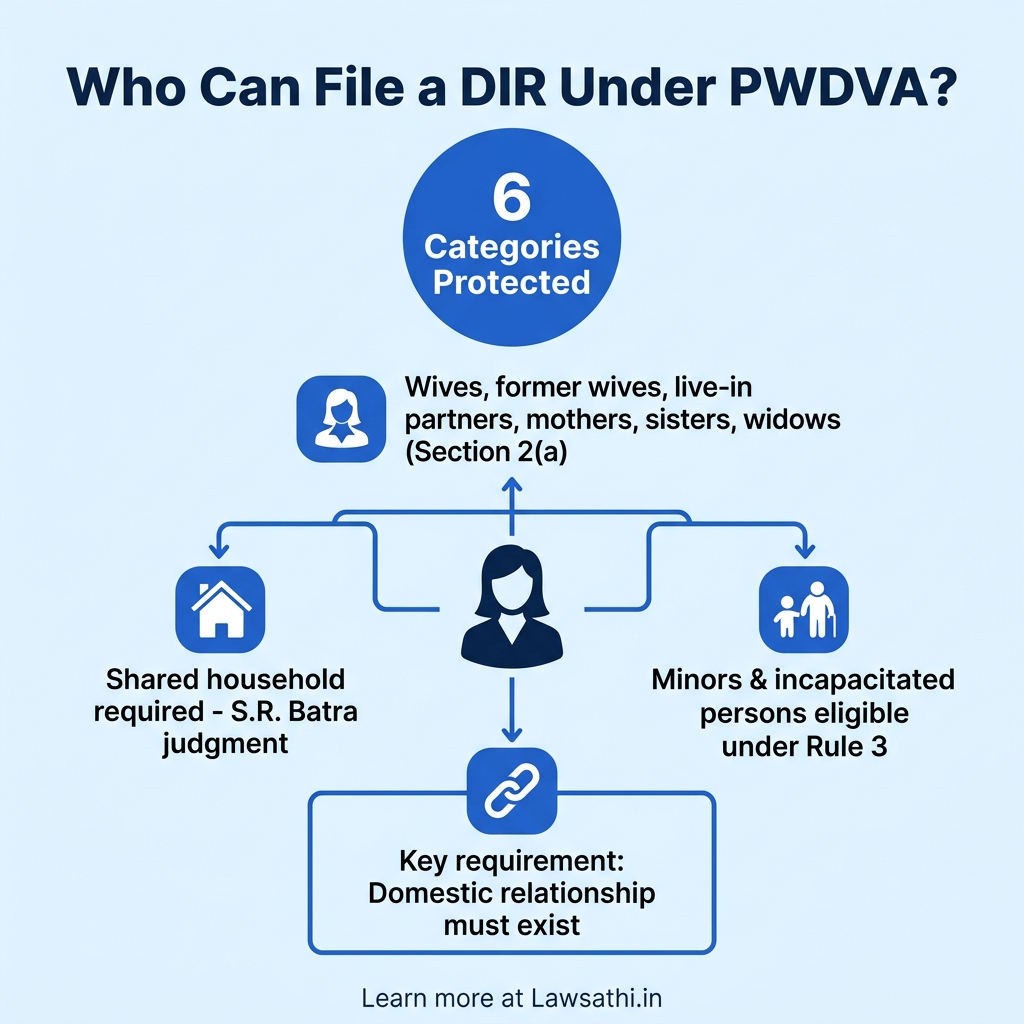
Rule 3 of the PWDVA Rules permits filing on behalf of minors. A parent, guardian, or any person acting in good faith can file. The same applies to mentally or physically incapacitated women. Therefore, lawyers must identify the appropriate person to file when the victim cannot approach independently.
The Role of the Protection Officer (PO) vs. Direct Filing
Mandatory Duties of the Protection Officer
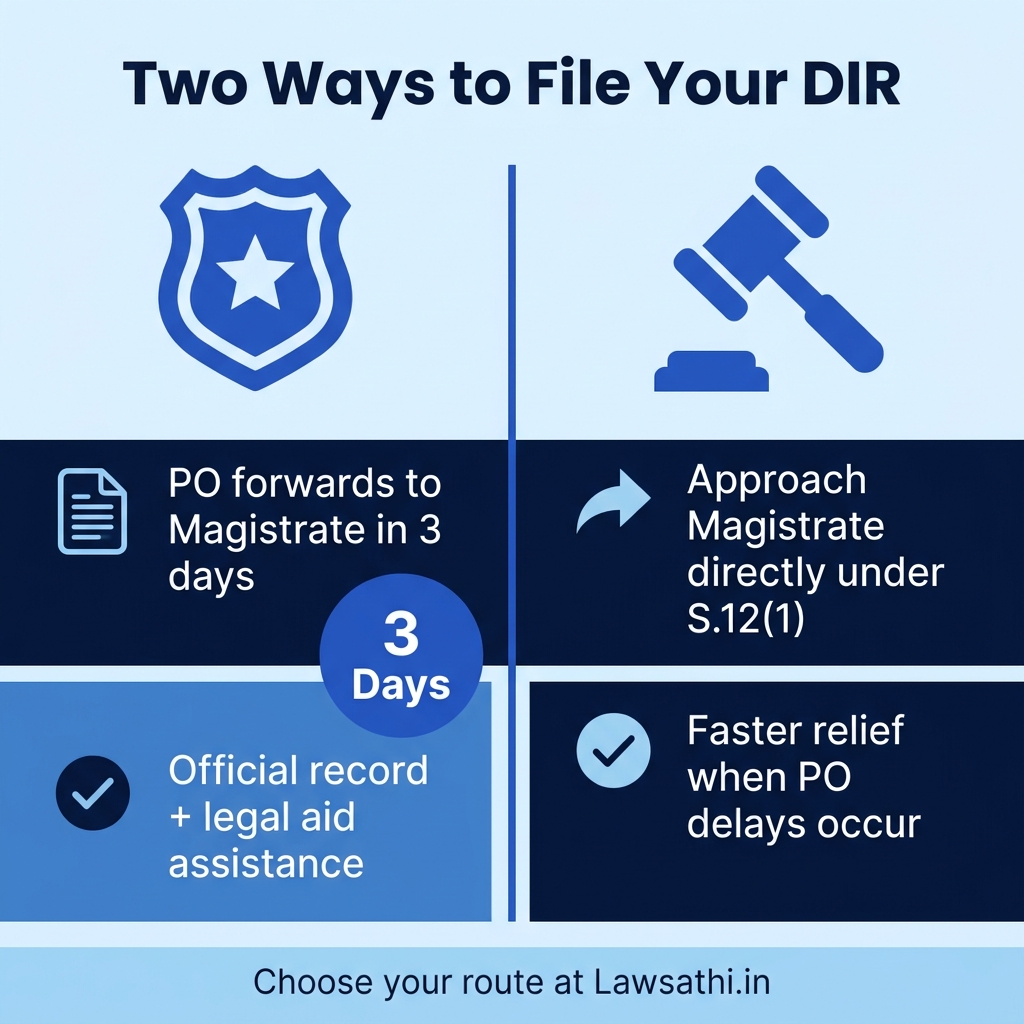
Section 8 of the PWDVA outlines the Protection Officer’s duties comprehensively. The PO must receive the DIR and forward it to the Magistrate within three days. Additionally, the PO assists the aggrieved person in accessing legal aid and medical services. The PO also coordinates with service providers and shelters when needed.
However, the ground reality differs significantly across states. Many districts lack appointed Protection Officers. In others, PO positions remain vacant for extended periods. Consequently, lawyers often face practical hurdles in completing the PO route.
Direct Filing Under Section 12
Section 12(1) of the PWDVA provides an alternative path. The aggrieved person may approach the Magistrate directly without a PO report. This provision acknowledges the practical difficulties in PO accessibility. For lawyers, this means two filing options exist depending on local circumstances.
Several High Courts have affirmed the right to direct filing. The Bombay High Court in Sandhya Manoj Wankhade v. Manoj Bhimrao Wankhade (2011) 3 Bom CR 705 addressed this issue. Specifically, it held that a PO report is not mandatory. Similarly, other High Courts have upheld direct filings where POs are unavailable.
Strategic Considerations for Lawyers
When a Protection Officer is accessible, obtaining the DIR through the PO offers advantages. The PO’s official documentation adds credibility to the allegations. Furthermore, the PO can provide crucial assistance in evidence collection. However, when urgency demands immediate relief, direct filing under Section 12 is advisable.
Step-by-Step Drafting of the Domestic Incident Report (Form I)
Structure of Form I
Form I under the PWDVA Rules contains four essential parts. Part A requires details of the aggrieved person. Part B captures information about the respondent(s). Part C documents the domestic violence incidents in detail. Finally, Part D specifies the reliefs sought from the Magistrate.
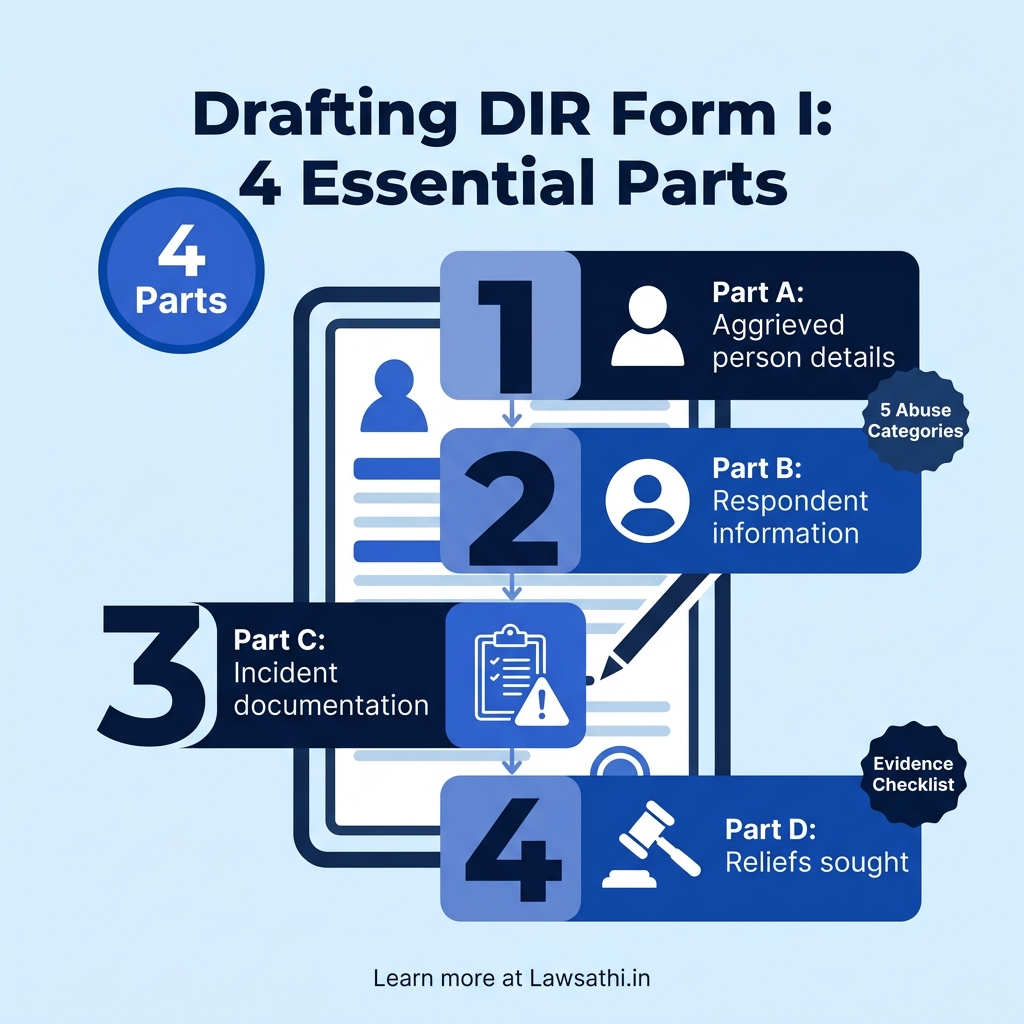
Each section demands careful attention to factual accuracy. Vague statements undermine credibility and delay relief. Therefore, lawyers must interview clients thoroughly before drafting.
Documenting Different Types of Abuse
Section 3 of the PWDVA recognizes five categories of domestic violence. First, physical abuse includes bodily harm, assault, and criminal intimidation. Second, sexual abuse covers forced sexual acts and humiliation. Third, verbal and emotional abuse encompasses insults, ridicule, and threats. Fourth, economic abuse includes deprivation of financial resources and property dispossession. Finally, the Act recognizes harassment related to dowry demands.
For each type, the DIR must specify dates, locations, and witnesses. General statements like “he harassed me” lack legal sufficiency. Instead, specific incidents with timeline strengthen the case considerably.
Essential Evidence to Annex
The Domestic Incident Report under PWDVA gains strength through supporting evidence. Medical certificates documenting injuries carry significant weight. Moreover, FIR copies, if registered, establish prior criminal complaints. Digital evidence like WhatsApp chats and call records demonstrate harassment patterns. Furthermore, bank statements help establish economic abuse claims.
Additionally, property documents support residence order claims under Section 19. Photographs of injuries or damaged property provide visual documentation. Witness statements from neighbors or relatives corroborate the allegations. Therefore, lawyers should create a comprehensive evidence checklist for each case.
Seeking Relief: Intersections Between DIR and Prayers to the Magistrate
Mapping Allegations to Relief Sections
The DIR must align with specific relief provisions under Sections 18-22. Protection orders under Section 18 require evidence of threat or violence. Residence orders under Section 19 need proof of wrongful dispossession or threat thereof. Similarly, monetary relief under Section 20 demands documentation of economic abuse or deprivation.
Therefore, lawyers should draft DIR allegations strategically. Each allegation should connect to a specific relief sought. This alignment helps the Magistrate grant relief expeditiously.
Securing Ex-Parte Interim Relief
Section 23 empowers Magistrates to grant interim relief without notice. This provision is crucial in urgent situations. For example, when the aggrieved person faces immediate threat of violence. However, the lawyer must demonstrate urgency through specific facts in the DIR.
The Supreme Court in V.D. Bhanot v. Dolan Bhanot (2012) 3 SCC 563 clarified interim relief principles. Specifically, the Court emphasized the need for prima facie satisfaction of domestic violence. Therefore, the DIR must present compelling facts to secure ex-parte orders.
Calculating Monetary Relief
Monetary relief claims require careful calculation. The DIR should document loss of earnings, medical expenses, and maintenance needs. Additionally, claims can include damage to property and stridhan dispossession. Therefore, lawyers should quantify these claims based on documentary evidence.
Post-Filing Procedure: From Magistrate’s Court to Disposal
Timeline for First Hearing
Section 13 mandates expedited processing of PWDVA applications. The Magistrate should endeavor to hear the application within three days of receipt. However, court congestion often delays this timeline. Consequently, lawyers can file urgency applications to expedite hearings when necessary.
Service of Notice to Respondent
The Magistrate issues notice to the respondent after the first hearing. The Protection Officer typically serves the notice. Alternatively, the court may direct personal service or registered post. Proper service documentation is essential for subsequent proceedings.
Respondent’s Rights and Defense
The respondent receives an opportunity to file a written statement. Cross-examination of witnesses follows standard civil procedure. However, the Magistrate can proceed ex-parte if the respondent fails to appear. Therefore, lawyers must ensure proper service and documentation.
Addressing Procedural Delays
Common delays include pending service reports and adjournments. Lawyers can request substituted service through newspaper publication when personal service fails. Additionally, regular mentions before the Magistrate help track case progress. For efficiency, maintaining a case diary with important dates proves invaluable.
Common Pitfalls and Best Practices for Legal Practitioners
Avoiding Vague Allegations
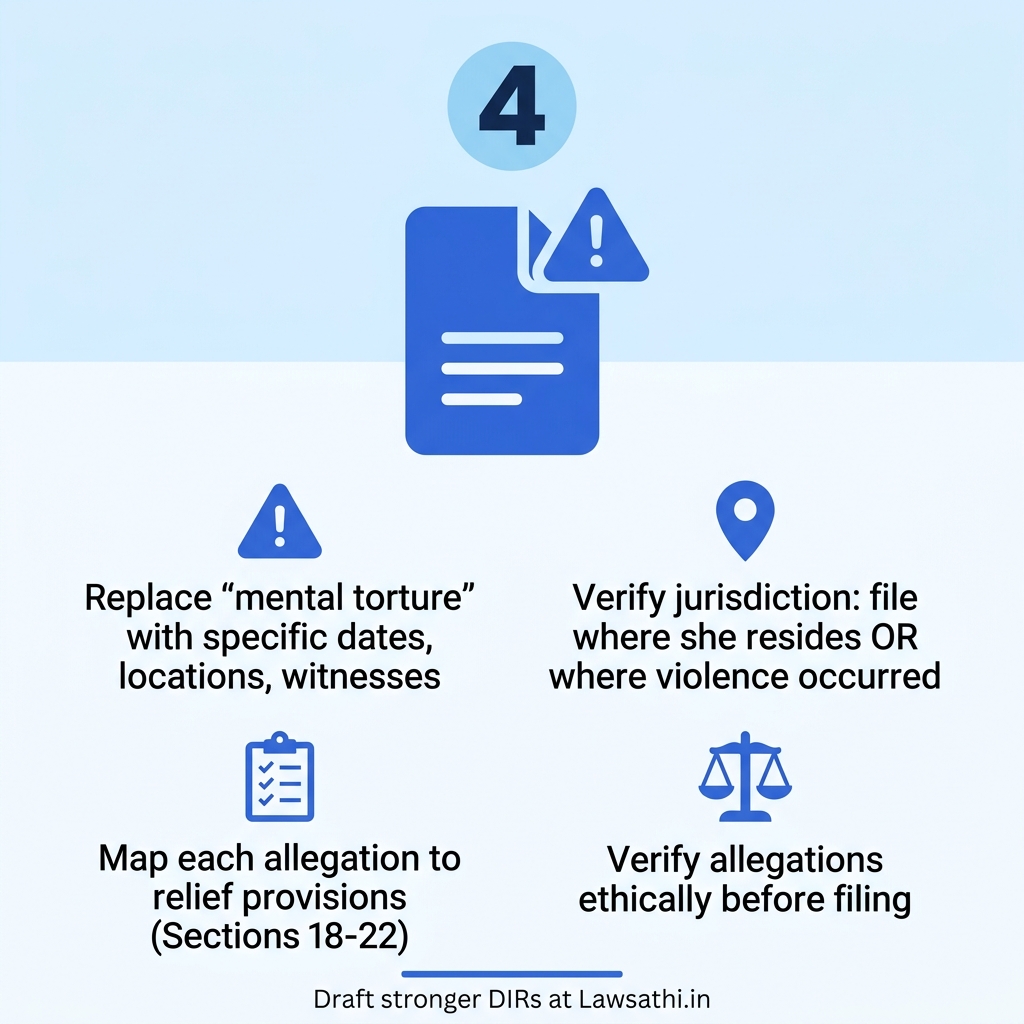
The most common reason for DIR rejection is vague allegations. Phrases like “mental torture” or “harassment” lack specificity. Instead, the DIR should describe exact incidents with dates. For example, “On March 15, 2025, the respondent verbally abused the aggrieved person using derogatory language in front of their children.”
This specificity helps the Magistrate assess the case quickly. Furthermore, it demonstrates the lawyer’s diligence and preparation.
Jurisdictional Considerations
Section 27 governs jurisdiction under the PWDVA. The aggrieved person can file where she resides or where the violence occurred. However, determining the correct jurisdiction requires careful analysis. Lawyers must verify that the Magistrate has jurisdiction over the cause of action.
Filing in the wrong jurisdiction leads to dismissal or transfer. Consequently, this causes unnecessary delay and expense for the client.
Ethical Considerations in PWDVA Practice
Lawyers must balance client instructions with factual accuracy. The PWDVA is occasionally misused for retaliatory purposes. Therefore, lawyers should verify allegations before drafting the DIR. Filing false claims constitutes professional misconduct and undermines genuine victims.
The Bar Council of India’s rules emphasize honesty toward the court. Lawyers should counsel clients against exaggeration. At the same time, they must ensure legitimate grievances receive full legal protection.
Conclusion: Streamlining PWDVA Litigation
Filing a Domestic Incident Report under PWDVA requires meticulous attention to procedure. From understanding the aggrieved person’s definition to drafting comprehensive Form I details, each step matters. The intersection between DIR allegations and relief provisions determines case success. Additionally, navigating the Protection Officer’s role versus direct filing options requires strategic judgment.
For legal practitioners, staying updated on PWDVA jurisprudence is essential. Supreme Court and High Court judgments continue refining procedural aspects. Furthermore, technology increasingly aids case management in sensitive family law matters. Digital evidence, e-filing systems, and case management software streamline practice efficiency.
The Protection of Women from Domestic Violence Act procedure ultimately serves vulnerable women seeking legal protection. Lawyers play a crucial role in ensuring effective implementation. Accurate DIR drafting, strategic relief mapping, and procedural compliance together achieve meaningful outcomes for clients.
Simplify your Family Law practice with LawSathi. Automate your DIR drafting, track court deadlines, and manage sensitive client data securely. Start your free trial today.