Introduction: The Stakes of Litigation Strategy in 2026
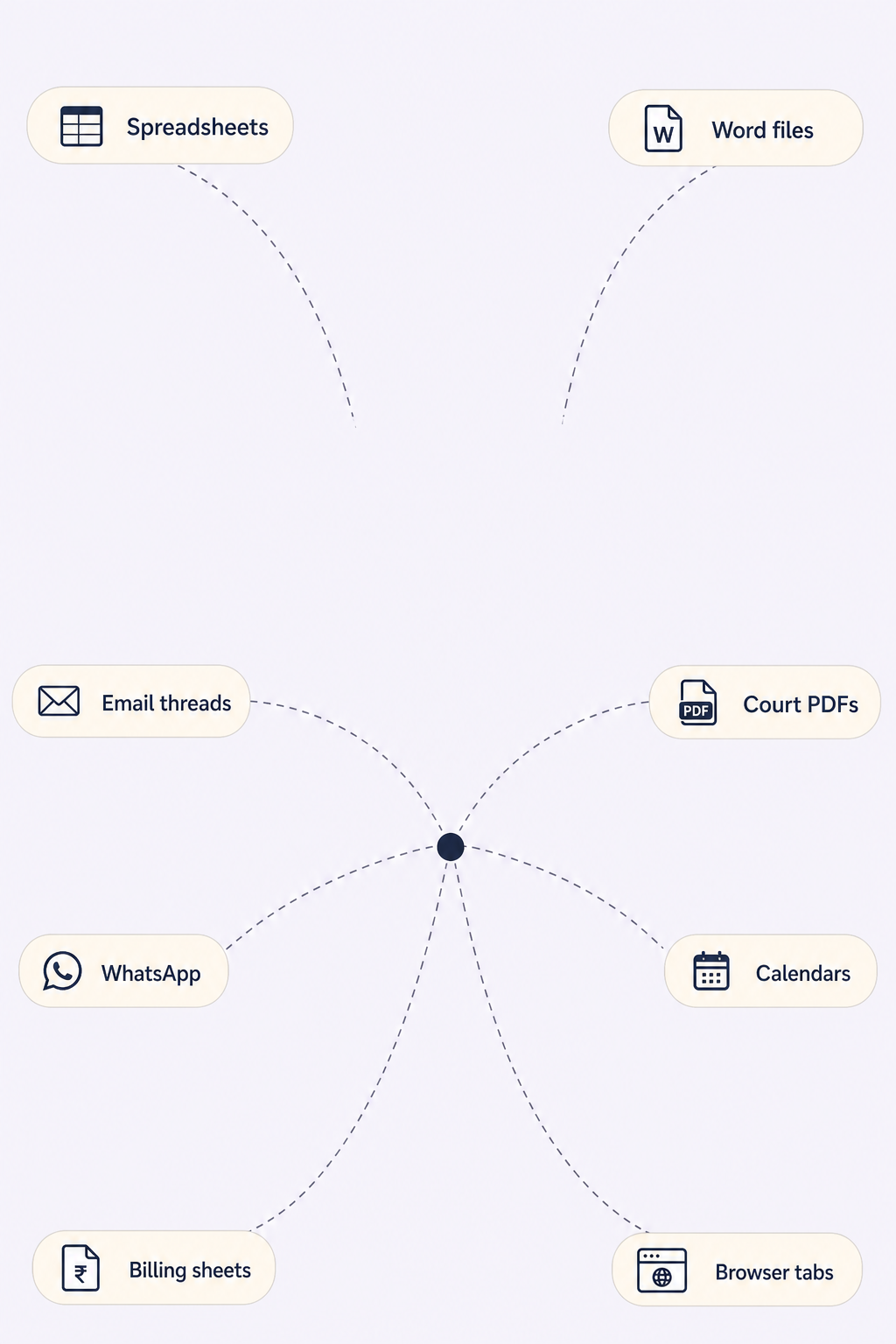
India’s legal system faces an unprecedented crisis in 2026. Approximately 48.7 million pending cases clog district courts, while 6.4 million await resolution in High Courts[^1]. Therefore, litigators must navigate an overwhelming volume of precedents. Moreover, clients now demand precise predictions about case outcomes rather than mere legal opinions. The debate around AI vs manual legal research India has never been more relevant.
Traditionally, Indian lawyers relied on intuition, experience, and laborious research to predict case outcomes. However, this approach has significant limitations when dealing with millions of judgments. Consequently, the difficulty of accurately forecasting results manually has become a pressing challenge.
Therefore, a comparative study between traditional methods and emerging AI legal technology is essential. While intuition remains vital, AI offers data-backed precision that manual research cannot match. This article examines both approaches to help Indian lawyers make informed decisions.
The Traditional Approach: Manual Legal Research Methodology
How Indian Lawyers Have Always Researched
Indian litigators have traditionally relied on commentaries, digests, and keyword searches. Platforms like SCC Online, Manupatra, and Indian Kanoon serve as primary research tools. Lawyers spend hours crafting Boolean search strings to find relevant precedents[^6].
Additionally, the “similar case” analysis method remains popular among practitioners. Lawyers identify cases with comparable facts and apply them to their current matters. However, this approach depends heavily on personal experience with specific judges.
The Time Cost of Traditional Research
Manual research demands enormous time investment from legal professionals. A single precedent search can consume hours or even days of careful reading. Furthermore, lawyers must filter through numerous judgments to find truly relevant authorities[^7].
The process also involves multiple iterations of keyword refinement. If the initial search fails, lawyers must reformulate queries repeatedly. Consequently, this trial-and-error approach significantly reduces productive hours. These hours could otherwise focus on strategy development.
The Hidden Dangers of Manual Research
Confirmation bias poses a serious risk in traditional legal research. Lawyers often find what they want to see rather than objective patterns[^8]. For example, when searching for favorable precedents, the human mind naturally gravitates toward supporting evidence.

Additionally, keyword dependency creates substantial blind spots in research. Courts frequently use different vocabulary for identical legal concepts. Terms like “misrepresentation,” “inducement,” and “suppression of material facts” may describe similar situations. Therefore, keyword searches often miss cases that don’t contain the exact query terms.
The scale of available information compounds these problems. As one senior advocate noted, overloading the system creates confusion. “Countless precedents are likely to result in a conundrum for a researcher.”[^7]
The Challenger: AI-Powered Legal Analytics
Understanding AI in the Legal Context
AI-powered legal analytics represents a fundamental shift in research methodology. Natural Language Processing (NLP) enables systems to understand meaning, not just keywords[^2]. Consequently, this semantic intelligence interprets legal concepts behind queries.
Machine learning algorithms analyze millions of Indian court judgments. They identify hidden patterns within the data. Unlike human researchers, AI can process vast datasets from platforms like SCC Online in minutes. Furthermore, the technology recognizes connections that would take humans weeks to discover[^9].
Key Features of Modern Legal AI
Contemporary legal AI platforms offer several advanced capabilities for Indian litigators:
Judge Profiling: Analyzes specific judges’ ruling patterns and preferences. Jurisdiction-Specific Trends: Identifies regional variations in case outcomes. Argument Strength Analysis: Evaluates which legal arguments historically succeed. Citation Integrity Tracking: Monitors how courts have treated cases subsequently[^10].
The Shift from Finding to Predicting
AI transforms legal research from mere case-finding to outcome prediction. Instead of locating similar precedents, litigation analytics tools calculate statistical probabilities. Therefore, this represents a paradigm shift in how lawyers approach case strategy.
For example, platforms like Manupatra AI Search and LegitQuest now offer predictive analytics. They don’t just retrieve cases; they analyze win-loss patterns. Specifically, they base predictions on fact patterns, jurisdictions, and judicial behavior[^10].
—
Comparative Analysis: Speed, Accuracy, and Depth

Speed: Days vs. Minutes
The speed difference between manual and AI research is dramatic. Manual research requires days of reading judgments to find precedents. In contrast, AI processes millions of documents in minutes[^1].
Additionally, AI eliminates the need for multiple keyword refinements. A single conceptual query yields comprehensive results. As a result, this efficiency allows lawyers to focus on strategy rather than document hunting.
Accuracy: Subjective vs. Data-Driven
Manual research relies on subjective interpretation and personal judgment. Lawyers may miss relevant cases due to keyword mismatch or cognitive bias. However, AI-powered analysis provides data-driven statistical models with broader coverage[^7].
Nevertheless, accuracy requires verification. Stanford University research found a significant issue. Legal AI models hallucinate in approximately one out of six queries[^5]. Therefore, lawyers should treat AI output as a starting point, not a final answer.
Depth of Insight: Surface vs. Deep Analysis
AI offers superior depth through several capabilities:
Dissent Analysis: Examines minority opinions and their impact. Reasoning Patterns: Identifies how judges construct arguments. Citation Mapping: Tracks the treatment history of precedents. Temporal Trends: Shows how legal interpretation evolves over time[^16].
Cost-Benefit Analysis for Indian Law Firms
The financial implications are significant. AI subscriptions incur costs. However, the billable hours saved deliver substantial ROI. Gartner predicts legal technology spending will double by 2027[^20]. For Indian firms, this investment translates to competitive advantage.
Most importantly, AI identifies winning arguments based on historical data. This capability transforms how lawyers advise clients and build litigation strategies.
Real-World Application: Case Study on Win Rate Prediction
The Section 138 NI Act Challenge

Consider a lawyer handling a Section 138 Negotiable Instruments Act case. These matters constitute a significant portion of Indian litigation. In fact, the Supreme Court has noted “gargantuan pendency” of such complaints[^13].
Manual Research Outcome
Using traditional methods, the lawyer would search for landmark judgments. Cases like Adalat Prasad v. Rooplal Jindal (2004) would emerge as key precedents. Similarly, Subramanium Sethuraman v. State of Maharashtra (2004) might appear. The lawyer might spend hours reading digests to build a case strategy.
However, this approach has limitations. The lawyer may miss jurisdictional variations and recent trends. Furthermore, landmark judgments often represent exceptional cases rather than typical outcomes[^14].
AI Analytics Outcome
Win rate prediction software provides a dramatically different picture. The system analyzes specific magistrate conviction and acquittal rates[^11]. Additionally, it examines win rates across different courts to identify jurisdictional patterns[^12].
Furthermore, AI can match similar fact patterns to predict outcomes. The system might reveal that certain courts have low conviction rates for specific defenses. Consequently, this intelligence enables strategic decisions about forum selection and argument framing.
Illustrating the Critical Gap
The gap between manual and AI approaches becomes stark when landmark judgments are outliers. The Supreme Court clarified a key point in NBCC (India) Ltd. v State of West Bengal (2025). Not every judgment creates binding precedent under Article 141[^14].
AI spots the actual trend while manual research may focus on exceptions. For example, Bombay High Court’s NI Act Dashboard shows varying settlement rates. Rates range from 0% to 8.3% across courts[^11]. This granular data remains invisible to manual researchers.
The Verdict: Why AI is the Future of Indian Litigation Strategy
Manual Research as a Growing Liability
Relying solely on manual research increasingly becomes a liability in high-stakes litigation. The sheer volume of 48.7 million pending cases defies human processing capacity[^1]. Therefore, firms using AI analytics gain significant competitive advantage.
Moreover, clients now expect data-backed predictions. Intuition-based advice no longer satisfies sophisticated corporate clients. Instead, they demand the same analytical rigor they receive from financial consultants.

The Hybrid Model: Best of Both Worlds
The optimal approach combines AI efficiency with human judgment. AI handles data gathering, pattern recognition, and initial research. Subsequently, lawyers apply strategy, narrative construction, and ethical judgment[^16].
This “Human-in-the-Loop” model ensures verification at three stages. First, lawyers determine what to show AI. Second, they review citations and contextual fit. Finally, they take responsibility for advice rendered[^16].
Empowering Young Associates
AI technology for Indian lawyers offers particular benefits for junior practitioners. Young associates can leverage AI to match the research capabilities of senior partners. Consequently, judge profiling and jurisdictional data become accessible to all experience levels.
As one expert noted, AI can be a delightful companion for research. However, it requires “intelligible questioning” to be effective[^7]. This democratization of legal intelligence levels the playing field across the profession.
Necessary Precautions
However, caution remains essential. The Supreme Court described AI-generated hallucinations as an “institutional concern” in February 2026[^5]. Similarly, Bombay High Court imposed ₹50,000 costs for fake AI-generated citations in January 2026[^5].
Therefore, verification of all AI outputs remains mandatory. The technology empowers lawyers but cannot replace their professional judgment and ethical duties.
Conclusion: Transforming Data into Courtroom Victory
The comparison between AI vs manual legal research India reveals clear advantages. AI-powered approaches offer superior results. Speed improvements alone justify adoption. What takes days manually takes minutes with AI.
More importantly, predictive accuracy based on statistical analysis surpasses intuition-driven predictions. However, technology does not replace the lawyer. Instead, it empowers legal professionals to provide better, more informed advice.
The Indian legal market grows increasingly competitive with foreign law firm entry. Firms that fail to adopt litigation analytics tools risk falling behind. Their competitors are more technologically advanced. The question is no longer whether to adopt AI. It is how quickly and responsibly they do so.
Stop guessing and start predicting. Experience the power of AI-driven legal analytics with LawSathi. Sign up for a free demo today and improve your litigation strategy.