Introduction: A Watershed Moment in Criminal Procedure
The transition from the Code of Criminal Procedure, 1973 to the Bharatiya Nagarik Suraksha Sanhita, 2023 has fundamentally altered criminal investigations in India. Among the most significant changes is the mandatory requirement of court permission for further investigation. This requirement applies once a final report is filed.
Moreover, the BNSS Section 193(9) Supreme Court ruling has now cemented this procedural safeguard through judicial interpretation.
In a landmark judgment delivered in November 2025, the Supreme Court of India addressed a critical question. The Court examined whether police can unilaterally initiate further investigation after filing a chargesheet. The Court’s answer was unequivocal: judicial oversight is mandatory. This ruling marks a decisive shift from the position under the old CrPC regime.
The Core Ruling Explained
The Supreme Court held that investigations cannot continue endlessly without judicial scrutiny. Once a police report is submitted under Section 193 of the BNSS, any further investigation requires the leave of the court. This interpretation aligns with the legislative intent behind the new criminal procedure code.
For criminal defense lawyers and prosecutors alike, this ruling fundamentally changes case strategy. Therefore, the era of unlimited police discretion to file supplementary chargesheets has officially ended.
Understanding BNSS Section 193(9): The Statutory Framework
Section 193 of the Bharatiya Nagarik Suraksha Sanhita deals with the submission of police reports after investigation. Section 193(3) specifies the contents that must be included in such reports. However, the crucial proviso appears in Section 193(9). This proviso contains the game-changing requirement for court permission.
The Critical Proviso
The proviso to Section 193(9) BNSS states: “Provided that where a further investigation is required during the trial, it shall be conducted with the leave of the Court…” S.193(9) BNSS Bars Further Investigation After Filing Of Police Report Without Permission Of Trial Court: Rajasthan High Court.
This language represents a deliberate departure from CrPC Section 173(8). Under the old code, police enjoyed broad autonomy to conduct further investigation without explicit court sanction. In contrast, the BNSS consciously restricts this power.
Contrast with CrPC Section 173(8)
Under the erstwhile CrPC, Section 173(8) allowed police to conduct further investigation and file supplementary chargesheets. This could be done with minimal judicial interference. As a result, multiple supplementary chargesheets were often filed over extended periods.
The legislative history reveals that Parliament intended to prevent this very abuse. Multiple committees and law commission reports had highlighted how endless investigations violated the accused’s fundamental rights. Consequently, the BNSS Section 193(9) Supreme Court ruling validates this legislative intent.
Key Concepts: Cognizance and Further Investigation
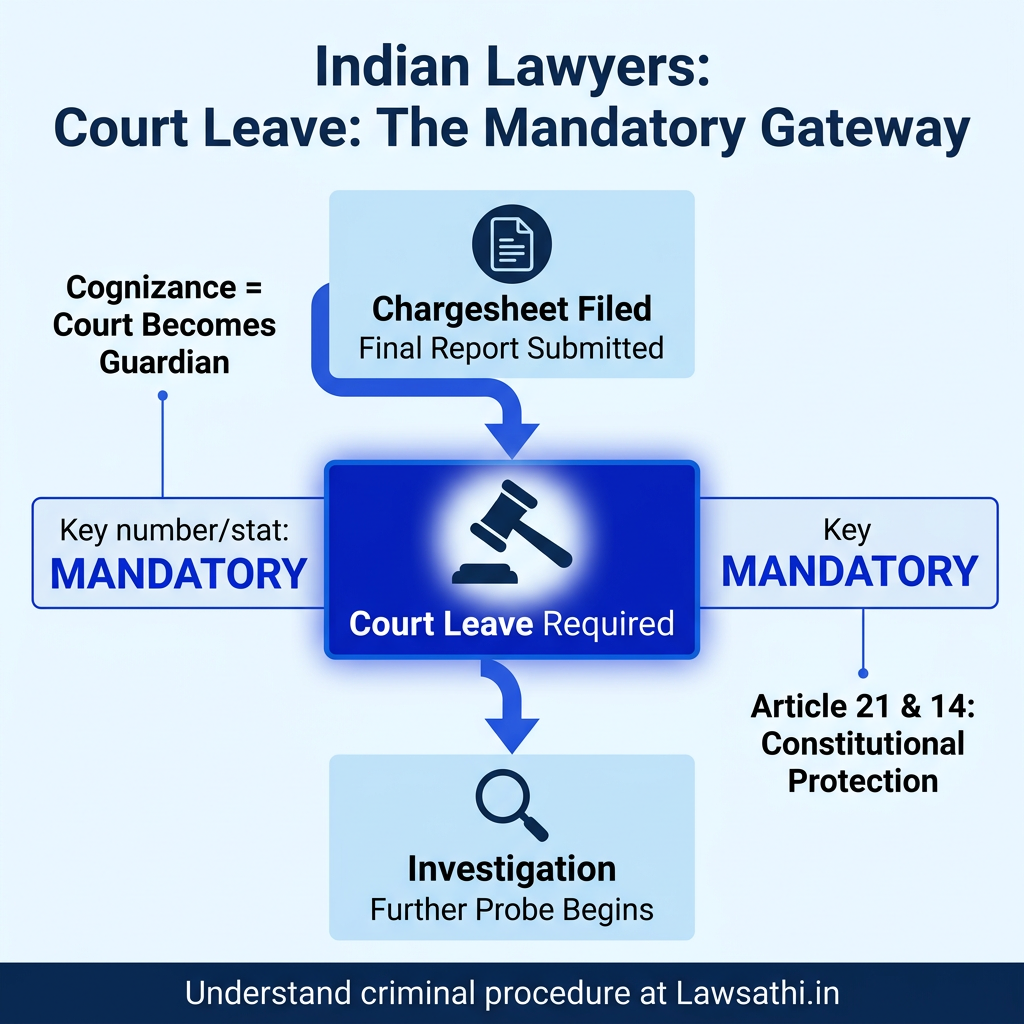
Understanding this ruling requires clarity on two fundamental concepts. First, cognizance refers to the magistrate’s judicial act of taking notice of an offence. Second, further investigation means additional probe after the initial chargesheet is filed.
The Supreme Court emphasized that once cognizance is taken, the court becomes the guardian of the proceedings. Therefore, any attempt to expand the scope of investigation thereafter must pass judicial scrutiny.
Case Analysis: The Supreme Court’s Reasoning
Factual Background of Robert Lalchungnunga Chongthu Case
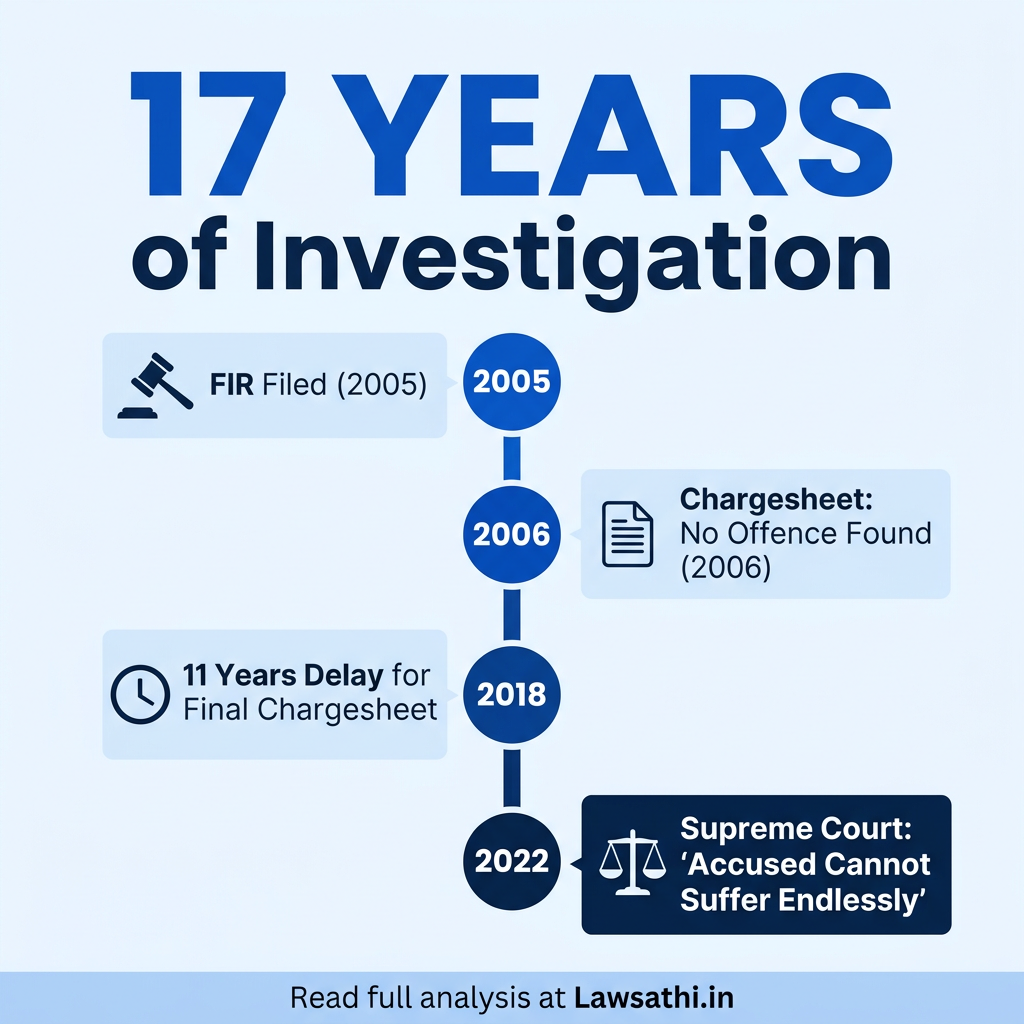
The case of Robert Lalchungnunga Chongthu v. State of Bihar, 2025 SCC OnLine SC 2511, presented a stark example of investigative abuse. The FIR was registered in 2005 against a District Magistrate for alleged irregularities in arms license issuance.
The initial chargesheet filed in 2005 sent only one accused for trial. A supplementary chargesheet in 2006 found no offence against the appellant. However, re-investigation requests followed in 2007 and 2008.
The Shocking Timeline
The Chief Judicial Magistrate permitted further investigation under Section 173(8) CrPC in 2009. What followed was an extraordinary delay. Specifically, the final chargesheet was filed only in 2020—a staggering 11 years later.
Meanwhile, administrative proceedings had already discharged the appellant in 2016. The State obtained sanction for prosecution in 2022. Cognizance was taken thereafter.
The Court’s Strong Observations
The Supreme Court expressed deep concern over this indefinite investigation. Justice Narayana Pisharadi, writing for the bench, observed:
> “The accused cannot be made to suffer endlessly with this threat of continuing investigation and eventual trial proceedings bearing over their everyday existence.” Court’s Permission Necessary For Further Investigation After Filing Final Report: Supreme Court
The Court further held that seeking prior leave of the court is now a necessary implication of the statutory framework.
Preventing Fishing and Roving Inquiries
A critical aspect of the BNSS Section 193(9) Supreme Court ruling concerns preventing abuse. The Court emphasized that magistrates must actively prevent “fishing and roving inquiries” that harass accused persons.
If there is a large gap between the FIR and the final chargesheet, the court must seek explanations from the investigating agency. As a result, this proactive judicial role represents a paradigm shift in criminal procedure.
Comparative Analysis: BNSS vs. CrPC – The Shift in Power Dynamics
Police Autonomy Under CrPC
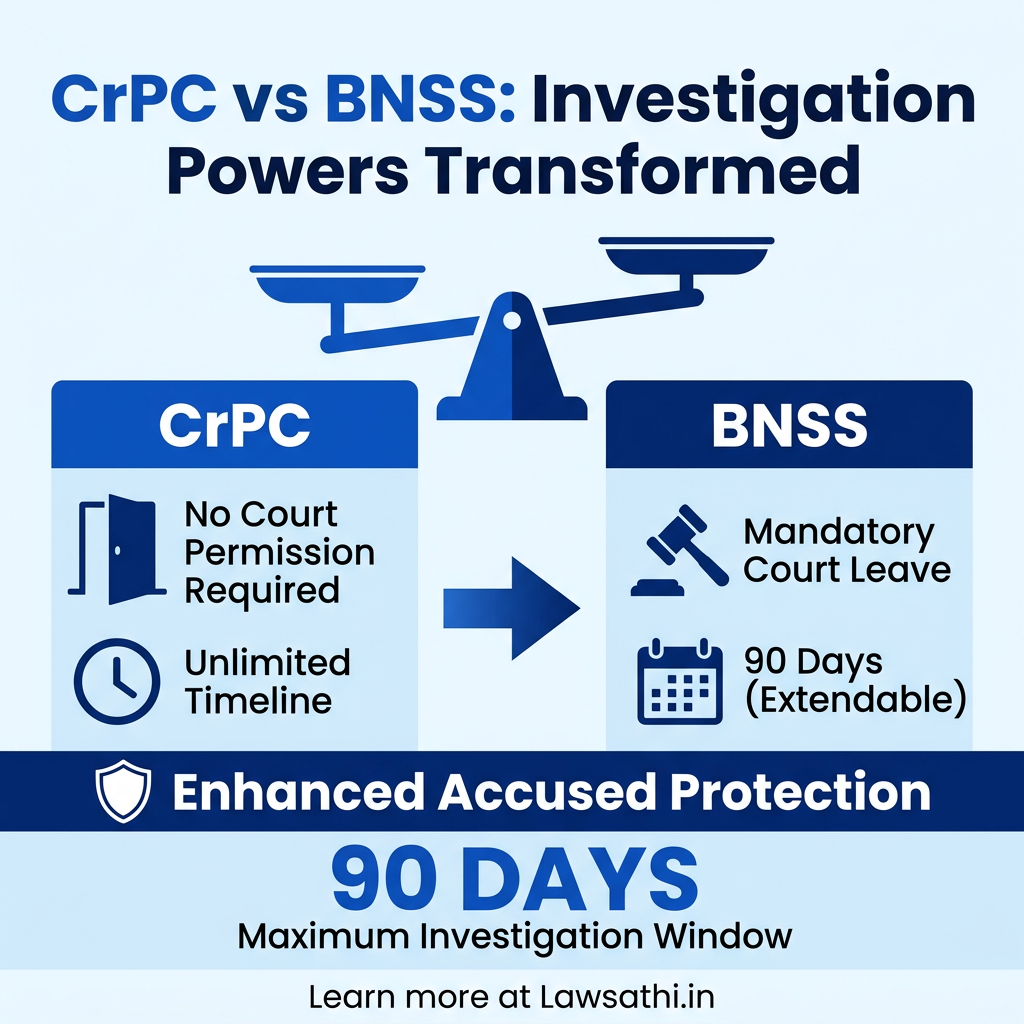
The Code of Criminal Procedure, 1973 granted police significant autonomy under Section 173(8). Officers could re-investigate cases and file supplementary chargesheets without judicial permission. While this allowed flexibility, it also enabled abuse.
Defense lawyers frequently encountered situations where clients faced prolonged uncertainty. For example, new charges could be added years after the original chargesheet. This violated fundamental principles of fair trial.
The New Balance Under BNSS
The BNSS Section 193(9) Supreme Court ruling affirms a new constitutional balance. The Magistrate now acts as a necessary check on executive power. Any further investigation after filling of Police Report requires trial court’s permission under Section 193(9) of BNSS: Rajasthan High Court
| Aspect | CrPC 173(8) | BNSS 193(9) | |——–|————-|————-| | Court Permission | Not required | Mandatory | | Timeline | No limit | 90 days (extendable) | | Judicial Control | Minimal | Active gatekeeping | | Accused Protection | Limited | Enhanced |
Protecting Accused Rights
The Supreme Court recognized that accused persons have a legitimate expectation of certainty. They must know the charges against them to prepare their defence effectively. Therefore, endless investigations undermine this fundamental right.
However, the Court also acknowledged the prosecution’s legitimate interests. Genuine discoveries of new evidence can still be pursued through proper judicial channels.
Victim Rights Considerations
The ruling does not ignore victims’ rights to complete investigation. Courts can grant permission when genuine need exists. In other words, the key requirement is judicial oversight rather than absolute prohibition.
This balanced approach serves both justice and efficiency in the criminal system.
Practical Implications for Legal Practitioners
Strategies for Defense Lawyers
The BNSS Section 193(9) Supreme Court ruling opens powerful new defence strategies. Lawyers can now challenge applications for further investigation on multiple grounds.
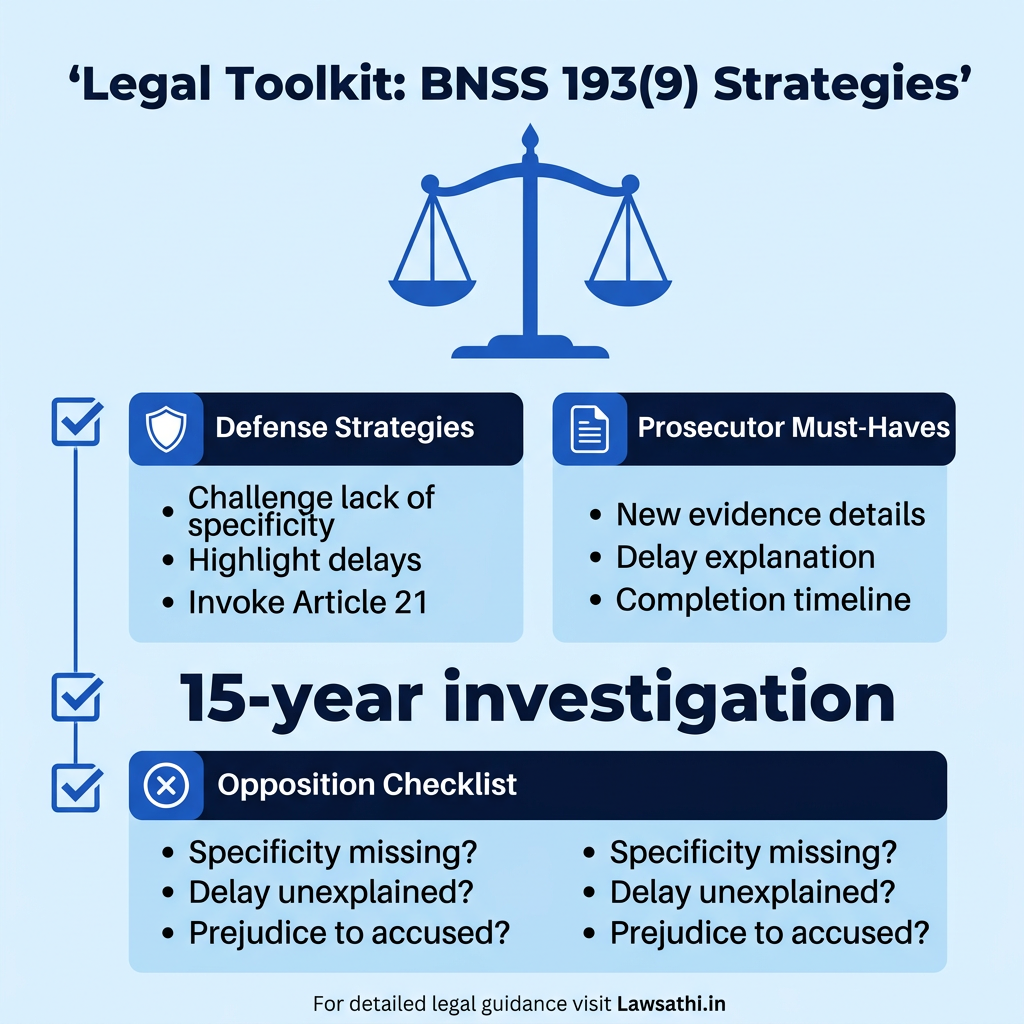
First, examine whether the application demonstrates genuine necessity. Courts must be satisfied that new evidence exists and could not have been collected earlier. Therefore, generic requests should face vigorous opposition.
Second, highlight any unreasonable delay. The Supreme Court’s emphasis on timeliness provides strong grounds for resistance. Reference the 15-year investigation period condemned in the Chongthu case.
Third, invoke the right to speedy trial under Article 21. Prolonged investigations violate constitutional guarantees. Consequently, demand particularized reasons if courts grant permission.
Procedural Requirements for Prosecutors
Prosecutors must now satisfy higher standards. Applications under Section 193(9) must specify the nature of additional evidence sought. Additionally, they must explain why such evidence wasn’t collected during initial investigation.
Furthermore, the 90-day timeline creates pressure for efficiency. Extensions require demonstrable cause. Further Investigation under BNSS §193(9) is Court-Regulated and Distinct from Default Bail under §187(3): Delhi High Court-is-court-regulated-and-distinct-from-default-bail-under-187(3)-delhi-high-court-declines-constitutional-challenge/view)
Drafting Effective Applications
When drafting applications under Section 193(9), include specific details:
– Nature and source of newly discovered evidence – Explanation for delay in collection – Timeline for completion – Assessment of prejudice to accused
Checklist for Opposing Applications
Defense counsel should systematically challenge:
1. Lack of specificity in application 2. Unexplained delay in seeking further investigation 3. Prejudice to the accused 4. Violation of fair trial rights 5. Prior opportunities to collect evidence
High Court Precedents Supporting the Supreme Court
Rajasthan High Court’s Early Recognition
Even before the Supreme Court’s definitive ruling, the Rajasthan High Court had recognized this principle. In Gajendra Singh Shekhawat v. State of Rajasthan [2024 SCC OnLine Raj 2886], Justice Arun Monga delivered a significant judgment. He held that the proviso to Section 193(9) creates a mandatory requirement.
The Court reasoned that legislative intent clearly favoured judicial oversight. Therefore, police cannot unilaterally expand investigations after court cognizance.
Delhi High Court on Constitutional Validity
The Delhi High Court in Yash Mishra v. State of NCT of Delhi addressed constitutional challenges to Section 193(9). The Court upheld the provision. It noted that court-regulated investigation serves legitimate state interests.
Importantly, the Court distinguished between further investigation powers and default bail rights under Section 187(3). These are separate legal concepts requiring different analysis.
Impact on Bail Applications and Trial Timelines
Effect on Pending Bail Matters
The BNSS Section 193(9) Supreme Court ruling significantly impacts bail jurisprudence. Accused persons can now argue that pending applications for further investigation cannot justify continued detention.
If courts deny permission for further investigation, any subsequent detention becomes questionable. Therefore, defense lawyers should track such applications carefully.
Streamlining Trial Proceedings
The ruling promotes efficiency in trial proceedings. Courts can now refuse vague requests that would indefinitely delay trials. As a result, this protects both judicial resources and accused rights.
However, courts must balance this against genuine investigative needs. Each application requires careful evaluation.
Legislative Intent and Constitutional Principles
Parliament’s Purpose
The Bharatiya Nagarik Suraksha Sanhita was enacted to modernize India’s criminal justice system. The requirement of court leave for further investigation reflects a conscious policy choice.
Parliament recognized that unchecked investigative powers had led to abuse. Multiple supplementary chargesheets caused prejudice to accused persons. Overview of criminal investigations and trials under BNSS, BNS, BSA – Part II
Constitutional Foundations
The Supreme Court anchored its interpretation in constitutional principles. Article 21 guarantees the right to life and personal liberty. This includes the right to speedy trial and certainty in criminal proceedings.
Article 14 requires that state action not be arbitrary. Unrestricted further investigation could violate this mandate. Therefore, judicial oversight ensures that investigative powers are exercised reasonably.
Conclusion: Balancing Justice and Efficiency
The BNSS Section 193(9) Supreme Court ruling represents a defining moment in Indian criminal jurisprudence. By mandating court leave for further investigation, the Court has restored balance between investigative needs and accused rights.
This ruling protects citizens from harassment through endless supplementary chargesheets. At the same time, it preserves legitimate avenues for discovering new evidence. The Magistrate’s gatekeeping role ensures accountability in the criminal justice system.
For legal practitioners, adapting to this new framework is essential. Defense lawyers gain powerful tools to protect their clients. Similarly, prosecutors must satisfy higher standards before expanding investigations.
The ruling ultimately serves the interests of justice. It prevents the abuse that plagued criminal proceedings under the old CrPC regime. However, it maintains necessary flexibility for genuine cases.
As India’s criminal justice system continues evolving under the BNSS framework, this Supreme Court interpretation provides crucial guidance. Courts, lawyers, and investigators must internalize these principles.
Stay ahead of critical legal updates. Use LawSathi to track case law changes and manage your criminal practice efficiently. Start your free trial today.