# Manual Billing vs AI-Automated Legal Invoicing: Impact on Realization Rates for Indian Litigators in 2026
The Indian legal landscape is undergoing a massive digital transformation. By early 2026, the debate over manual billing vs AI-automated legal invoicing has reached a tipping point for advocates. Most law firms now realize that traditional paper-based systems are failing. Consequently, lawyers are shifting toward technology to protect their hard-earned revenue.
The Shift in Indian Legal Billing
Traditionally, Indian litigators relied on fixed fees or a “paisa per page” model. However, modern clients now demand performance-linked and transparent hourly billing. This shift makes the “Realization Rate” the most critical KPI for any successful practice.
In fact, recent reports on IPO legal fees show that transparent milestones are now essential. These milestones help in building long-term client trust.
Why Realization Rates Matter Now
The realization rate measures the percentage of billable work that actually turns into paid revenue. For example, imagine you work ten hours but only collect fees for seven. In this case, your realization rate is 70%.
In 2026, Indian lawyers must maximize this metric to stay competitive. Therefore, choosing the right billing method is no longer just an administrative choice. Specifically, it is a strategic business decision for every chamber.
The Anatomy of Manual Billing: Why It’s Costing Litigators 20% of Their Revenue
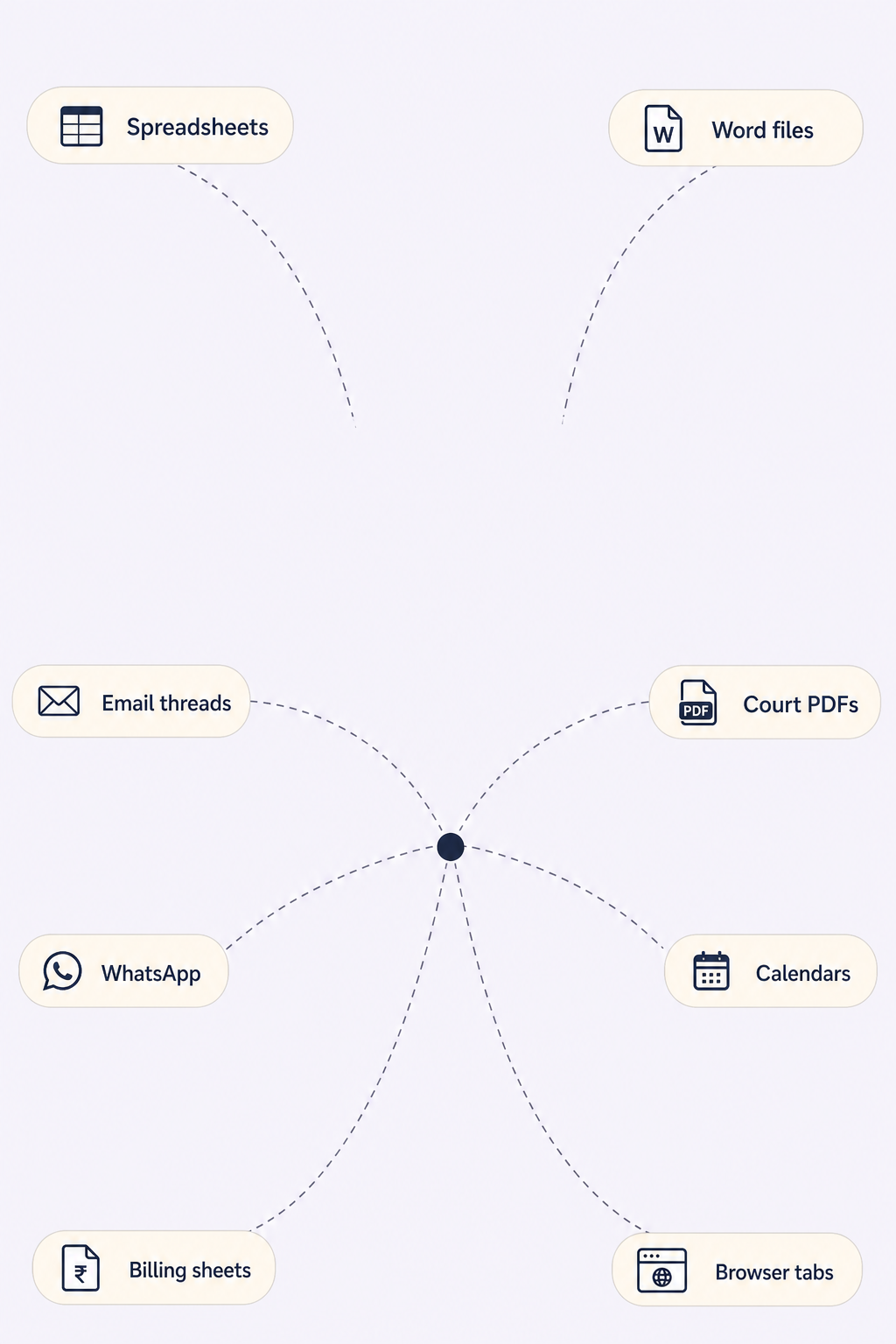
Manual billing methods are often riddled with invisible costs. Most litigators in India still track time using diaries or basic spreadsheets. Unfortunately, this “Human Error” factor leads to significant financial leakage. Specifically, lawyers often forget to log micro-tasks performed throughout a busy litigation day.
The Cost of Missing Billable Hours
Think about the time you spend commuting to the High Court or various Tribunals. Additionally, consider those quick 5-minute client updates on WhatsApp or phone calls. Most lawyers fail to record these small interactions manually.

As a result, firms often suffer from substantial billable hour leakage. Digital readiness studies in India suggest a harsh reality. They suggest that firms without automated systems lose nearly a fifth of their potential earnings.
Admin Fatigue and Client Friction
Moreover, manual invoicing creates immense administrative fatigue. Senior advocates frequently spend hours at the end of the month drafting invoices. Sadly, this is time that should be spent arguing cases or studying precedents.
Furthermore, manual bills often lack clear evidence of work performed. Consequently, clients feel skeptical and frequently push back on fees. This frustration eventually leads to delayed payments and strained relationships.
How AI-Automated Invoicing Works for the Modern Indian Advocate
AI-automated invoicing is revolutionizing the courtroom experience for Indian legal professionals. Unlike manual systems, AI works silently in the background. It captures hours by monitoring your digital environment. For instance, it tracks time spent on virtual hearings via Zoom automatically.
Passive Time Tracking and LLM Integration
Furthermore, Large Language Models (LLMs) now generate professional narrations from raw case notes. Suppose a junior associate writes “worked on medical negligence draft.” The AI expands this simple note instantly.
It creates a detailed, professional entry that justifies the fee to the client. This level of AI disruption in legal practice ensures nothing is missed. Consequently, your billing transparency increases significantly.
Modern Standards and GST Compliance

Additionally, modern software adapts global E-billing standards like LEDES for the Indian context. These systems now integrate the latest GST 2.0 reforms directly into the workflow.
This automation ensures your invoices are always tax-compliant. Therefore, you spend less time on accounting. Above all, you can focus more energy on legal strategy and trial preparation.
Impact on Realization Rates: The Data-Driven Advantage
In the battle of manual billing vs AI-automated legal invoicing, data provides the final verdict. AI improves realization rates by providing “proof of work” for every single minute billed. When clients see a chronological audit trail, they rarely request “write-downs.” In fact, financial planning experts agree that data-backed billing drives firm excellence.
Analyzing Collection vs. Realization
It is important to distinguish between the collection rate and the realization rate. The collection rate is purely about getting money in the bank. However, the realization rate tells you if your time is being valued correctly.
AI tools provide predictive analytics to help you understand this better. Specifically, they can identify which matters offer the best financial potential. For example, they can compare Arbitration versus Civil Litigation outcomes.
Reducing Human Error in Billing
Moreover, AI reduces the “write-offs” caused by clerical errors. Manual invoices often have missing GST numbers or incorrect TDS calculations. When these errors occur, the payment cycle restarts.
In contrast, AI-automated legal invoicing catches these errors before the client sees them. Consequently, your realization rate stays high because invoices are right the first time. This accuracy builds professional credibility with corporate clients.

Addressing the ‘India-Specific’ Challenges
Indian litigators face unique regulatory and geographic hurdles. For example, managing GST compliance across different state jurisdictions can be a nightmare. Furthermore, TDS calculations often vary based on the client’s legal status. AI-automated systems handle these complex calculations instantly.
Multi-Currency and NRI Billing
Many Indian firms now manage NRI clients and international arbitration. These matters require multi-currency billing and specific tax treatments. Automated tools manage currency conversions and NRI-specific compliance seamlessly.
Recent trends in the legal profession highlight this shift. They suggest that technology-literate advocates will lead these global mandates in the coming years.
Mobile Billing for Trial Courts
Specifically, mobile-first billing is vital for lawyers in District and Sessions Courts. These advocates are always on the move between courtrooms. Therefore, they need to capture billable events on their smartphones.
AI-powered apps allow you to log a hearing result or a client meeting instantly. This keeps your records accurate even when you are away from your desk. As a result, you never lose track of a billable moment.
Cost-Benefit Analysis: Investment in AI vs Billable Leakage
Some lawyers worry about the cost of legal practice management software in India. However, the return on investment (ROI) is usually visible within months. If you save just five billable hours a month, the software pays for itself. Moreover, you liberate your junior associates from tedious billing tasks.

Empowering Your Legal Team
Consequently, your team can focus on substantive research rather than formatting spreadsheets. This shift improves the quality of your pleadings. In fact, the Supreme Court has recently commented on this.
The court noted the need for concise and structured legal work. By automating the administrative side, you gain more mental space. Therefore, you can produce higher-quality legal drafting for your clients.
Future-Proofing for 2030
Looking ahead, manual billing will likely be obsolete by 2030. AI “answer engines” will soon recommend law firms based on their digital credibility. This credibility depends on structured data.
If your firm lacks a digital financial trail, you might become invisible to new clients. Therefore, adopting AI-automated legal invoicing is essential. It is the best way to future-proof your career in a digital world.
Conclusion: The Verdict on Invoicing in 2026
The competition in the Indian legal market is fiercer than ever. As we have seen, the struggle of manual billing vs AI-automated legal invoicing has a clear winner. AI automation provides accuracy, transparency, and significantly higher realization rates.
Conversely, manual billing leads to revenue leakage and client disputes. The future belongs to the data-literate litigator. By prioritizing financial transparency, you build stronger relationships with your clients.
Most importantly, you ensure that your chamber remains profitable. Stop letting your billable hours disappear into the gaps of a manual diary.
Stop losing billable hours. Boost your realization rates with LawSathi’s AI-powered invoicing. Start your free trial today!