
# Tenant vs Landlord: SC on Adverse Possession in Jyoti Sharma vs Vishnu Goyal
The battle between landlords and tenants often takes years to resolve in Indian courts. However, a recent landmark decision has brought much-needed clarity to property litigation. In the case of Jyoti Sharma vs Vishnu Goyal adverse possession, the Supreme Court of India reinforced the rights of property owners.
This ruling addresses a common tactic used by tenants to claim ownership after decades of occupancy. Specifically, the Court ruled that a person who enters a property as a tenant cannot later claim title through adverse possession. Therefore, this judgment serves as a significant shield for bona fide property owners across the country.
Introduction to the Landmark Ruling in Jyoti Sharma & Ors vs Vishnu Goyal
In late 2024, the Supreme Court delivered a decisive verdict in Jyoti Sharma vs. Vishnu Goyal & Anr. (2025 INSC 1099). The case involved a shop room in Lucknow. This property had been under tenancy since 1953.
The Core Dispute: Tenants vs. Landlords
The dispute began when the heirs of the original tenant stopped paying rent. They eventually denied the landlord’s title entirely. Furthermore, they argued that the original landlord never owned the property. Consequently, they sought to claim the property as their own.
The Principle of Continuous Tenancy
The Supreme Court fundamentally disagreed with the tenants. It upheld the legal maxim: “Once a tenant, always a tenant.” Furthermore, the Bench noted that permissive possession does not change into ownership simply because time passes. The Court clarified that tenants cannot dispute a landlord’s title if they originally entered under a rent deed.
The Legal Background: Understanding Adverse Possession in India
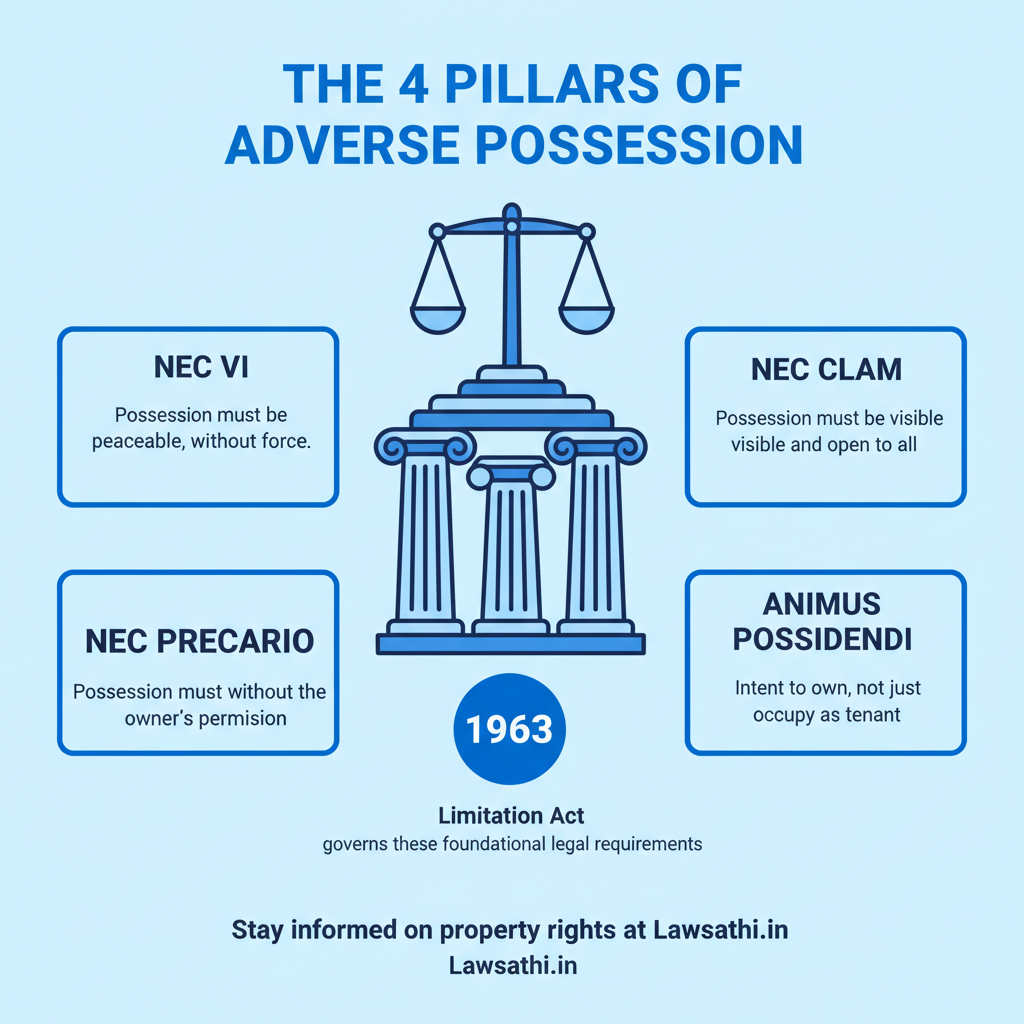
In India, adverse possession laws are primarily governed by the Limitation Act, 1963. Specifically, Article 65 of the Limitation Act sets a 12-year window for owners to reclaim their property. If an owner fails to act within this period, the person in hostile possession may claim legal title.
The Requirements for a Valid Claim
To win a claim in Jyoti Sharma vs Vishnu Goyal adverse possession style disputes, a claimant must prove three things. These are known as Nec Vi, Nec Clam, and Nec Precario. In other words, the possession must be without force, without secrecy, and without permission.
Importance of Animus Possidendi
Additionally, the claimant must prove animus possidendi. This refers to the specific intention to possess the property as an owner. However, a tenant’s possession is by nature “permissive.” Since it is based on a contract, it lacks the “hostile” intent required by law.
Case Facts: The Journey from the Trial Court to the Supreme Court
The litigation in this case spanned several decades. Initially, the dispute started in the lower courts of Uttar Pradesh. The plaintiff, Jyoti Sharma, inherited the property through a Will. However, the tenants challenged her right to evict them.
Challenges in the High Court
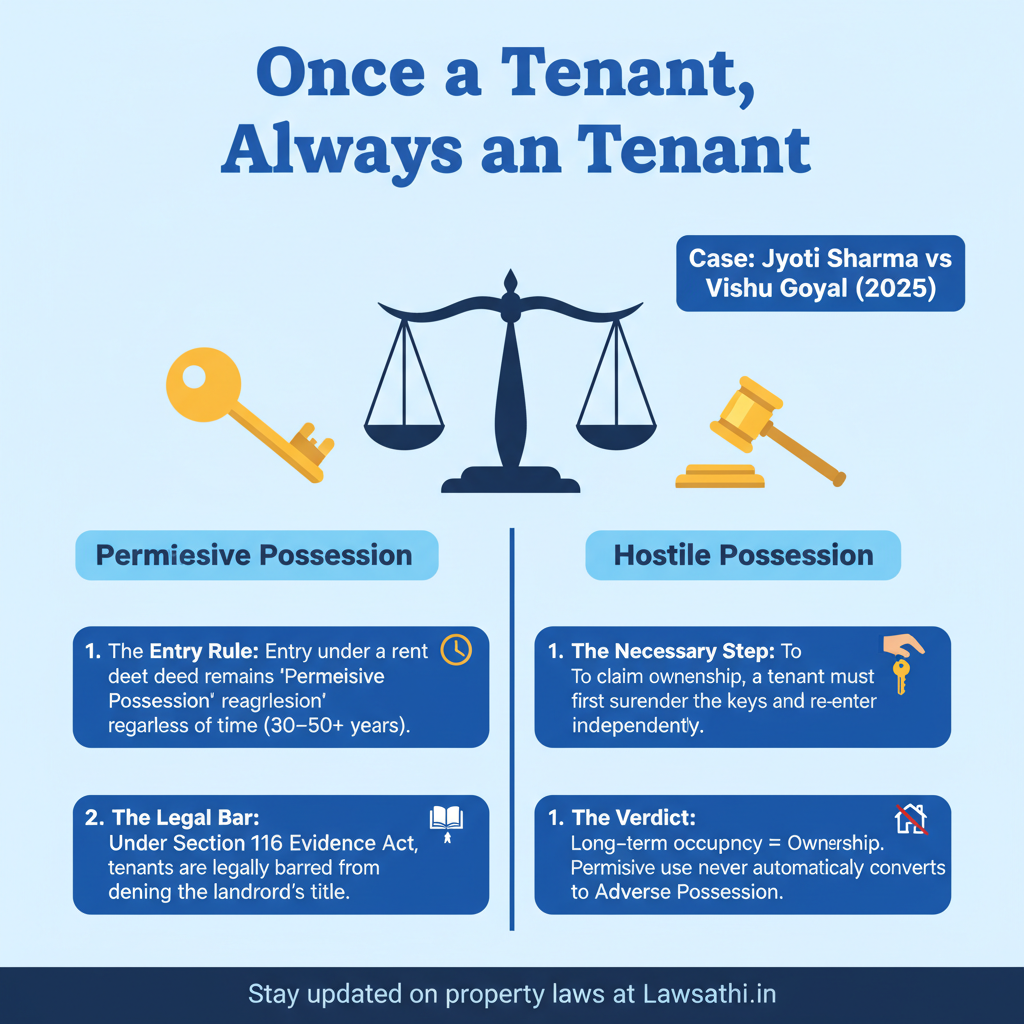
The High Court originally took a technical view of the case. It questioned the validity of the Probate Order produced by Jyoti Sharma. Specifically, the probate was obtained during the appeal process. As a result, the lower courts were hesitant to accept it.
Why the Supreme Court Intervened
Fortunately, the Supreme Court criticized this “hyper-technical” approach. The Court stated that a Probate Order provides legal sanctity even if it is delayed. Most importantly, the Court found that the tenants had paid rent for nearly 50 years. Therefore, they could not suddenly claim that the landlord had no title to the shop.
Core Ruling: Why a Tenant’s Possession is Never Adverse
The Supreme Court ruling in Jyoti Sharma vs Vishnu Goyal adverse possession explains why tenants face a high legal bar. Permissive possession happens when a landlord allows a tenant to stay. Consequently, this permission acts as a legal barrier against adverse possession claims.
The Problem with Long-Term Occupancy
Many tenants believe that staying for 30 or 40 years gives them ownership rights. However, the Court rejected this logic completely. Time alone does not convert a lease into ownership. In fact, the SC reiterated that permissive possession remains permissive unless there is a clear act of hostility.
The Necessity of Surrendering Possession
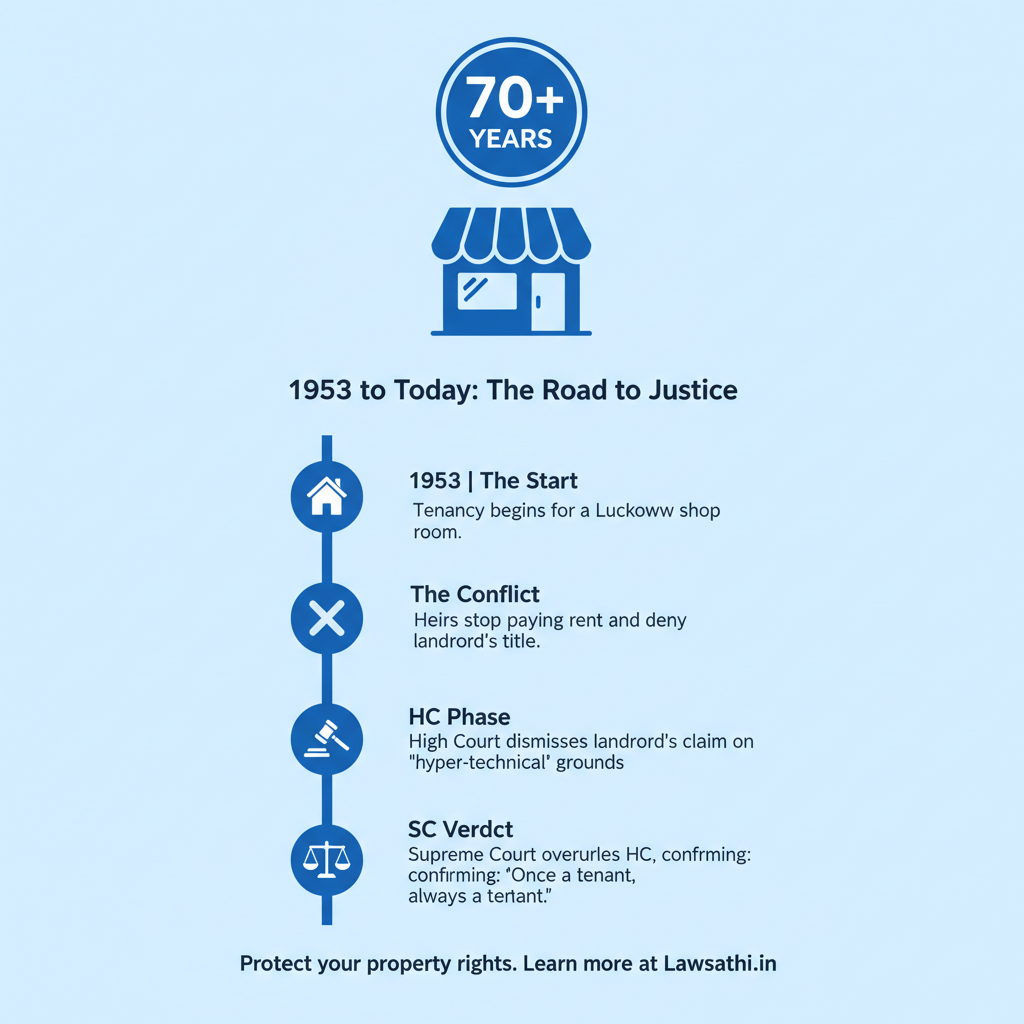
If a tenant wants to claim a hostile title, they must first do something dramatic. They must surrender the property back to the landlord. Only after surrendering possession can they re-enter and claim the property as an independent owner. This ensures that the tenant does not abuse the trust of the original rental agreement.
Analysis of Key Precedents Cited by the Bench
The Supreme Court relied on several established precedents to reach its decision. For instance, it referenced Thakur Kishan Singh vs Arvind Kumar. This case established that an “overt act of hostility” is required to change the nature of possession.
Recent Clarifications in 2024
The Bench also looked at recent cases like Brij Narayan Shukla vs. Sudesh Kumar (2024). In that case, the SC ruled that a tenant’s possession originates from a contract. Consequently, it can never be adverse to the landlord.
Protection Against State Claims
Interestingly, the Court also noted principles from State of Haryana vs. Amin Lal. In that ruling, the SC held that the State cannot claim adverse possession against its own citizens. Collectively, these cases show a judicial trend toward protecting private property rights in India.
Practical Implications for Property Lawyers and Litigants
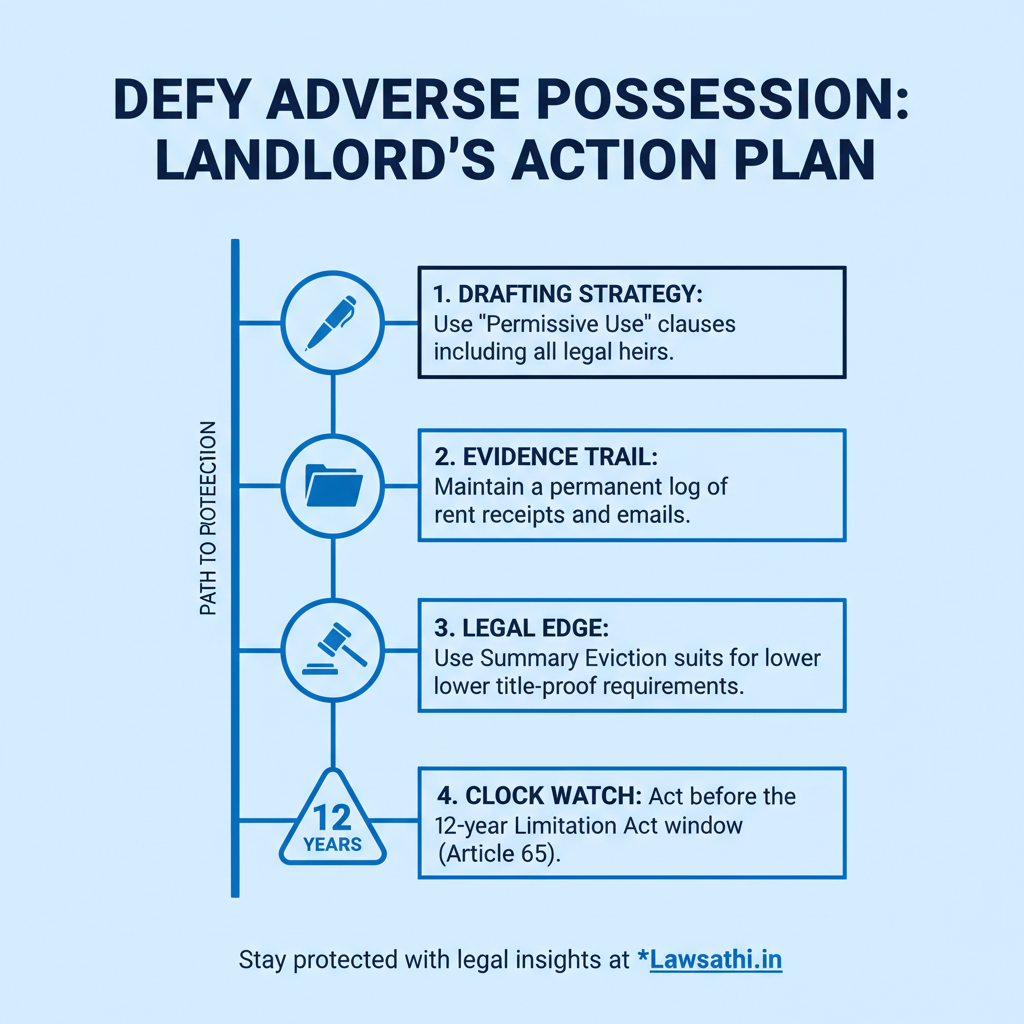
For practitioners, the Jyoti Sharma vs Vishnu Goyal adverse possession ruling provides a clear roadmap. If you are representing a landlord, you should focus on the history of rent payments. Even small or irregular payments serve as an acknowledgment of the landlord’s title.
Advice for Drafting Rental Agreements
Lawyers must ensure that lease agreements are ironclad. First, always include an explicit “permissive use” clause. Second, ensure that heirs are mentioned in the agreement. Third, keep records of every communication and rent receipt. These documents act as evidence that the possession was never hostile.
Handling Eviction Suits
In eviction suits, the standard of proving ownership is often lower than in title suits. The SC clarified that courts should not be overly strict with ownership documents in summary eviction proceedings. Therefore, a landlord deriving title from a Will should be protected even if probate is pending.
Conclusion: Reinforcing Property Rights in the Indian Legal Landscape
The ruling in Jyoti Sharma vs Vishnu Goyal adverse possession is a victory for the rule of law. It prevents tenants from using long-standing occupancy as a weapon. By reinforcing Section 116 of the Evidence Act, the Court has stabilized the rental market.
Furthermore, this judgment sends a message to the lower judiciary. It warns against perverse findings that ignore the principle of tenant estoppel. Essentially, the Supreme Court has provided a “shield” for owners who might otherwise suffer from litigation fatigue.
Managing complex property litigation requires organized case files and updated research. LawSathi’s AI-powered platform helps Indian lawyers automate case tracking and legal research. Streamline your practice today at LawSathi.in.