
# 2026 Land Registry Revolution: Nationwide Digital Overhaul Crushes Property Frauds
The Indian real estate landscape is undergoing a massive transformation this year. For decades, property transactions felt like a gamble. This was due to opaque records and rampant scams.
However, the 2026 land registry revolution is finally changing the game. This nationwide digital overhaul secures the future for buyers and lawyers alike.
Why the 2026 Land Registry Revolution Matters
The Ministry of Rural Development has pushed a major update. Specifically, the Digital India Land Records Modernization Programme (DILRMP) has reached its final saturation point.
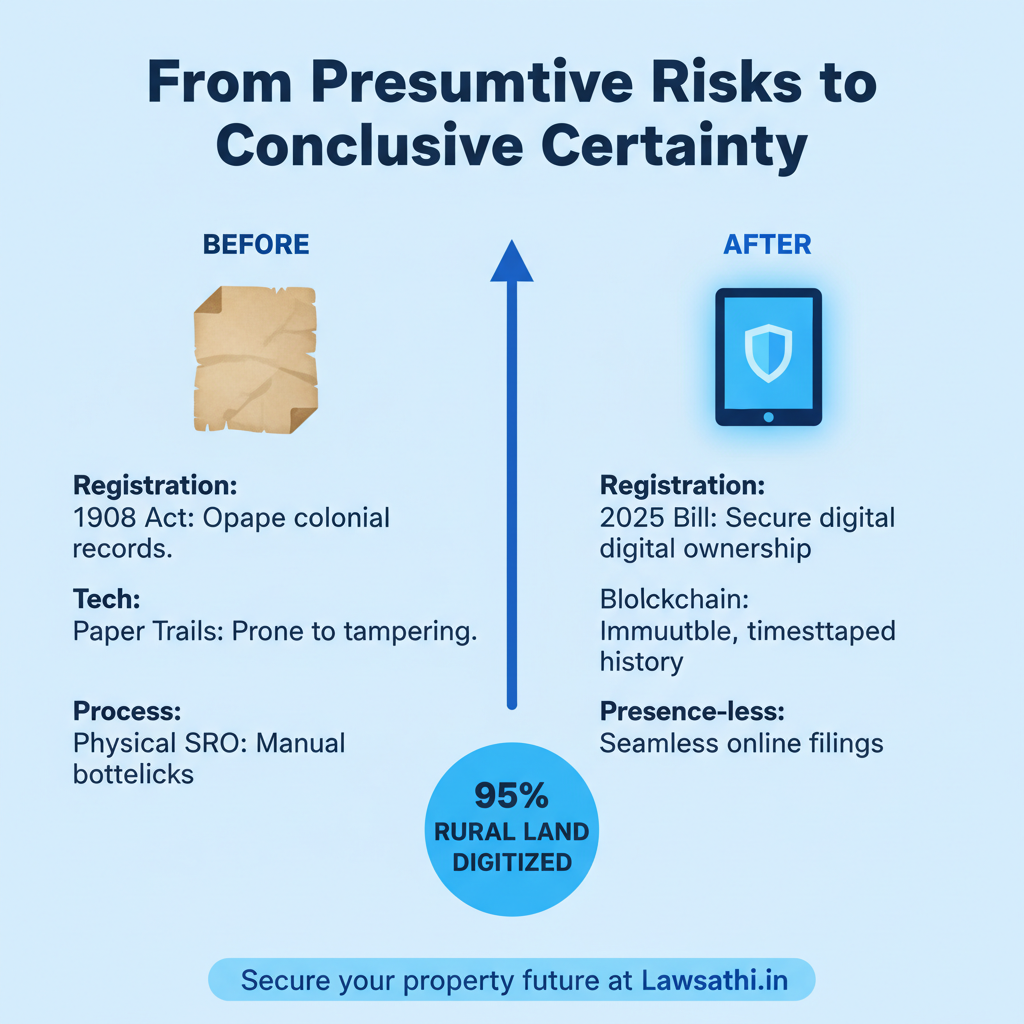
As of January 2027, almost 95% of rural land records are fully digitized across India. Moreover, this shift moves us from “presumptive” titles to “conclusive” ownership.
Replacing the Colonial Framework
The government is also replacing the antiquated Registration Act of 1908. In its place, the new Registration Bill, 2025 enables a modern environment.
This system allows for “presence-less” digital registrations. Consequently, lawyers can now handle filings without physical bottlenecks. They no longer need to visit traditional Sub-Registration Offices (SROs) for every step.
The Power of Bhu-Aadhar: A 14-Digit Security Shield
At the heart of this digital shift is the Unique Land Parcel Identification Number (ULPIN). You should think of this as the “Aadhaar for Land.”
Mapping Property Boundaries
Specifically, this 14-digit alphanumeric code uses geo-coordinates. These coordinates map property boundaries with extreme precision. Therefore, every plot is identified uniquely across the country.
Eliminating Double Sales
Most importantly, Bhu-Aadhar prevents “double-selling.” This was a common fraud tactic in the past. Previously, sellers often sold the same plot to multiple unsuspecting buyers.
Now, the system flags any secondary attempt to sell the same coordinates. This happens as soon as a ULPIN is linked to a transaction.
Benefits for Legal Professionals
As a result, title verification has become significantly faster for legal practitioners. You can now verify a parcel’s history instantly.
In contrast, the old way required manual searches through dusty ledgers. This new transparency builds immense trust between buyers and sellers in the current market.
One Nation, One Registration: The NGDRS Impact
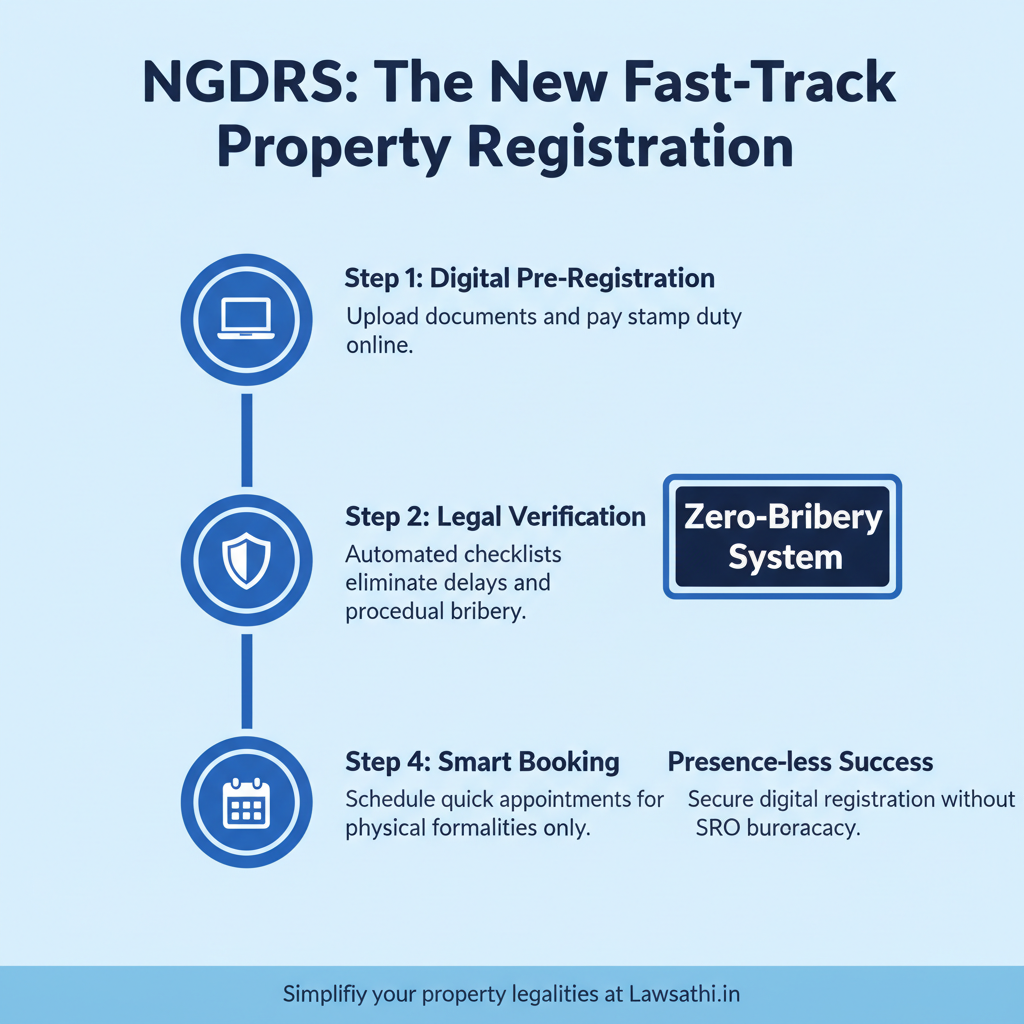
Another pillar of this overhaul is the National Generic Document Registration System (NGDRS). This unified platform provides a single interface for property registrations nationwide.
Pre-Registration Simplified
First, the system reduces the influence of middlemen. It also brings every detail into the public eye. Additionally, citizens can now pre-register documents easily.
They can also pay stamp duties online. Most importantly, users can book appointments for any remaining physical formalities with ease. This centralized approach ensures that registration data stays consistent across all state borders.
Reducing Corruption in SROs
Furthermore, the NGDRS ecosystem limits the discretionary powers of local officials. The system ensures that every document follows the same legal checklist.
In fact, the process is now fully standardized. Consequently, the chances of bribery or procedural delays have plummeted. This makes the entire experience much smoother for the public.
Blockchain and the Future of Immutable Titles
The judiciary is also pushing for even more advanced security measures. For instance, in the case of Samiullah v. State of Bihar (Nov 2025), the Supreme Court took a stand.
The court suggested the adoption of blockchain technology. This would create a permanent, tamper-proof record of every transaction.
Secured Ownership Histories
Blockchain provides a timestamped and immutable trail of ownership. This means no one can backdate documents. Similarly, no one can forge entries in the digital ledger.
As a result, property disputes are becoming a thing of the past. The “traumatic” experience of fighting for legal rights is finally ending.
AI in Land Management
Additionally, the government is using AI and Machine Learning to identify encroachments. These DILRMP guidelines help authorities analyze land use patterns.
They use high-resolution satellite imagery for this task. Therefore, verifying whether a land parcel is under litigation is now simple. Above all, this technology prevents illegal occupation before it becomes a legal nightmare.
Landmark Judicial Rulings Supporting Digitization
The courts have been vocal about streamlining the registration process lately. In April 2025, the Supreme Court decided the case of K. Gopi v. The Sub-Registrar.
Focused Procedural Compliance
The court ruled that Registrars cannot act as judges over property titles. Instead, Registrars must focus on procedural correctness. Similarly, the court quashed rules in Bihar regarding mutation proof.
These rules required proof before registration could occur. This ruling prevents officials from creating unnecessary hurdles. Consequently, legitimate sellers can move forward without delays.
Digital Records as Evidence
Most importantly, digital land records are gaining stronger evidentiary value. It is true that revenue entries do not confer title.
However, they serve as crucial evidence of possession. The 2026 revolution ensures these records are accurate. Specifically, they are now easily accessible for all court proceedings.
NAKSHA: Revolutionizing Urban Property Maps
While rural digitization is nearly complete, the urban sector is catching up. The NAKSHA pilot is now active in 150 cities. This project focuses on creating meticulous digital maps for congested areas.
Dealing with City Congestion
Urban land records have historically been messy. This was largely due to rapid vertical growth. However, NAKSHA uses high-resolution mapping to define boundaries in three dimensions.
This is a massive win for lawyers. For example, it simplifies handling apartment disputes or commercial lease agreements.
Integration with e-Courts
Additionally, these digital maps link directly with the e-Courts system. If a property is under litigation, the digital record will highlight the “stay order” immediately.
Therefore, buyers are warned of legal risks instantly. As a result, they can avoid paying deposits on disputed lands.
Conclusion: A New Era for Indian Real Estate
The 2026 land registry revolution marks a turning point. We have moved from a broken, paper-based system to a streamlined, digital-first nation.
With Bhu-Aadhar, NGDRS, and blockchain, property investments are safer than ever. For legal professionals, this means less time chasing documents. Instead, you can focus on providing strategic advice.
The reduction in land-related litigation will finally declog our courts. This digital overhaul is not just about technology. Most importantly, it is about restoring trust in property ownership.
Managing your property cases has never been easier with the right tools. Are you ready to modernize your legal practice?
Try LawSathi free for 15 days and experience the future of digital-age law practice management!