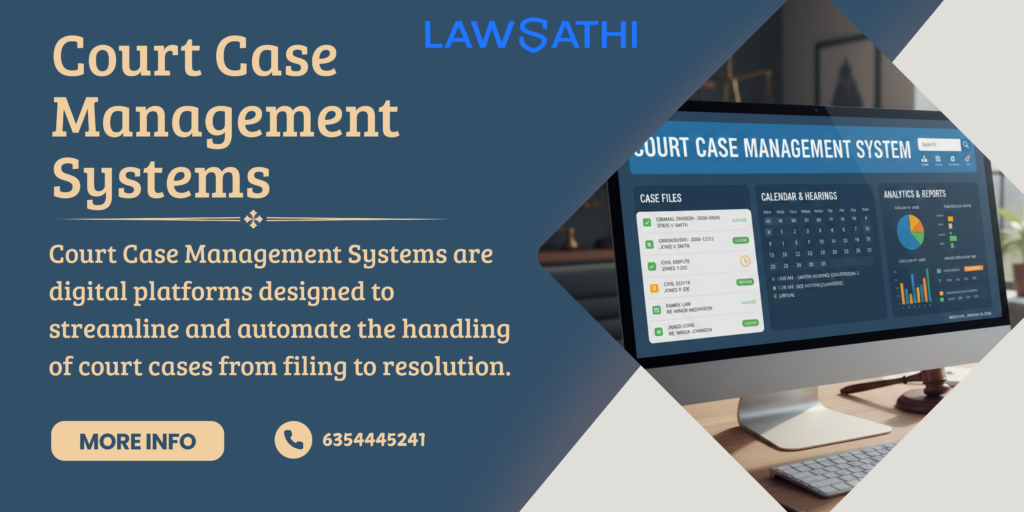
Court operations are no longer slowed by paperwork alone; they are strained by fragmented data, missed deadlines, and disconnected systems. In this environment, court case management systems have shifted from optional tools to structural necessities. They now shape how cases are tracked, reviewed, and closed, influencing accuracy, accountability, and institutional credibility across modern legal workflows.
Many professionals still approach digital transformation through law firm management software, expecting it to solve every operational gap. Yet courtroom processes demand deeper procedural alignment, tighter audit control, and court-specific logic. Platforms such as Lawsathi Hub reflect this emerging shift by focusing on workflow continuity rather than surface-level digitisation.
What must a court-ready system manage that standard legal software cannot?
Most legal tools are designed around internal office efficiency. Court-ready systems, however, must operate inside a procedural ecosystem shaped by judges, registries, jurisdictions, and statutory timelines. This is where court case management systems separate themselves from general legal platforms.
A court-aligned system must manage more than files. It must manage process integrity.
Key distinctions that standard software usually cannot handle:
- Procedural dependency: Every action is tied to court-defined stages, not internal task preferences.
- Jurisdictional logic: The same case type can follow different procedural paths across courts.
- Judicial accountability: Each update must remain auditable for future scrutiny and compliance.
- Lifecycle continuity: Cases cannot break into disconnected phases between filing and disposal.
Why this matters:
Most competitors describe efficiency. Court professionals require procedural reliability. A system that cannot respect court logic will always create manual bridges, and those bridges are where errors, delays, and accountability gaps begin.
Which case lifecycle stages must a system support without manual bridges?
A court case is governed by procedure, not convenience. When any lifecycle stage is handled outside an integrated court case management system, continuity breaks and accountability weaken.
A dependable court workflow platform must preserve every stage as part of one controlled procedural flow.
1. Filing
The platform must record case category, jurisdiction, parties, and filing history in a structured and searchable format. This allows legal case platforms to preserve procedural accuracy from the very first entry.
2. Listing
Hearing schedules and cause list references should update automatically within the same case record. When listing data lives outside the system, litigation tracking tools lose their reliability.
3. Hearings
Each hearing must capture submissions, directions, and adjournments as procedural events rather than informal notes. This keeps the hearing trail trustworthy across digital court platforms.
4. Orders
Judicial orders must remain connected to the exact hearing that produced them. Any case workflow system that separates orders from context weakens legal traceability.
5. Compliance
Compliance deadlines should be generated based on procedural rules, not personal reminders. This is where modern legal management platforms actively prevent operational risk.
6. Closure
Case closure should lock the procedural record while keeping it fully accessible for audits and reporting. Well-designed judicial case platforms protect institutional memory at this final stage.
How should court integrations actually function in real practice?
Court integrations determine whether court case management systems preserve procedural accuracy or simply act as data collectors. When designed well, they remove reconciliation work and protect workflow integrity across jurisdictions. This distinction separates operational systems from surface-level legal platforms.
- Procedural consistency: Court updates must change case stages without rewriting historical records inside court case management systems.
- Calendar intelligence: Hearing schedules and adjournments must follow court calendars and jurisdiction rules rather than generic logic used in law firm management software.
- Cause list connection: Daily cause lists should automatically link to existing case files without manual matching.
- Registry visibility: Filing defects, objections, and approvals must remain traceable within the same case lifecycle.
What competitors often miss:
They connect systems technically, but not procedurally. Without procedural control, even advanced court case management systems lose operational credibility.
What document control standards separate professional systems from storage tools?
Document volume is not the challenge. Control, traceability, and procedural reliability are.
Most platforms store files. Court-grade systems govern them.
| Standard | Basic document tools | Court case management systems |
| Version control | Manual overwriting or duplicates | Automatic version history tied to case stages |
| Audit trail | Limited or optional logs | Mandatory, non-editable activity records |
| Access roles | Folder-based permissions | Role, case, and action-based access control |
| Evidence tagging | File naming only | Procedural, party, and hearing-based tagging |
| Chain of custody | Not preserved | Fully traceable evidence lifecycle |
Why this matters: Courts do not evaluate documents in isolation. They evaluate procedural authenticity, context, and traceability.
Competitor gap: Most platforms highlight storage capacity, not governance discipline.
Professional reality: Without document control standards, even advanced court case management systems behave like digital filing cabinets rather than judicial workflow platforms.
How should reporting support accountability, not just dashboards?
Most legal platforms treat reporting as a visual feature. In court environments, reporting is a governance tool that protects decision quality, responsibility, and long-term credibility.
Effective reporting inside court case management systems must answer questions that professionals are accountable for, not just numbers they can display.
- Case ageing clarity: Reports must show how long each matter has remained in every procedural stage, not merely total case duration.
- Performance visibility: Advocate and team performance should be measured by procedural efficiency, not by activity volume alone.
- Court-wise intelligence: Trends must reflect court behavior patterns, adjournment frequency, and disposal timelines across jurisdictions.
How Lawsathi Hub strengthens modern court case management systems
Legal teams now expect court case management systems to operate as procedural partners, not digital filing rooms. Many still rely on law firm management software, only to discover its limits inside court-driven workflows. Lawsathi Hub addresses this gap by aligning system behavior with courtroom reality rather than office convenience.
For professionals planning long-term digital maturity, this distinction shapes how court case management systems deliver value in daily practice.
How Lawsathi Hub supports court-ready workflows:
- Procedural continuity: Every case stage remains connected within one controlled lifecycle without manual bridges.
- Court-aligned logic: Jurisdictional rules, listings, and compliance timelines guide system behavior naturally.
- Accountability structure: Each action is traceable within the procedural record for audit and review.
- Operational clarity: Case data, documents, and deadlines stay unified inside the same workflow environment.
Choose a Court-Aligned Management Framework
Selecting court case management systems in 2026 is no longer about digital convenience. It is about procedural reliability, accountability, and long-term operational clarity. Systems that respect court logic, lifecycle continuity, and compliance discipline will define how effectively legal professionals manage risk, credibility, and performance.Lawsathi Hub reflects this future-ready approach by aligning technology with real court workflows rather than surface automation. For teams seeking structured growth beyond basic law firm management software, it offers a court-focused operational foundation. If your practice values procedural confidence over temporary efficiency, Lawsathi Hub is the platform worth evaluating today