The Writ of Habeas Corpus in High Court remains the most powerful shield against the state’s overreach. Translated literally as “to have the body,” this prerogative writ serves one primary purpose. Specifically, it ensures that no person remains in custody without legal justification.
As of February 2026, Indian courts have intensified their scrutiny of police procedures. Therefore, defense attorneys must master both the constitutional theory and the digital filing nuances. This guide helps you navigate the procedural maze of Article 226 for your clients.
Introduction: The Great Writ in the Modern Indian Legal Landscape
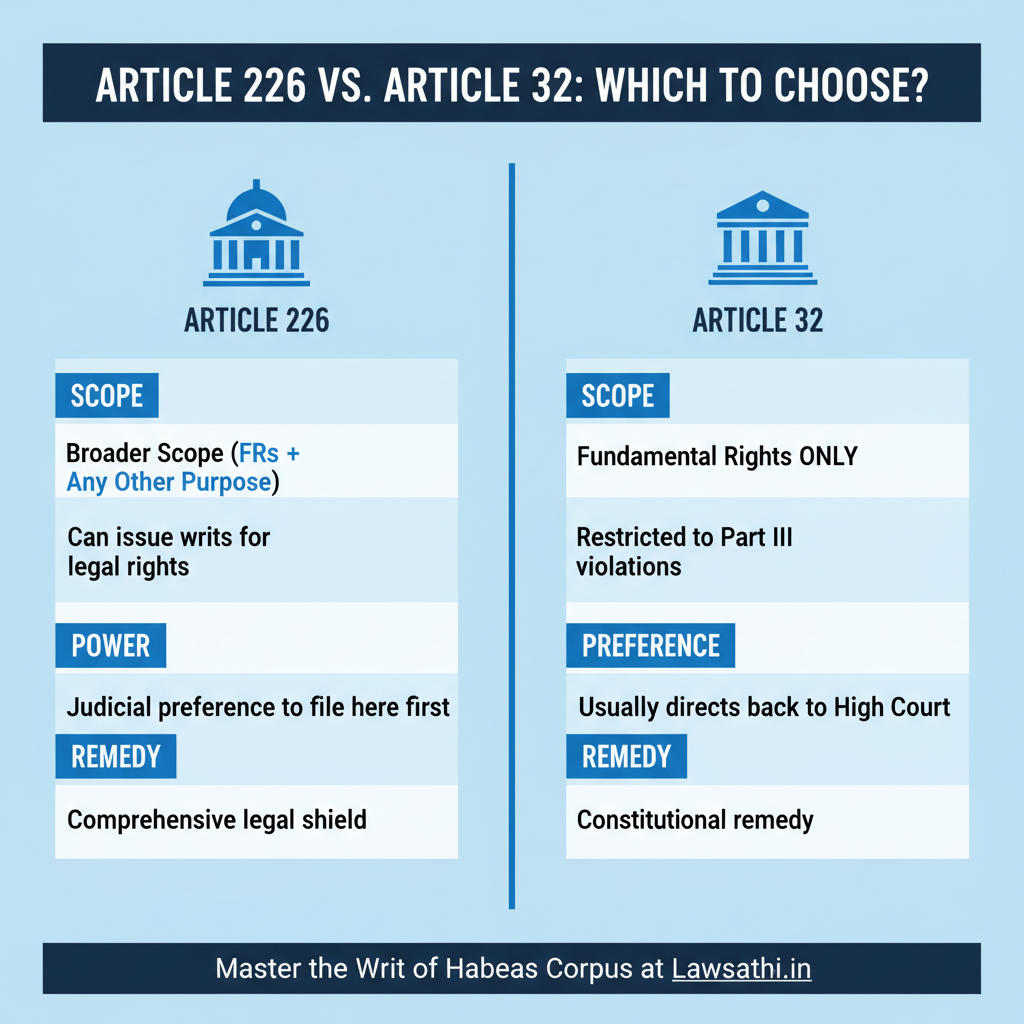
Habeas Corpus is the cornerstone of personal liberty in India. Under the Constitution, citizens have two primary routes for this remedy. First, they can approach the Supreme Court under Article 32. Second, they can move the High Court under Article 226.
Comparing Article 226 and Article 32
Specifically, the Writ of Habeas Corpus in High Court offers a broader scope than Article 32. Article 32 covers only Fundamental Rights violations. In contrast, Article 226 allows High Courts to issue writs for “any other purpose.”
Consequently, the Supreme Court often directs petitioners to High Courts first. This trend has solidified through 2024 and 2025. Courts now exercise “heightened scrutiny” regarding executive actions. Furthermore, they emphasize that procedural shortcuts cannot curtail individual liberty.
The Evolution of Personal Liberty (2024-2026)
The legal landscape in 2026 demands faster judicial intervention. For example, recent years have seen a rise in digital evidence usage. This evolution helps prove illegal detentions that were previously hard to document. Above all, the writ remains the fastest way to challenge “informal” police custody.
Locus Standi and Who Can File a Habeas Corpus Petition
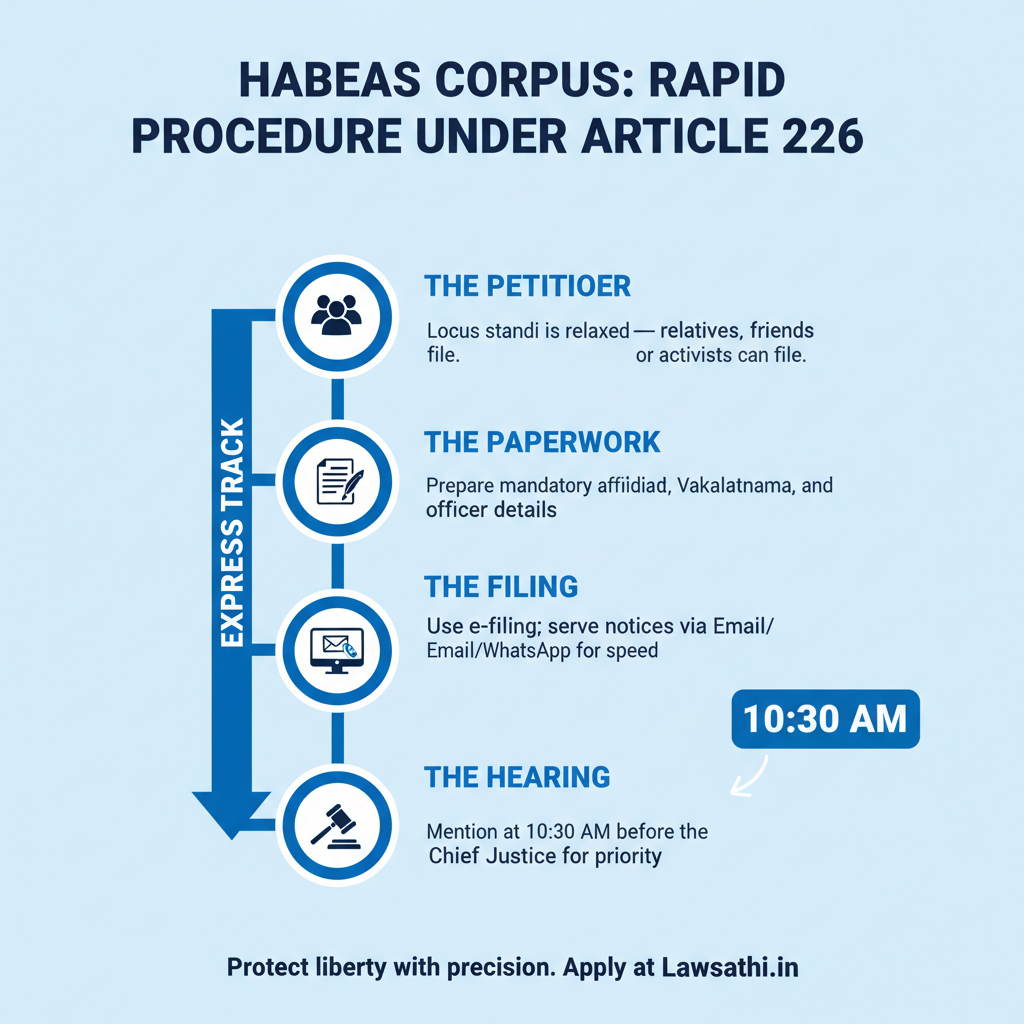
In most legal matters, only the aggrieved party can approach the court. However, the Writ of Habeas Corpus in High Court is a unique exception. The principle of Locus Standi is significantly relaxed here. This is because a detained person often cannot access a lawyer themselves.
Petitions by Friends and Relatives
A petition can be filed by a spouse, parent, or even a friend. For example, if a client is missing, a relative can sign the affidavit. Furthermore, social workers and activists may file petitions for marginalized groups. As a result, this allows the court to act even when the victim is silenced.
Suo Motu Powers of the High Court
High Courts frequently take suo motu notice of illegal detentions. They may act based on news reports or letters from concerned citizens. Moreover, this is known as “epistolary jurisdiction.” This power is vital in cases involving custodial violence or the detention of minors.
Procedural Requirements for Filing under Article 226
Filing a Writ of Habeas Corpus in High Court requires precision in drafting. You must clearly state the date, time, and location of the detention. Additionally, you must name specific police officers or state authorities as respondents. Failure to include these details can delay the urgent hearing.
Supporting Documents and Mandatory Affidavits
The most critical document is the Mandatory Affidavit. This must be signed by the petitioner, usually a close relative. It should confirm the facts of the detention. Furthermore, you will need a Vakalatnama to authorize your representation. Most High Courts require a nominal court fee, often ranging from ₹250 to ₹500.
Service of Notice to Respondents
In urgent matters, courts often issue a “Notice Returnable” within 24 to 48 hours. Many High Courts now accept electronic service. For instance, you can now serve notices via email or WhatsApp to speed up the process. Consequently, this prevents officials from claiming they did not receive the court’s orders.
Grounds for Challenging Illegal Detention
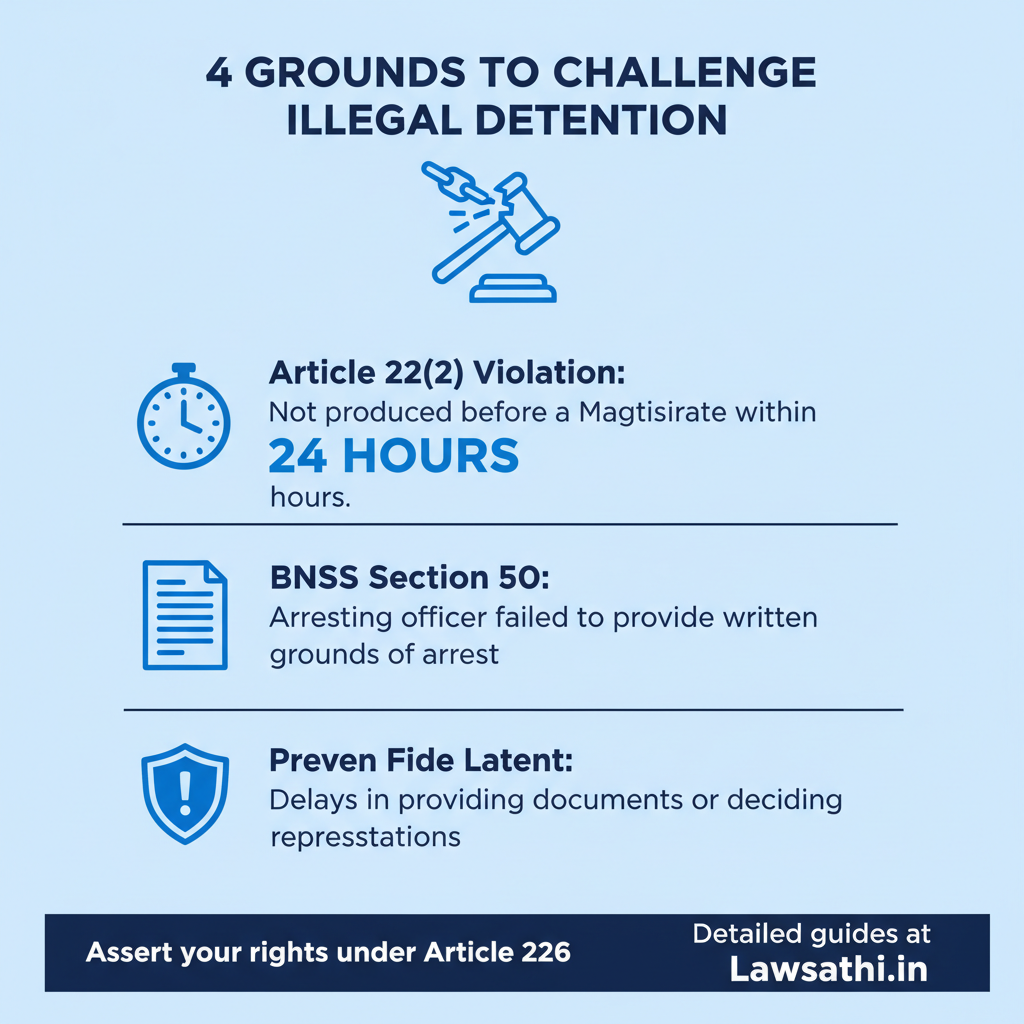
The most common ground is the violation of Article 22(2). This rule requires police to produce an arrested person before a Magistrate within 24 hours. Recently, the Bombay High Court ruled on this in Hanumant Jagganath Nazirkar v. State of Maharashtra. The court vitiated a detention because this limit was exceeded without justification.
Failure to Communicate Grounds of Arrest
Section 50 of the BNSS mandates informing the detenu of the grounds of arrest. Moreover, the Supreme Court emphasized this in Vihaan Kumar v. State of Haryana (2025). The court held that these grounds must be provided in writing. Therefore, if the police fail to do this, the arrest becomes illegal from its inception.
Mala Fide Intent and Vulnerable Persons
Courts also intervene if they find mala fide (bad faith) intent by agencies. For example, if an arrest is used to harass a person, the writ applies. Specifically, the detention of minors without strict legal compliance is viewed very seriously. Thus, defense lawyers must highlight any procedural lapses immediately.
Recent Case Law Trends and Precedents (2024-2026)
Recent rulings have reshaped how attorneys approach the Writ of Habeas Corpus in High Court. In 2025, the Supreme Court strongly condemned the practice of handcuffing accused persons. For example, in the Vihaan Kumar case, the court ordered inquiries into officials who chained an accused to a hospital bed.
Strict Timelines for Preventive Detention
In preventive detention cases, like COFEPOSA or UAPA, timelines are everything. As seen in Jaseela Shaji v. Union of India (2024), a 9-month delay was fatal. The Court quashed the detention because the government failed to explain the delay. Consequently, attorneys must track every day of the detention period.
Compensation for Illegal Detention
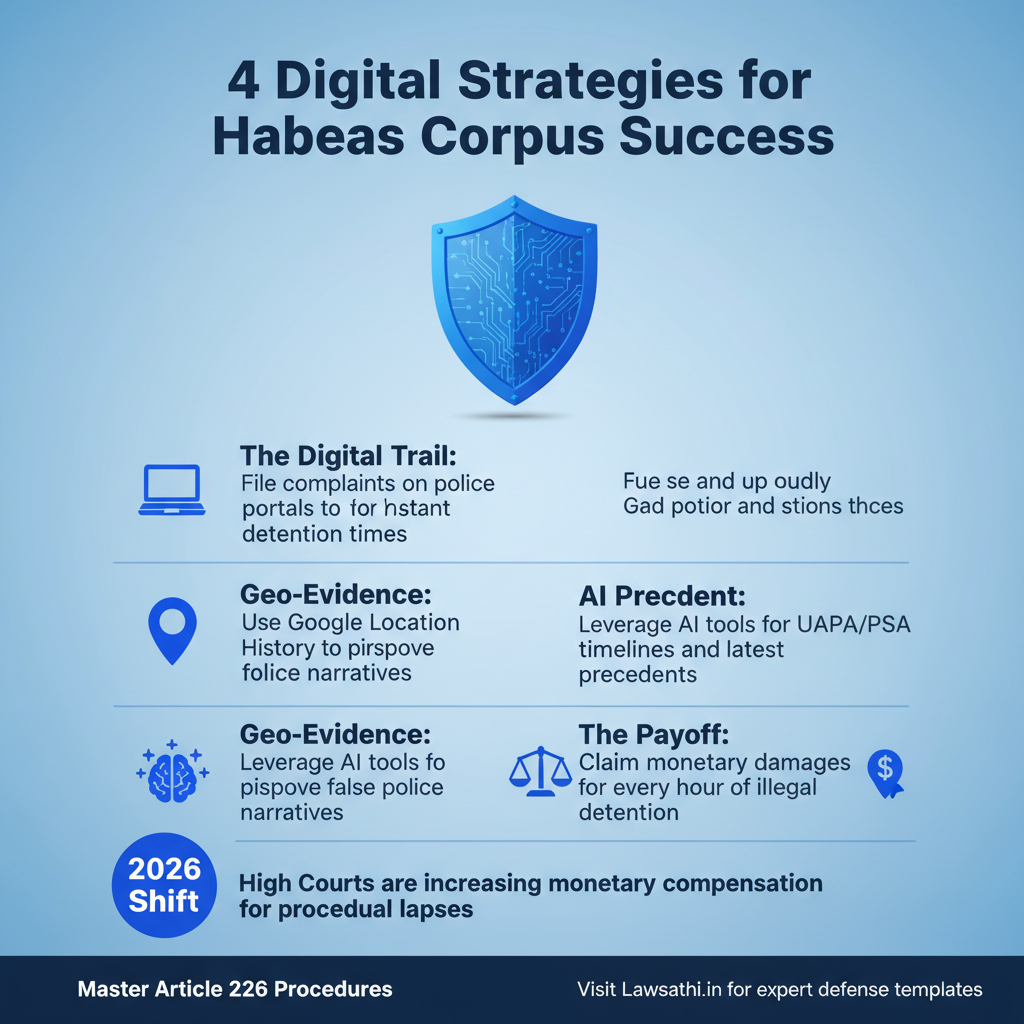
Modern trends show a shift toward awarding monetary compensation. If the High Court finds the detention was clearly illegal, it may order the State to pay. Similarly, this serves as both a remedy for the victim and a deterrent for the police. This development has significantly strengthened the impact of the writ.
Practical Obstacles and How Defense Attorneys Can Overcome Them
Defense attorneys often face the challenge of “informal” detention. This happens when the police pick someone up but do not record the arrest. In these cases, you should immediately file a complaint on the state’s police portal. Therefore, you create a digital trail that is hard to dispute in court.
Dealing with Specialized Acts (UAPA/PSA)
Challenging detention under specialized acts like the PSA requires attacking “Subjective Satisfaction.” For instance, the case of Amritpal Singh (2026) brought NSA procedural nuances to the High Court. You must check if the authorities served all relied-upon documents to the detenu.
Expediting the Hearing in Urgent Matters
To get an urgent hearing, mention the matter before the Chief Justice’s bench at 10:30 AM. Specifically, you should highlight the immediate threat to life or liberty. Most High Courts prioritize these matters as “out-of-turn” listings. Above all, your preparation in the first few hours is critical for success.
The Role of Technology in Expediting Writ Petitions
Digital transformation has changed the Writ of Habeas Corpus in High Court. Most major High Courts now use mandatory e-filing for writ petitions. This includes major benches like Delhi and Bombay. As a result, lawyers can submit petitions 24/7 without waiting for court counters to open.
Using AI and Digital Evidence
AI-powered research tools help you find the latest precedents in seconds. Furthermore, digital evidence like Google Maps “Location History” is now highly valued. You can use these records to disprove police claims about an arrest location. Similarly, Call Detail Records (CDR) can show when a person was taken into custody.
Managing Case Deadlines with Tech
Managing a criminal defense practice requires tracking strict timelines. For example, missing a deadline for a representation can lead to prolonged custody. In contrast, using legal management software helps attorneys keep track of these life-altering dates. This ensures that no procedural advantage is lost.
Conclusion
The Writ of Habeas Corpus in High Court under Article 226 remains the most vital tool for any defense attorney. By understanding the relaxed rules of locus standi, you can effectively protect your clients. Remember that recent case laws like Vihaan Kumar (2025) have made the state more accountable.
As the legal world moves toward digital filings, staying updated is no longer optional. Mastery over these tools will ensure that justice is never delayed. Furthermore, staying informed on Article 22 grounds is essential for every practitioner.
Streamline your High Court filings and never miss a precedent. Try LawSathi’s AI-powered legal management today to manage your writ petitions efficiently.