Navigating property disputes in India requires a deep understanding of evolving statutes. Historically, Indian rent laws heavily favored the tenant. This was done to prevent mid-century homelessness.
However, the legal landscape is shifting rapidly in 2026. Therefore, practitioners must master the legal procedure for evicting a tenant in India. This knowledge is essential to protect their clients’ interests effectively.
The Shift Toward the Model Tenancy Act (MTA)
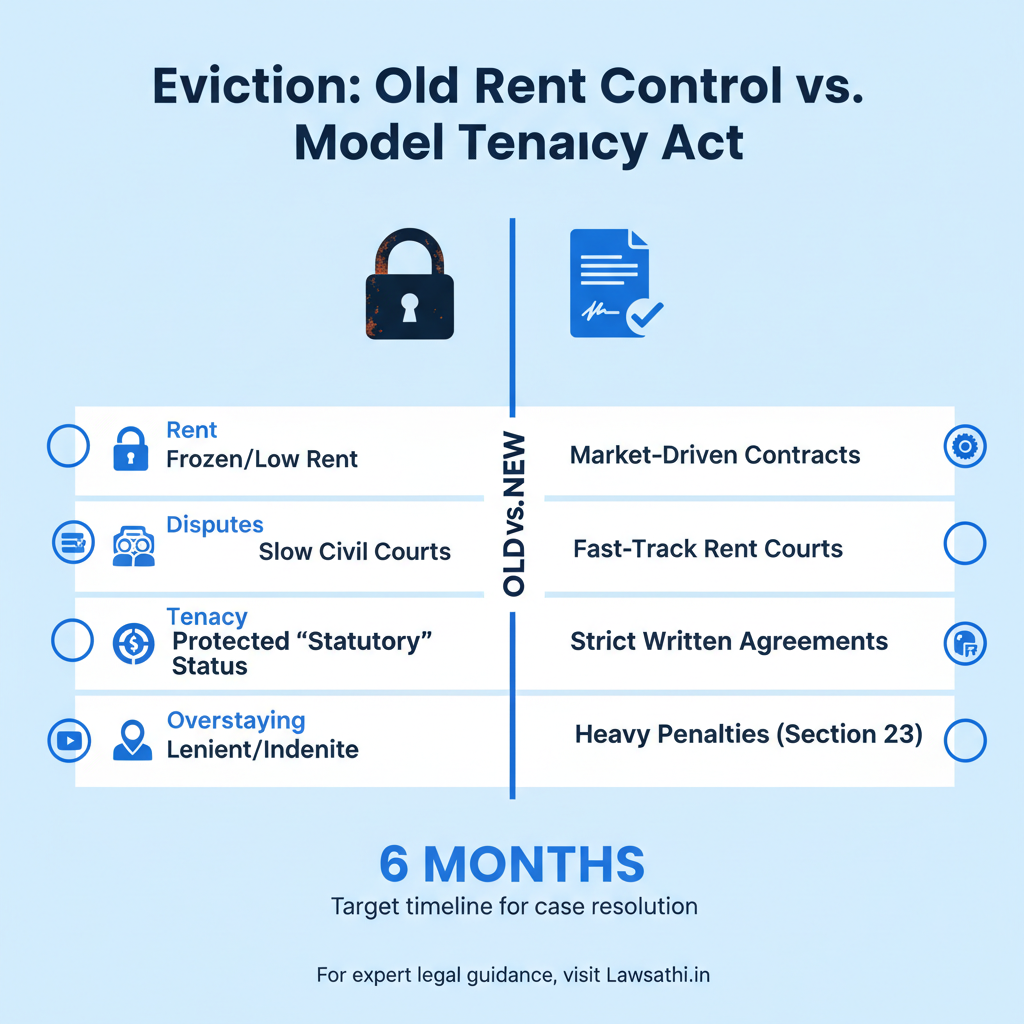
The Model Tenancy Act (MTA) 2021 has transformed the landlord-tenant relationship. Specifically, it moves away from the old rent control “frozen rent” regime.
Furthermore, it emphasizes written contracts and specialized Rent Courts. Consequently, many states like Jammu & Kashmir have already implemented their versions of this act by 2025.
Statutory vs. Contractual Tenancies
First, lawyers must distinguish between different types of tenancies. A “statutory tenant” is one whose lease has expired. However, they remain protected by Rent Control Acts.
In contrast, contractual tenants are governed strictly by the lease terms. They also fall under the Transfer of Property Act (TPA). Most importantly, the MTA clarifies that overstaying tenants face heavy financial penalties. These are outlined under Section 23 of the Act.
Valid Grounds for Eviction under the Rent Control Act
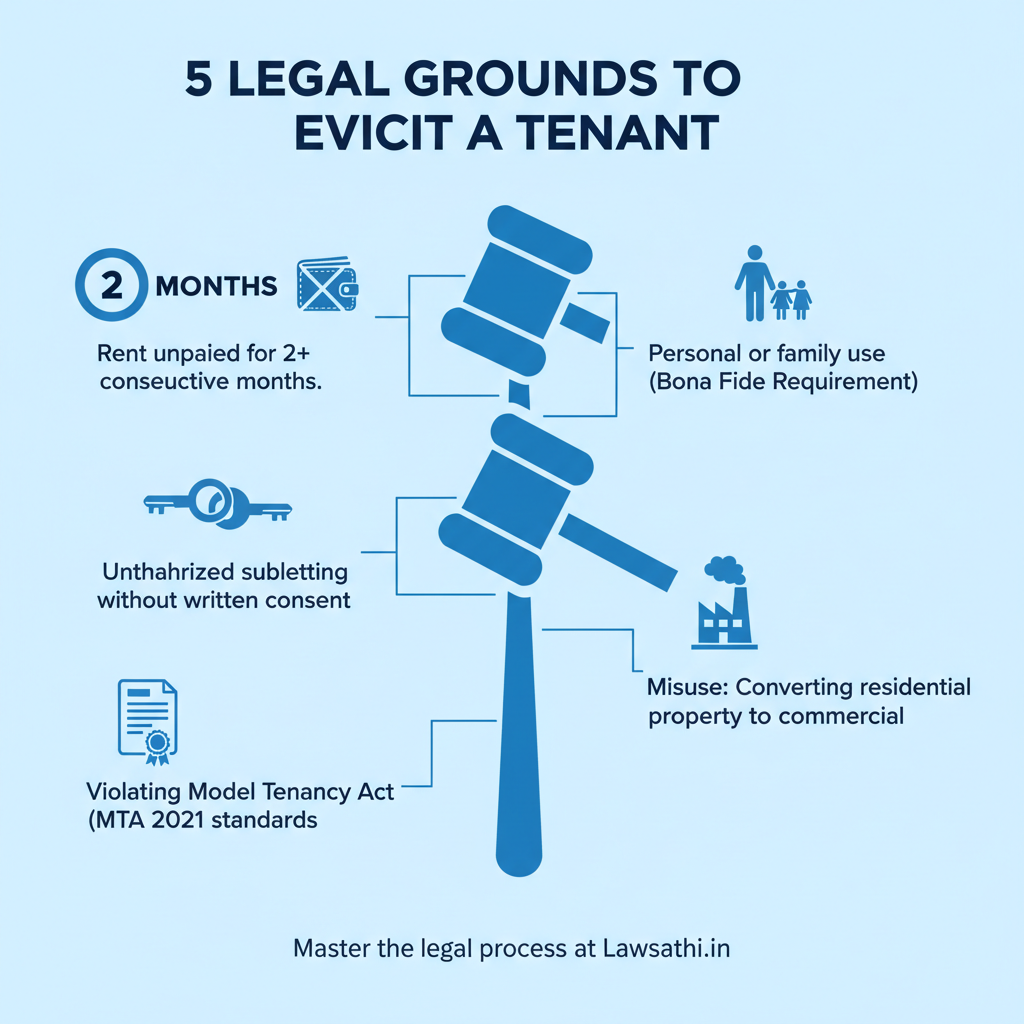
To initiate the legal procedure for evicting a tenant in India, you must establish specific legal grounds. Courts do not allow arbitrary evictions.
For example, non-payment of rent for two consecutive months is a primary ground for eviction. In addition, the tenant must have failed to pay within the notice period. This period is provided by the landlord.
Understanding Bona Fide Requirement
The landlord’s “personal use” is a frequent cause for litigation. In the landmark case of Murlidhar Aggarwal v. Mahendra Pratap Kakan (2025), the Supreme Court expanded this definition.
Specifically, it now includes the needs of the landlord’s family members. This might include an unemployed child. Therefore, the requirement does not need to be for the landlord alone.
Subletting and Misuse of Property
Subletting without written consent is another robust ground for eviction. If a tenant parts with possession of the premises, the landlord can seek immediate recourse.
Furthermore, using residential property for commercial activities typically justifies eviction. However, the landlord must usually serve a “desist notice.” This must be done before filing the petition in court.
Step 1: Drafting and Serving a Valid Eviction Notice
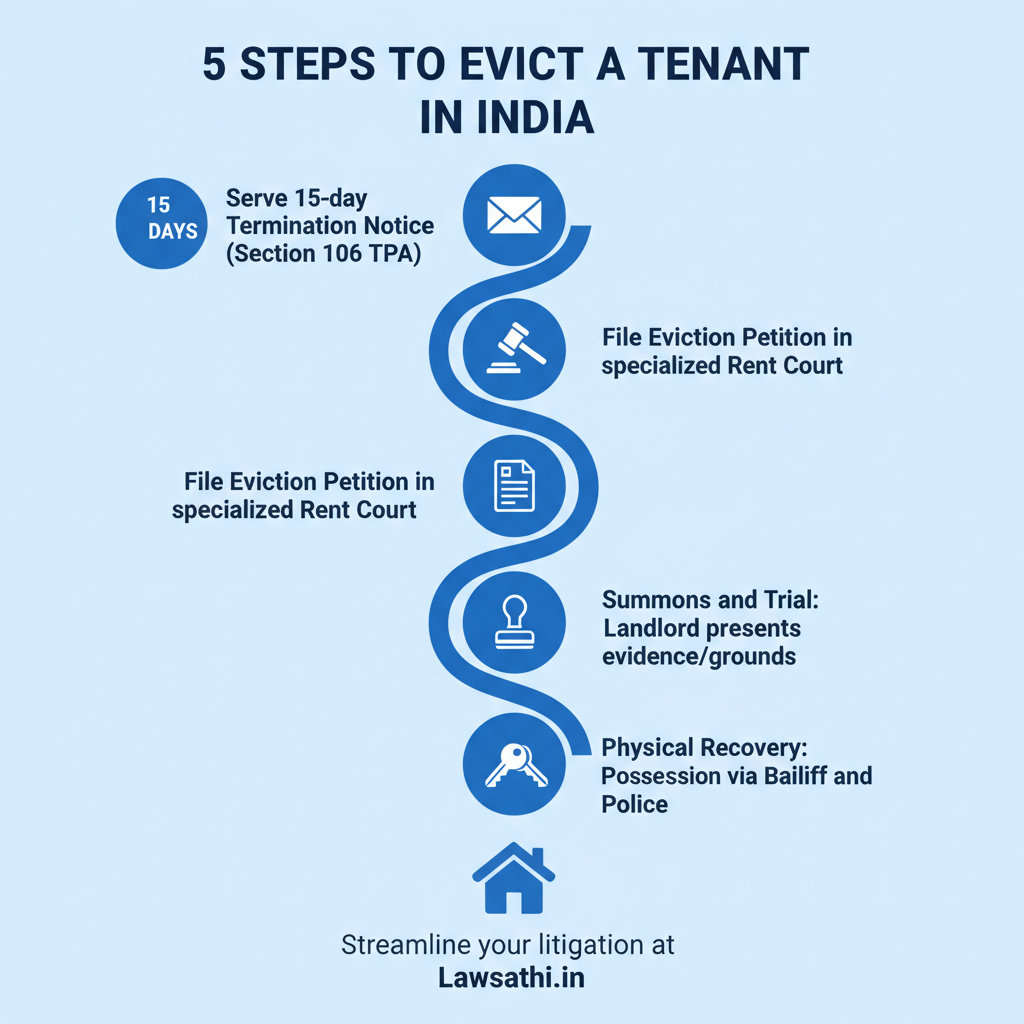
Every eviction case begins with a formal notice. Under Section 106 of the Transfer of Property Act, a 15-day notice is mandatory for month-to-month tenancies.
This notice must state clearly that the tenancy is terminated. Most importantly, it must demand that the tenant vacate the premises within the stipulated time.
Methods of Service in 2026
Traditional methods like Registered Post (RPAD) and Speed Post remain the gold standard. However, digital service is becoming common in modern practice.
For instance, courts may accept notices sent via WhatsApp or Email. For example, recent Delhi High Court rulings like Dell International Services v. Adeel Feroze (2024) highlight the importance of procedure.
Essential Certificates for Digital Evidence
You must include a Section 65B Certificate under the Bharatiya Sakshya Adhiniyam. Without this certificate, WhatsApp screenshots are often inadmissible.
Consequently, lawyers should always dual-serve notices via physical post. This ensures a redundant paper trail. Furthermore, the notice should explicitly mention the grounds for eviction as required by state-specific Rent Acts.
Step 2: Filing the Eviction Petition and Procedural Framework
If the tenant refuses to vacate, you must take the next step. This involves filing a petition in the legal procedure for evicting a tenant in India.
Jurisdiction is a critical factor here. In states where the MTA is active, you must approach the Rent Court or Rent Authority. In fact, many states now expressly bar Civil Court jurisdiction to speed up the process.
Essential Documentation for Filing
The petition should include the registered rent agreement. It should also include proof of rent defaults. Additionally, practitioners should annex the notice of termination and the proof of service.
Most significantly, you must pay the required court fees. These fees vary significantly between states like Delhi, Maharashtra, and Karnataka.
The Summons Process and Defense
After filing, the court issues a summons to the tenant. The tenant is then given a specific period to respond. They may file their “leave to defend” or a written statement.
In summary suits, the timeline is much tighter. Therefore, the landlord’s advocate must be ready to argue against any delays. They must also block frivolous applications by the defense.

Step 3: Trial, Evidence, and Common Defense Tactics
During the trial, the burden of proof often rests on the landlord. To illustrate, if you claim “bona fide necessity,” you must provide documentary evidence.
For example, the landlord should show business registration papers if they need the space for a business. Similarly, bank statements are the best way to prove arrears of rent.
Countering the Tenant’s Hardship Defense
Tenants often plead “comparative hardship.” They claim they have nowhere else to go. However, the Supreme Court ruled in 2025 that this defense is weak if the tenant made no effort to find new housing.
Additionally, practitioners can use Section 116 of the Evidence Act. This section prevents a tenant from denying the landlord’s title at the start of the tenancy.
Techniques for Cross-Examination
In cross-examination, focus on inconsistencies regarding the payment of rent. You can also look at utility bills. If the tenant claims the property is in disrepair, ask for proof of complaints.
In other words, compel the tenant to prove they acted as a “reasonable person” would. Furthermore, use digital recordings of the tenancy registration to disprove any claims of a “verbal agreement.”
The Execution Decree: Recovering Possession
Winning the case does not always mean immediate possession. The final stage of the legal procedure for evicting a tenant in India is the Execution Petition (EP).
Under Order XXI of the CPC, the landlord must apply to the court. This application enforces the eviction decree. Unfortunately, this is often the most time-consuming phase.
Seeking Police Assistance
If the tenant resists, you can request the court for police assistance. The court bailiff then executes the order with the help of local law enforcement.
For instance, the Supreme Court in Rahul S. Shah v. Jitendra Kumar Gandhi provided a clear timeline. It emphasized that eviction proceedings should be finished quickly, ideally within six months.
Dealing with Obstructions
Sometimes, tenants induct sub-tenants during the litigation. However, the bailiff has the authority to remove all occupants under Order XXI Rule 35.
Furthermore, any “willful non-compliance” with an eviction decree can result in contempt of court proceedings. As a result, the tenant may face fines or even civil imprisonment for defying the court.
The Role of Technology: Managing Eviction Litigation
Managing multiple eviction suits can be overwhelming for a busy law firm. Fortunately, legal technology has evolved to simplify this process.
In 2026, AI is no longer a luxury but a necessity for real estate practitioners. For example, AI tools can now draft Section 106 notices in seconds based on specific case facts.
Digital Case Tracking
Using practice management software allows lawyers to track every stage of the eviction process. You can set reminders for notice expiry dates or court appearances.
Moreover, maintaining a digital repository of rent receipts ensures evidence is always ready for trial. This is specifically useful when handling “tenant-at-will” cases across different jurisdictions.
Improving Precision in Drafting
Precision in drafting prevents cases from being dismissed on technicalities. Additionally, AI-powered systems can scan recent high court and supreme court judgments for relevant precedents.
This saves hours of research time for the advocate. Consequently, firms using these tools can provide more accurate and faster results for their clients.
Conclusion: Mastering the Eviction Process
The legal procedure for evicting a tenant in India has become more structured with the introduction of the Model Tenancy Act. While challenges like court delays still exist, the new specialized Rent Courts offer hope.
By focusing on valid grounds and precise notice drafting, lawyers can successfully navigate these waters. Mastery of these steps ensures better outcomes for your clients.
Streamline your property litigation and never miss a court date. Experience LawSathi’s AI-powered case tracking and automated drafting—specifically built for the Indian Judiciary. Start your free trial today!