The legal battle surrounding Anti-Conversion Laws Supreme Court proceedings reached a new milestone today. Specifically, on February 01, 2026, the apex court postponed the high-stakes hearing to February 3. This delay impacts a consolidated batch of petitions. These petitions challenge the “Freedom of Religion” acts across nine Indian states.
Overview of Recent Court Proceedings
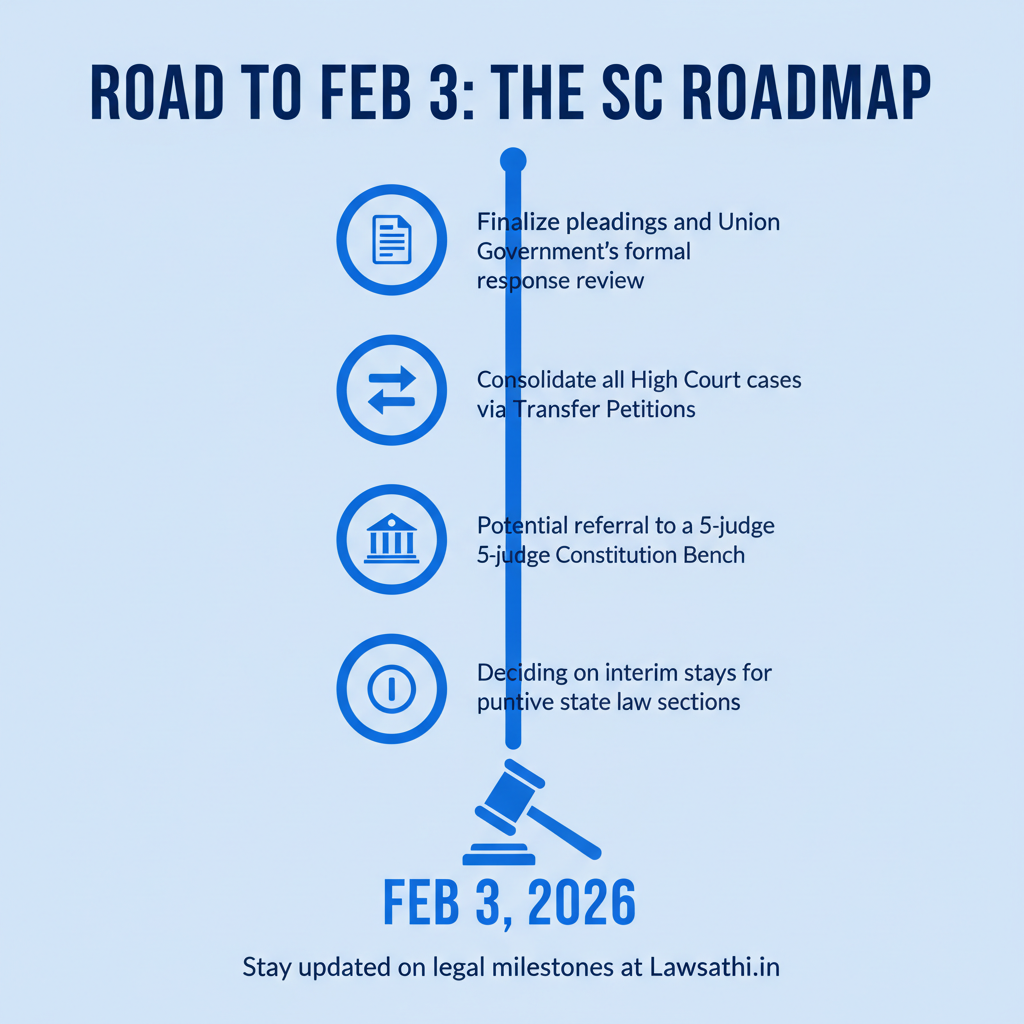
The Supreme Court of India adjourned the matter to allow for the completion of formal pleadings. Specifically, the bench needs more time to review the Union’s final response. This response addresses several interim applications. These applications seek an immediate stay on the most punitive sections of the state laws.
Moreover, the court is dealing with a massive volume of documents from diverse petitioners. Leading NGOs like Citizens for Justice and Peace (CJP) have joined the fight. For example, the National Federation of Indian Women and individual citizens are also involved. They argue that these laws create a climate of fear for inter-faith couples.
Why the Adjournment Matters for February 3
The adjournment until February 3, 2026, is not merely a procedural pause. Instead, it provides the Attorney General and Solicitor General a final window to finalize their defense. Consequently, the upcoming hearing will likely determine if these laws face an immediate stay.
Furthermore, legal observers expect the court to address “Transfer Petitions” during the next session. This move would shift all pending cases from various High Courts to the Supreme Court. Therefore, a single, definitive ruling could soon govern the entire country.
Background: The Evolution of State Freedom of Religion Acts
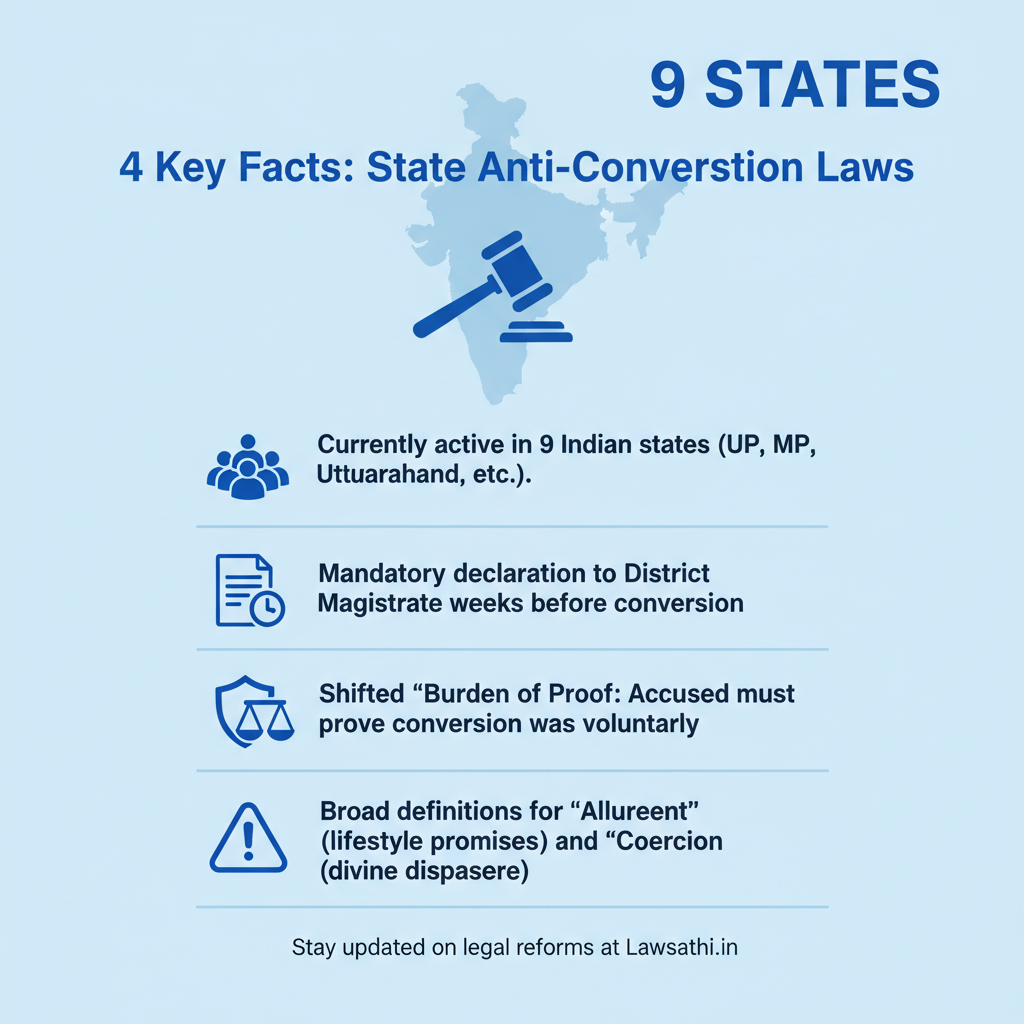
Initially, controversial ordinances in Uttar Pradesh, Uttarakhand, and Madhya Pradesh sparked this national debate. These states replaced older statutes with far more stringent regulations starting in 2018. As a result, the legal requirements for religious conversion became significantly more complex.
Key Provisions Under Judicial Scrutiny
One of the most debated aspects involves the mandatory declaration process. Most states now require citizens to inform the District Magistrate (DM) weeks before converting. For instance, the UP Anti-Conversion Law puts onerous conditions on citizens. These conditions include public notices that may violate privacy.
Additionally, the burden of proof has shifted entirely onto the accused. The person who “facilitates” the conversion must now prove it was not forced. In other words, the law presumes guilt until the individual proves their innocence in court.
Broad Definitions and Legal Uncertainty
Critics also point to the high level of “vagueness” in the statutory language. Terms like “allurement” are now broadly defined. For example, the definition includes promising a “better lifestyle.” Therefore, standard religious discourses could potentially be misinterpreted as criminal acts.
Furthermore, some amendments even include “divine displeasure” as a form of coercion. Such broad strokes make it difficult for practitioners to advise clients with certainty. In fact, this uncertainty is a primary reason why the Anti-Conversion Laws Supreme Court challenge is so critical.
Core Constitutional Arguments: Freedom vs. Regulation
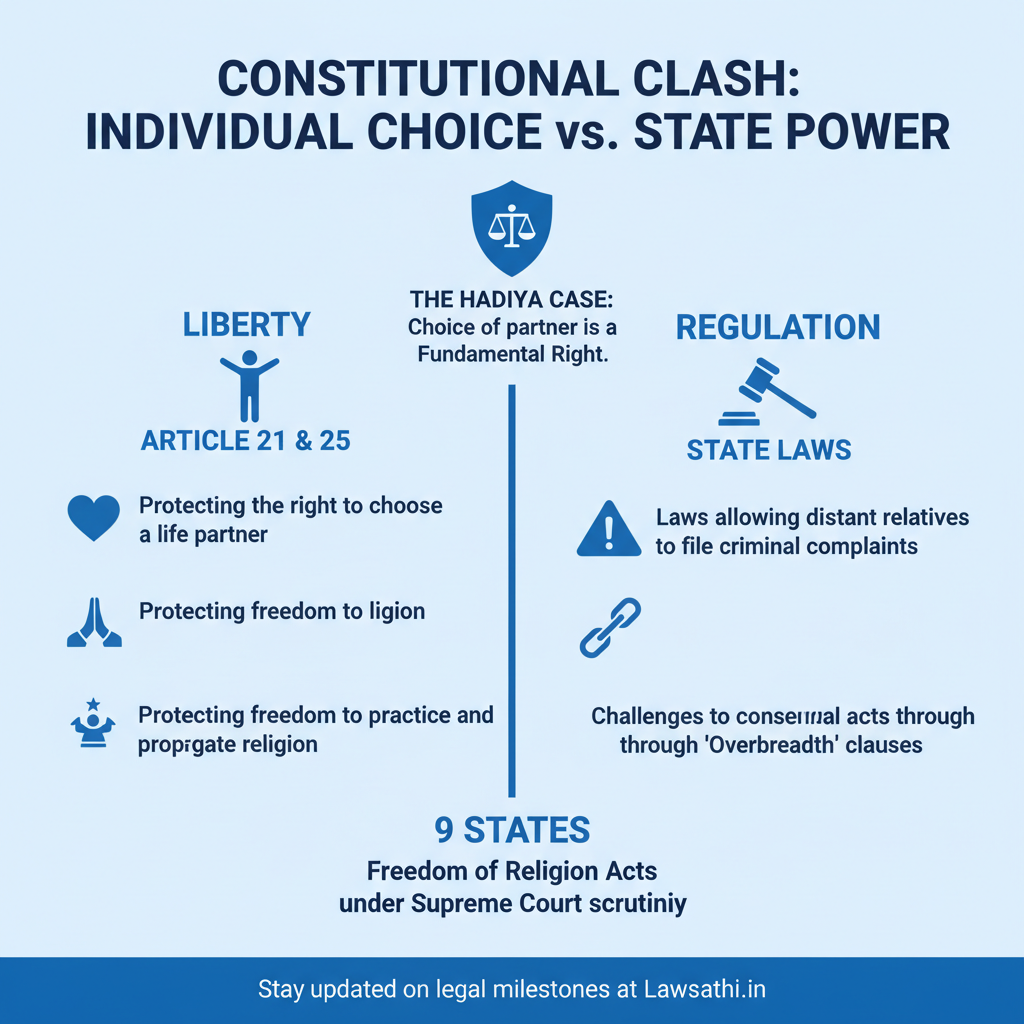
The fundamental question involves the tension between state regulation and individual liberty. Petitioners argue that these laws violate Article 21 of the Indian Constitution. Specifically, they claim the laws infringe upon the right to privacy. Moreover, they believe the laws restrict the right to choose a life partner.
Privacy and the Right to Choose
In the landmark Hadiya Case, the court protected the choice of a partner as a fundamental right. However, the new state laws force couples to make their private decisions public. Consequently, this state-mandated disclosure often leads to harassment by external groups.
Additionally, the laws may conflict with Article 25. This article guarantees the freedom to practice and propagate religion. While the state can prevent “fraud,” many argue these laws exceed that mandate. In fact, many believe the regulations target the very essence of religious freedom in India.
The Problem of Overbreadth
The “overbreadth” of these laws remains a major point of contention for legal experts. For example, some statutes allow any “aggrieved person” to file a complaint. This has led to cases where distant relatives or strangers interfere in consensual marriages.
Moreover, the recent 2024 UP Amendment introduced life imprisonment. This penalty applies to certain violations. Such harsh punishments make the constitutional validity of the definitions even more vital for the court to decide.
The Significance of the February 3, 2026 Hearing
The legal fraternity is closely watching the bench composition for the upcoming hearing. Many expect the Chief Justice of India to lead the proceedings. Most importantly, the court may refer these matters to a larger five-judge Constitution Bench.
Consolidation of High Court Matters
Currently, multiple High Courts are hearing similar challenges. To avoid conflicting judgments, the Supreme Court is considering transferring all these cases. This consolidation would ensure a uniform constitutional standard for the whole nation.
However, the court previously expressed some reluctance to stop High Courts from working. Therefore, the February 3 hearing will clarify if the Supreme Court will take exclusive control. Such a move would significantly speed up the final resolution of these disputes.
The Role of the Attorney General
The Attorney General of India will play a pivotal role in the upcoming session. He must state which provisions the Union government intends to defend vigorously. On the other hand, the court might suggest that the states reconsider intrusive clauses.
Specifically, the court has orally observed that India is a secular country. This suggests that the AG must balance state security with the secular fabric of the Constitution. Consequently, his submissions will likely set the tone for the entire February hearing.
Implications for Legal Practitioners and Law Firms
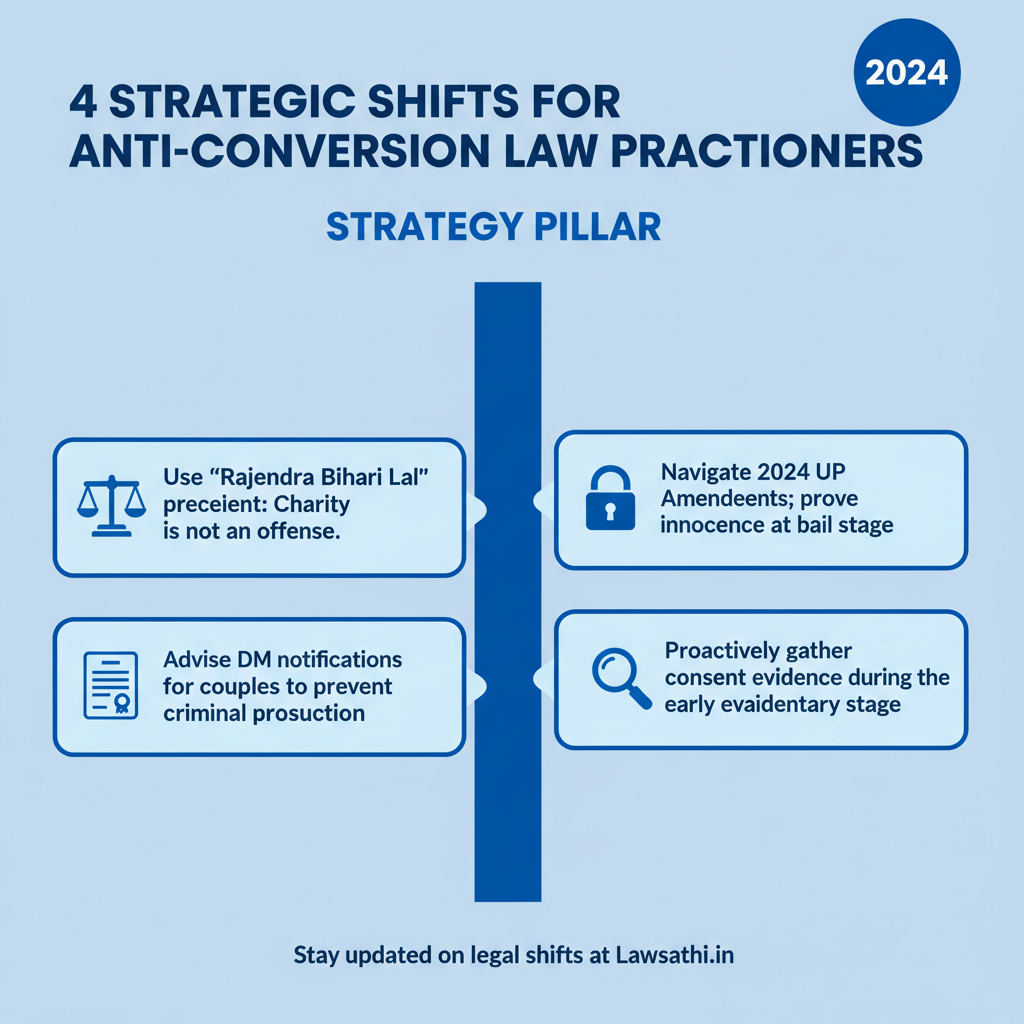
For criminal defense lawyers, the evolving Anti-Conversion Laws Supreme Court landscape requires a shift in strategy. Many practitioners now rely on recent precedents to quash FIRs. For example, the case of Rajendra Bihari Lal vs. State of UP is very important. It clarified that “charity is not an offence.”
Navigating the 2024 Amendments
Practitioners in Uttar Pradesh face even tougher challenges following the 2024 amendments. These new rules introduce “PMLA-style” bail conditions. In these cases, the accused must prove their prima facie innocence just to get bail.
Therefore, defense attorneys must focus heavily on the evidentiary stage during bail applications. This requires a much more proactive approach to gathering proof of consent. As a result, the workload for law firms handling these cases has increased dramatically.
Advice for Inter-Faith Couples
Law firms advising inter-faith couples must navigate a maze of bureaucratic requirements. Despite the pending challenges, lawyers often recommend complying with District Magistrate notifications. This prevents immediate criminal prosecution while the broader constitutional battle continues.
Moreover, practitioners should stay updated on the Supreme Court’s weekly roundups. Frequent updates ensure that clients receive the most current advice. Specifically, they need info on stay orders or interim reliefs. Failing to monitor these developments can have severe consequences for clients.
Conclusion: What to Expect Next
The hearing on February 3, 2026, could be a turning point for religious freedom in India. If the Supreme Court grants an interim stay, it would offer immediate relief to thousands. However, if the court refuses to intervene, the strict state regimes will continue to operate.
Ultimately, the final verdict will define the boundaries of individual autonomy in India. It will decide if the state has a right to monitor personal choices. Therefore, both civil rights activists and state governments are bracing for a definitive conclusion.
As we await the next update, legal professionals must stay vigilant. The outcome of the Anti-Conversion Laws Supreme Court case will reshape law for years to come.
Stay ahead of high-stakes litigation with LawSathi’s AI-powered case tracking. Never miss a hearing update—sign up for a free trial today!