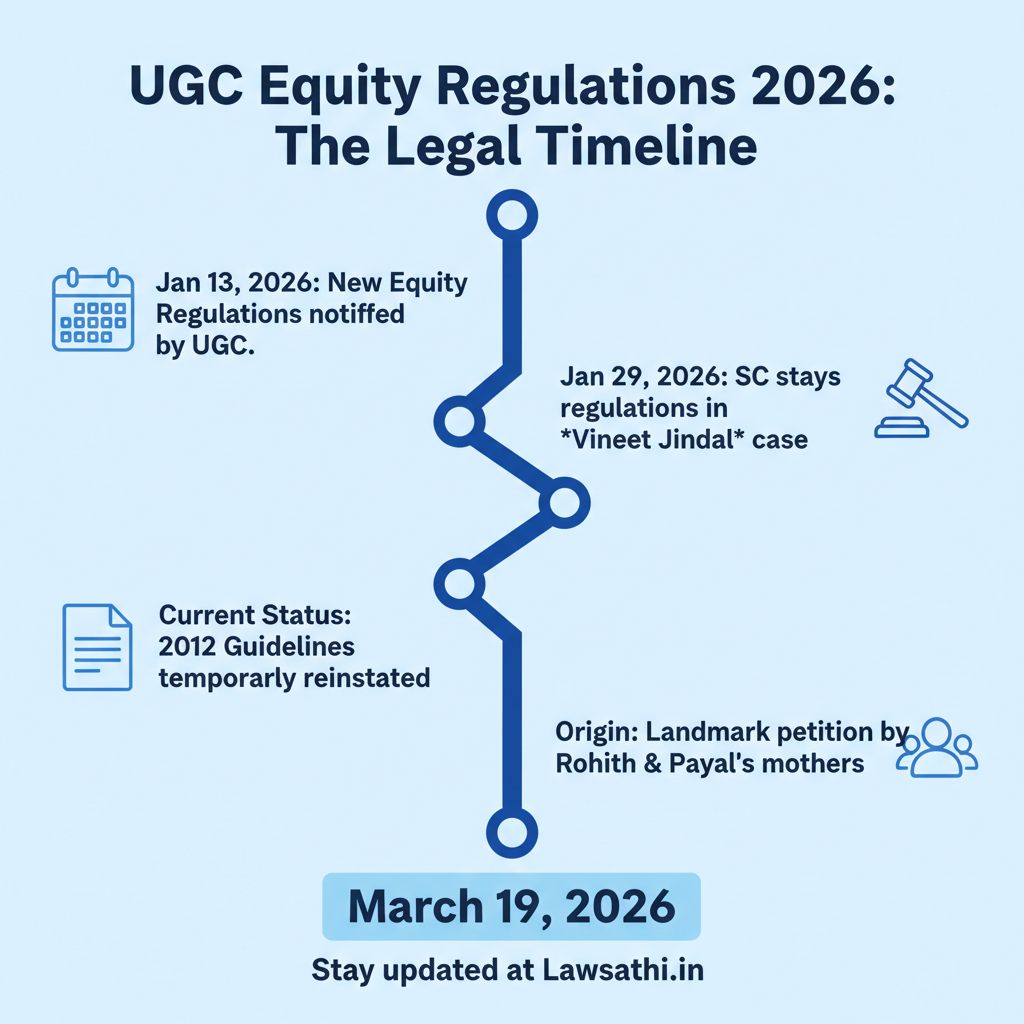
The Indian higher education landscape is currently facing a significant legal upheaval. On January 13, 2026, the government notified the UGC Equity Regulations 2026. These rules aim to eliminate discrimination across all Higher Education Institutions (HEIs). However, the Supreme Court of India recently intervened to scrutinize these mandates. In a dramatic turn, the Court stayed the regulations on January 29, 2026. This decision followed concerns regarding the clarity and potential misuse of the new rules.
The Rise of the 2026 Mandates
The UGC Equity Regulations 2026 emerged from a long legal battle. The mothers of Rohith Vemula and Payal Tadvi filed a landmark petition. Specifically, they sought better protection for students. Consequently, the University Grants Commission (UGC) drafted these regulations to foster inclusion. The rules mandate the creation of Equal Opportunity Cells (EOCs) in every college. They also require formal grievance redressal mechanisms for disadvantaged groups.
Supreme Court Intervention and the Stay Order
Shortly after notification, the Supreme Court expressed deep reservations. Chief Justice Surya Kant and Justice Joymalya Bagchi noted that certain provisions appeared vague. As a result, the Bench stayed the regulations in the case of Vineet Jindal v. Union of India. The Court has now temporarily reinstated the older 2012 guidelines. This intervention highlights the delicate balance between administrative autonomy and constitutional safeguards.
Question 1: The Necessity of a Separate Caste-Based Discrimination Definition
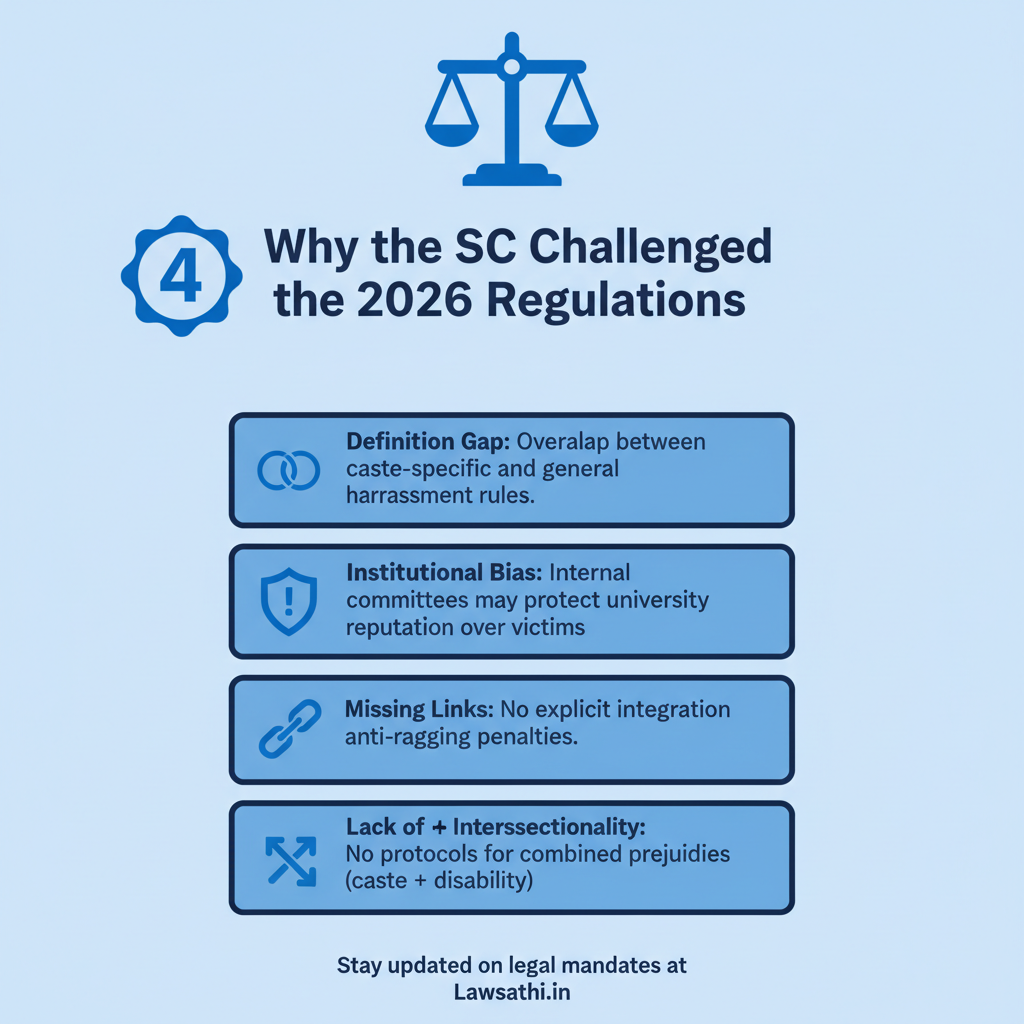
The primary legal point of contention involves how we define discrimination. Regulation 3(c) of the UGC Equity Regulations 2026 specifically defines “caste-based discrimination.” It focuses primarily on students from SC, ST, and OBC backgrounds. However, the Supreme Court questioned this narrow focus during the latest hearings.
Overlap with General Harassment Rules
The Court asked why a specific definition is necessary if broad protections already exist. For example, Regulation 3(e) already covers “discrimination” in a universal sense. Therefore, the Bench questioned the utility of having overlapping categories. Petitioners argue that a non-inclusionary definition might violate Article 14 of the Constitution. They claim it presumes that general category students cannot be victims of caste-related hostility.
Subtle vs. Overt Academic Discrimination
In contrast, advocates for the regulations point to the Thorat Committee findings. That report highlighted how caste bias in India is often subtle. For instance, a professor might exclude a student from a research project based on their surname. These “subtle” acts differ from physical ragging or overt verbal abuse. Consequently, the UGC argues that specific definitions are vital to capture these academic nuances.
Question 2: Accountability Mechanisms for Institutional Heads
A major gap in previous rules was the lack of top-level accountability. The UGC Equity Regulations 2026 attempt to fix this issue. However, the Supreme Court remains skeptical about the current internal structures. Most HEIs use internal committees to solve these sensitive disputes.
The Risk of Internal Bias
The Court observed that internal equity committees often protect the institution’s reputation. Furthermore, Vice-Chancellors (VCs) and Registrars may lack the incentive to report their own faculty. To address this, the Bench suggested a more robust oversight mechanism. For example, the Court proposed a committee of eminent jurists to redraft the liability framework. This would ensure that institutional heads are held personally liable for toxic campus environments.
Legal Precedents for Liability
Indian courts are increasingly holding institutions responsible for student welfare. In the past, colleges often escaped liability by blaming individual “bad actors.” Under the new proposed scrutiny, the failure to maintain a safe environment could result in heavy penalties. Specifically, the Court wants to ensure that grievance cells remain independent from the college administration.
Question 3: Standardizing Punitive Measures Across HEIs
Currently, punishments for discrimination vary wildly across different Indian states. A professor might face dismissal in Delhi for an offense but find work in another state. Therefore, the Supreme Court is pushing for a Uniform Sanctions Framework.
The Missing Link: Ragging and Caste
The SC flagged a surprising omission in the UGC Equity Regulations 2026. It noted that the draft oddly omits “ragging” from its primary definitions. In many Indian colleges, ragging is the primary vehicle for caste-based harassment. Consequently, the Court has directed the UGC to integrate anti-ragging penalties with equity mandates.
Conflict with University Statutes
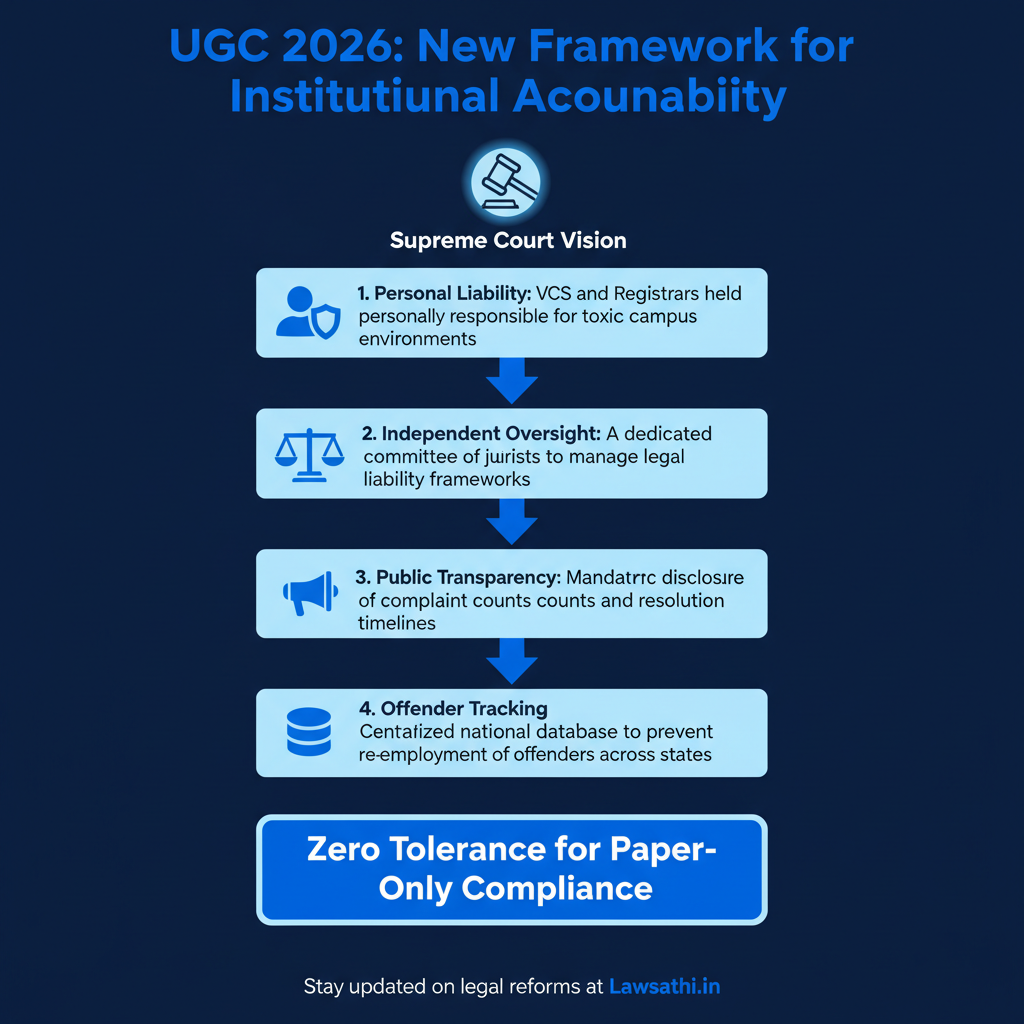
Additionally, many state university statutes have their own disciplinary procedures. This creates a legal conflict between UGC mandates and local university laws. The SC wants a system where guilty faculty cannot simply move to a different institution. Most importantly, a centralized database of offenders could prevent “re-employment” without a proper background check.
Question 4: Inclusion of Intersectionality in Reporting Protocols
Modern legal theory emphasizes “intersectionality.” This concept recognizes that a person can face multiple forms of prejudice at once. For example, a Dalit student with a physical disability faces unique challenges. The Supreme Court noted that the UGC Equity Regulations 2026 lack specific protocols for such cases.
Mandatory Anonymized Reporting
The Court is also advocating for transparent data collection. It suggested that HEIs should use “Anonymized Institutional Reporting.” Under this system, colleges must publicly disclose the number of complaints received. They must also show the time taken to resolve these issues. This ensures transparency without revealing the identity of the victims.
Tracking Double Discrimination
Furthermore, failing to track intersectional data makes it hard to create effective policies. If a college only tracks “caste” or “gender” separately, they miss the overlap. Therefore, the SC wants the redrafted regulations to include clear reporting lines for complex cases. This would align Indian regulations with international human rights standards.
Implications for Legal Practitioners and Universities
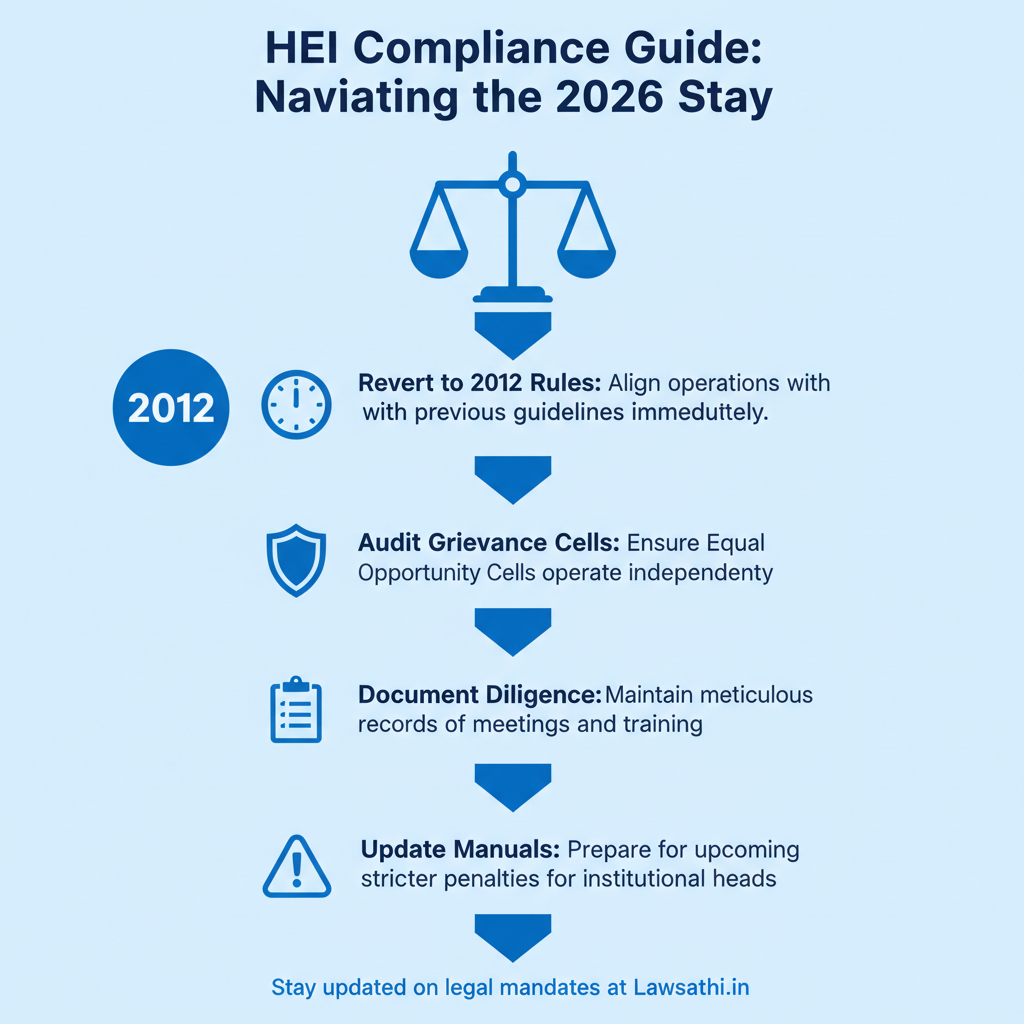
The stay on the UGC Equity Regulations 2026 creates a temporary compliance vacuum. Lawyers representing educational trusts must act quickly. First, you must advise clients that the 2012 Regulations are currently back in force. This status will likely remain until the next hearing on March 19, 2026.
Preparing for Higher Education Litigation
Educational institutions should prepare for a surge in litigation. Specifically, the Court’s focus on “caste-neutral” grievance logs is a major shift. Lawyers should help colleges review their current Equal Opportunity Cells. Additionally, you should ensure that internal policies align with the latest Supreme Court observations.
Redrafting Compliance Manuals
Law firms need to update their compliance checklists for HEIs. The final version of the regulations will likely include stricter penalties for VCs. Consequently, proactive risk management is now essential. In fact, you should document all training sessions and grievance meetings. This helps to prove “due diligence” during future audits.
Conclusion: Toward a Robust Anti-Discrimination Framework
The Supreme Court’s scrutiny of the UGC Equity Regulations 2026 is a pivotal moment for Indian law. While the intent of the UGC is noble, the Court demands a more precise legal framework. By questioning the definition of discrimination, the Bench is pushing for a more universal approach to equality.
Moreover, the emphasis on institutional accountability marks a shift away from “paper-only” compliance. The upcoming redrafting process will determine the future of campus safety in India. Stakeholders must remain vigilant as the UGC prepares its response to these four critical questions.
Stay ahead of rapid legal shifts in education law. Use LawSathi’s AI-powered research tools to monitor Supreme Court updates and manage institutional compliance effortlessly. Try LawSathi today.