# Supreme Court Orders ₹30 Lakh Compensation for Manual Scavenging Deaths: A Legal Guide
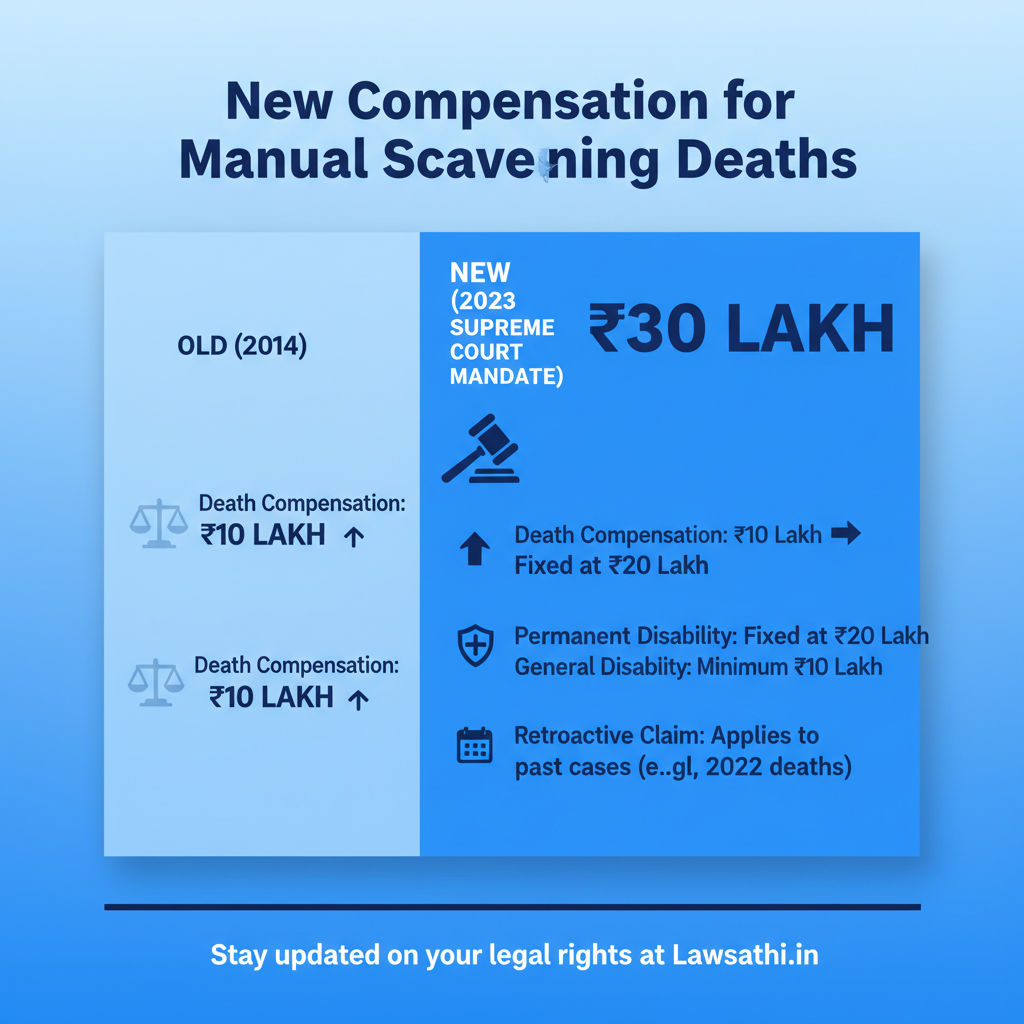
The legal landscape for sanitation workers in India has reached a critical turning point. Recently, the judiciary took a stand against the “most inhuman” practice of hazardous cleaning. The manual scavenging compensation supreme court mandate has officially increased. The amount rose from ₹10 lakh to ₹30 lakh.
A New Standard for Human Dignity
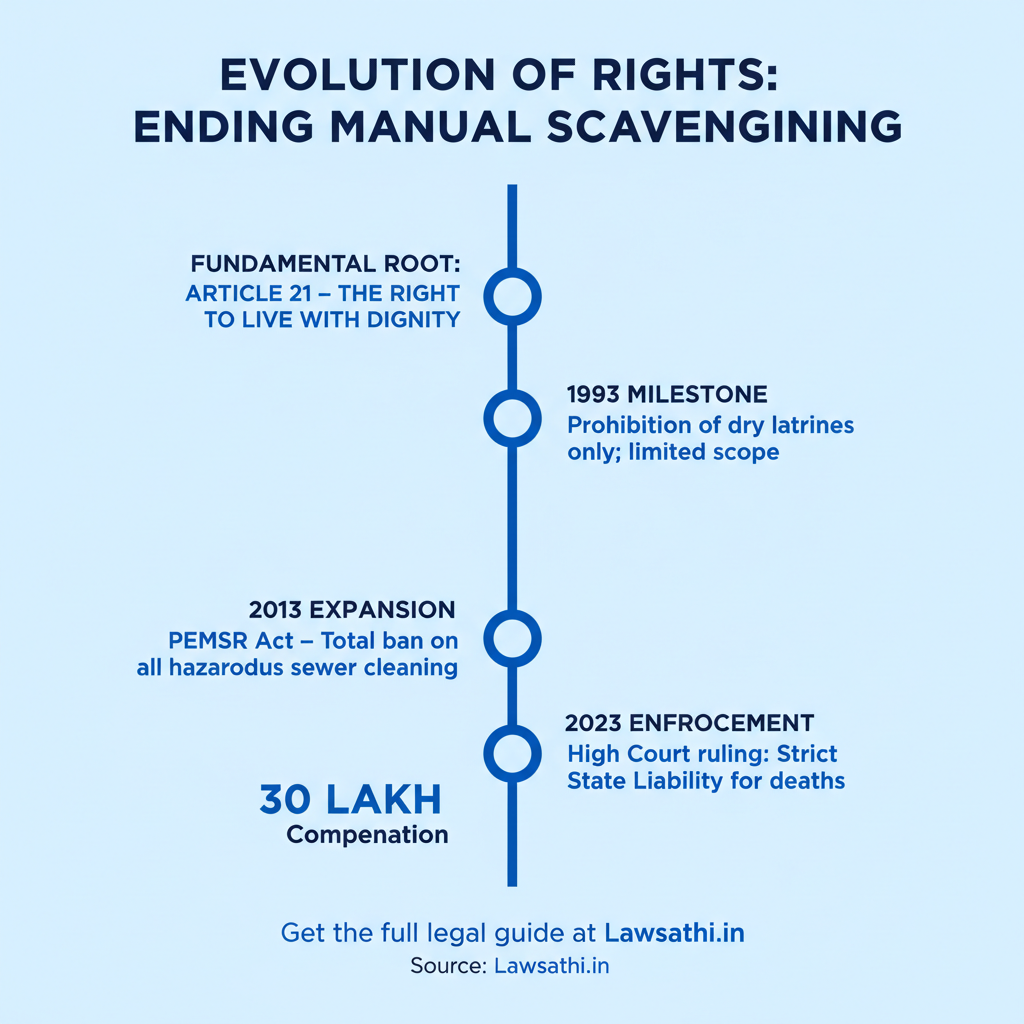
This landmark shift aims to provide a meaningful safety net for families of victims. Therefore, it directly addresses the systemic failure to protect those forced into hazardous work. The Court emphasized that this practice violates the fundamental “right to live with dignity” under Article 21.
The Scope of the PEMSR Act 2013
Additionally, the ruling reinforces the Prohibition of Employment as Manual Scavengers Act 2013. This Act specifically bans the hazardous cleaning of sewers and septic tanks. However, implementation across various states remained inconsistent for years.
Understanding the Balram Singh vs. Union of India Ruling
The Division Bench of Justice S. Ravindra Bhat and Justice Aravind Kumar delivered this 2023 judgment. In Balram Singh vs. Union of India, the Court expressed deep concern. Consequently, the Bench ordered an immediate update to compensation figures. These figures had remained stagnant since 2014.
Retroactive Compensation for Victims
Most importantly, the Court directed that this enhanced compensation should apply retroactively. For example, the Delhi High Court recently applied this rule to a death from 2022. This ensures that families awaiting justice are not left behind. As a result, technicalities will not block their legal rights.
Differentiation in Compensation Values
The ruling also provides a clear scale for different types of injuries. Specifically, the manual scavenging compensation supreme court guidelines set ₹30 lakh for death. Furthermore, victims facing permanent disability must receive at least ₹20 lakh. For general disabilities, the minimum threshold is ₹10 lakh.
Evolution of Legal Protections: From 1993 to 2023
Initially, the 1993 Act only prohibited dry latrines. However, the 2013 PEMSR Act expanded the definition significantly. It now includes all hazardous sewer cleaning. This legislative shift was a major victory for the Safai Karamchari Andolan. They fought for decades against caste-based labor.
The 2014 Compensation Watershed
In 2014, the Supreme Court first mandated a ₹10 lakh payment for every sewer death. This was a crucial roadmap for state liability at the time. Nevertheless, the Court noted in 2023 that this amount was outdated. It no longer matched the economic reality of the victims.
Addressing the 2013 Act Limitations
Furthermore, the previous framework often failed to hold private contractors accountable. As a result, many deaths went unrecorded. Some were even dismissed as accidents not covered by the Act. Consequently, the new directives aim to close these loopholes by making the State strictly liable.
Directives for State and Central Governments
The Supreme Court issued 14 specific directions to ensure compliance. First, the Union and States must conduct a fresh national survey. This survey aims to identify all remaining manual scavengers within one year. Therefore, every worker can be officially recognized and protected.
Holistic Rehabilitation Beyond Cash
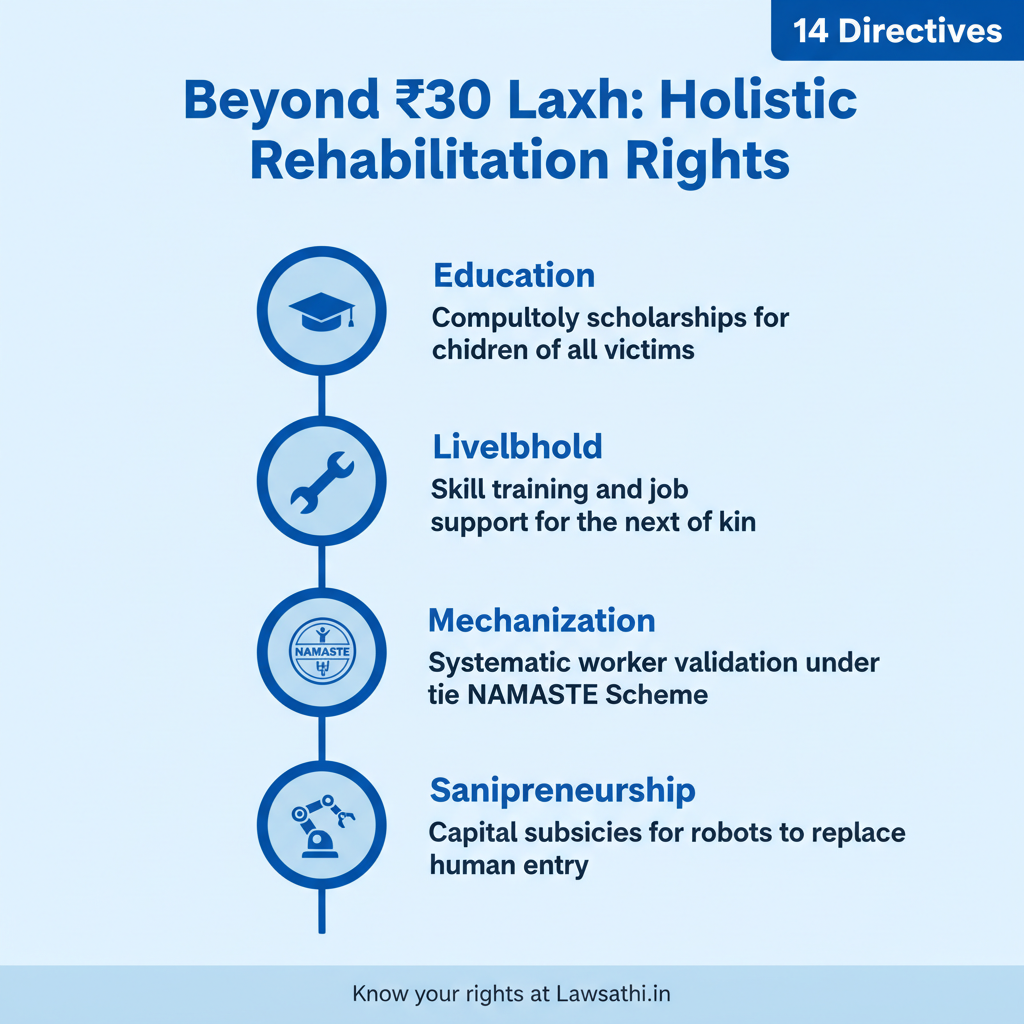
Additionally, rehabilitation must involve more than just a one-time payment. For example, the State must provide scholarships for the children of victims. Moreover, they must offer skill training and livelihood support to the next of kin. This ensures long-term stability for the family.
Accountability of Local Municipalities
Municipalities can no longer hide behind third-party contractors. Specifically, the Court held that the agency is still liable if a death occurs during outsourced work. Therefore, local bodies must enforce safety rules strictly. Most importantly, they must ensure no worker enters a sewer without protective gear.
Procedural Insights for Lawyers Filing Compensation Claims
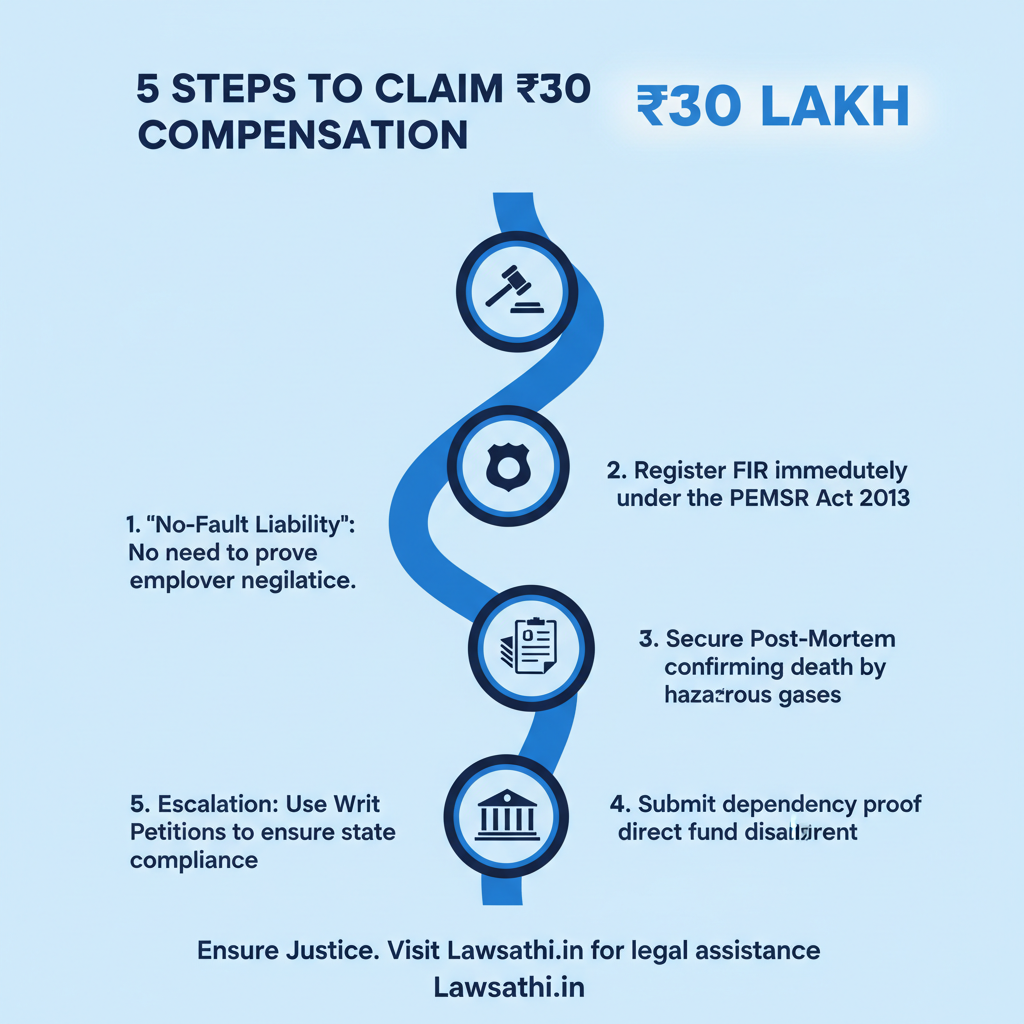
Lawyers handling these cases must navigate a “no-fault” liability principle. This means the claimant does not need to prove negligence by the employer. Instead, the mere fact of a sewer death triggers the right to compensation. This right is protected under Article 21 and Article 23.
Necessary Documentation for Filing
To file a successful claim, several documents are essential. First, an FIR must be registered under the PEMSR Act 2013. Second, the post-mortem report must confirm the cause of death. Typically, this is asphyxiation or related hazards. Finally, documentation proving the dependent’s relationship is vital for fund disbursement.
Role of High Courts in Monitoring
Moreover, the Supreme Court empowered High Courts to monitor these cases actively. In fact, the Court recently pulled up the Haryana government for non-payment. Lawyers should therefore approach High Courts via Writ Petitions if delays occur. This keeps the State Social Welfare Department accountable.
Challenges in Implementation and Enforcement
Despite clear laws, under-reporting remains a massive hurdle. Many contractors fail to report deaths to avoid blacklisting. Consequently, some states have submitted skeptical affidavits. These documents often claim “zero deaths” despite evidence to the contrary.
The “Hazardous Cleaning” Loophole
Another challenge is the linguistic distinction between different types of cleaning. Some agencies argue that cleaning sewers with basic gear is safe. However, the SC clarified that cleaning without proper safety equipment is illegal. Specifically, it is a form of forced labor.
Delays in Fund Disbursement
Furthermore, bureaucratic red tape often slows down the delivery of funds. Families in distress often wait for years to receive their legal dues. This delay forces many into a cycle of debt. As a result, the delay defeats the entire purpose of the compensation.
The Way Forward: Technology as a Solution
The ultimate goal is the complete mechanization of sewer cleaning. Programs like the NAMASTE scheme are designed to replace human labor with machines. By late 2025, over 88,000 workers had been validated under this ecosystem. This shift marks a new era for sanitation.
Transitioning to “Sanipreneurs”
Additionally, the government offers capital subsidies for sanitation vehicles. This shift allows former workers to become “Sanipreneurs” or owners of cleaning robots. Therefore, technology acts as a bridge to dignity. It also creates much safer working conditions for everyone involved.
Conclusion and Final Thoughts
The increase in manual scavenging compensation supreme court standards marks a significant legal victory. While money cannot replace a life, ₹30 lakh provides a crucial foundation. Survivors can use this to rebuild. Finally, it is our duty as lawyers to ensure these mandates are enforced nationwide.
Stay ahead of landmark judgments and streamline your legal research with LawSathi’s AI-powered practice management tools. Optimize your firm’s efficiency today.