In a significant intervention, the Supreme Court sets aside Allahabad HC order that has sent ripples through India’s criminal justice system. On February 10, 2026, a three-judge Bench headed by Chief Justice of India Surya Kant delivered a landmark judgment. This decision corrects “insensitive” judicial observations.
Consequently, this decision marks a turning point in how courts approach sexual offence trials in India. Specifically, the judgment came through suo motu cognizance taken by the Supreme Court. Senior Advocate Shobha Gupta, founder of NGO ‘We the Women of India’, had sent a letter. In it, she highlighted the problematic nature of the High Court’s observations.
Therefore, the Supreme Court set aside the erroneous order. Additionally, it initiated the process of framing comprehensive guidelines for trial courts handling sexual offence cases. For legal practitioners across India, this judgment carries immense significance.
Moreover, it clarifies the distinction between “preparation” and “attempt” in sexual assault cases. Furthermore, it establishes a framework for ensuring judicial sensitivity in cases involving vulnerable victims.
Background: The Controversial Allahabad High Court Order
The Case Facts That Triggered National Outrage
The controversy originated from an incident involving an 11-year-old minor girl in Kasganj, Uttar Pradesh. Two accused persons, Pawan and Akash, allegedly grabbed the victim’s breasts and broke the string of her pyjama. Subsequently, they attempted to drag her beneath a culvert. Fortunately, passers-by intervened, forcing the accused to flee the scene.
The Trial Court had issued summons under Section 376 IPC (rape) read with Section 18 of the POCSO Act. This charge recognized the act as an attempt to commit rape. However, the matter reached the Allahabad High Court through a revision petition filed by the accused.
What the High Court Observed
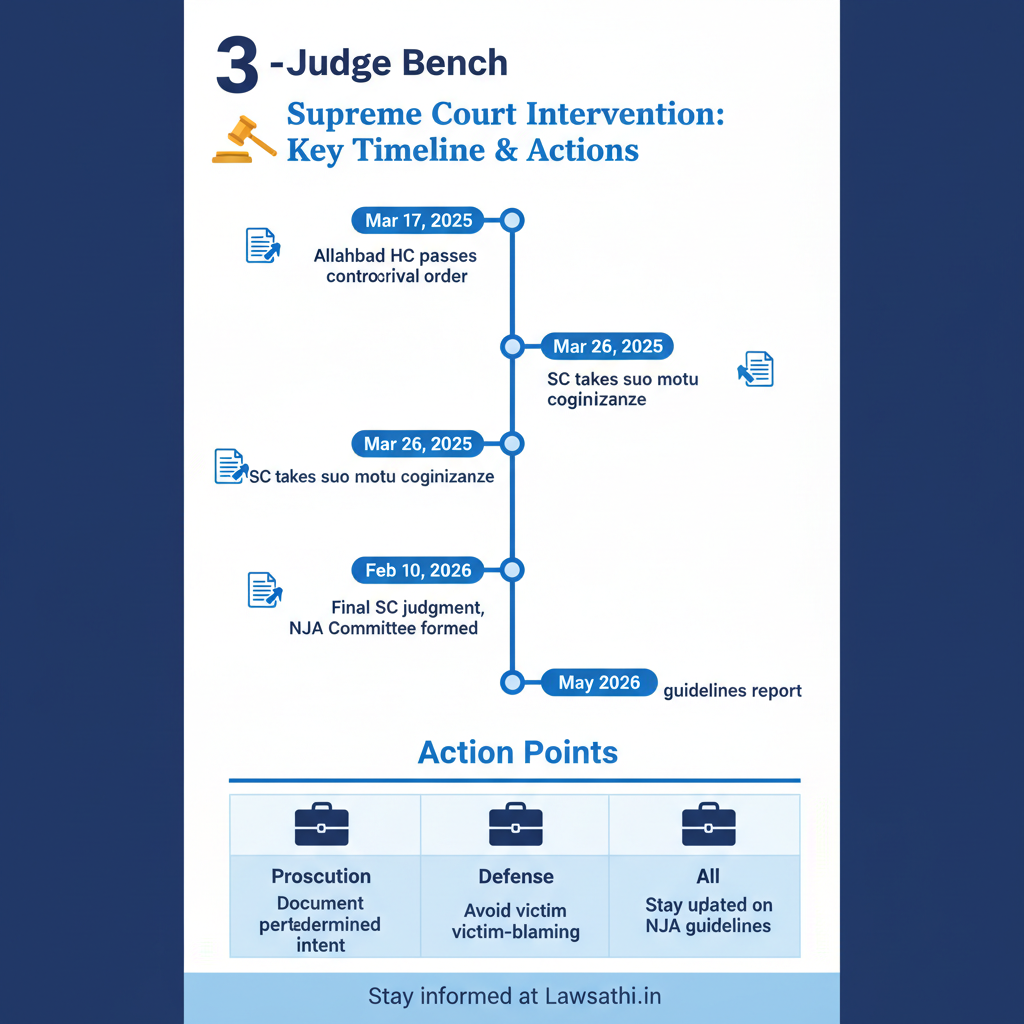
On March 17, 2025, Justice Ram Manohar Narayan Mishra of the Allahabad High Court passed an order. This order sparked nationwide controversy. Specifically, the High Court modified the charges from Section 376 IPC to the lesser offence of Section 354-B IPC. This section deals with assault or use of criminal force with intent to disrobe a woman.
In particular, the reasoning employed by the High Court proved controversial. Justice Mishra held that the acts constituted only “preparation” and not “attempt” to commit rape. He observed that “the difference between preparation and actual attempt to commit an offence consists chiefly in the greater degree of determination.”
Why the Order Drew Widespread Criticism
Consequently, the order immediately drew sharp criticism from legal practitioners, women’s rights organizations, and the general public. Critics argued that the reasoning trivialized the trauma experienced by the minor victim. Additionally, many questioned whether technical distinctions should override the substantive nature of sexual assault. This concern was noted in coverage by Bar & Bench.
The legal provisions involved in this case included: – Section 376 IPC (Rape) – Section 354-B IPC (Assault with intent to disrobe) – Section 511 IPC (Punishment for attempting offences) – Section 18 POCSO Act (Attempt to commit offence) – Sections 9/10 POCSO Act (Aggravated sexual assault)
Following the public outcry, Senior Advocate Shobha Gupta wrote to the Supreme Court. Consequently, the apex court took suo motu cognizance on March 26, 2025. The Court called the High Court’s observations “shocking” and “insensitive,” according to LiveLaw reports.
The Supreme Court’s Verdict: Setting Aside the Order
Grounds for Setting Aside the High Court Order
The Supreme Court identified multiple grounds for setting aside the Allahabad High Court’s order. First, the Bench found “patently erroneous” application of settled criminal jurisprudence. Second, the Court noted a misapplication of the distinction between preparation and attempt in criminal law.
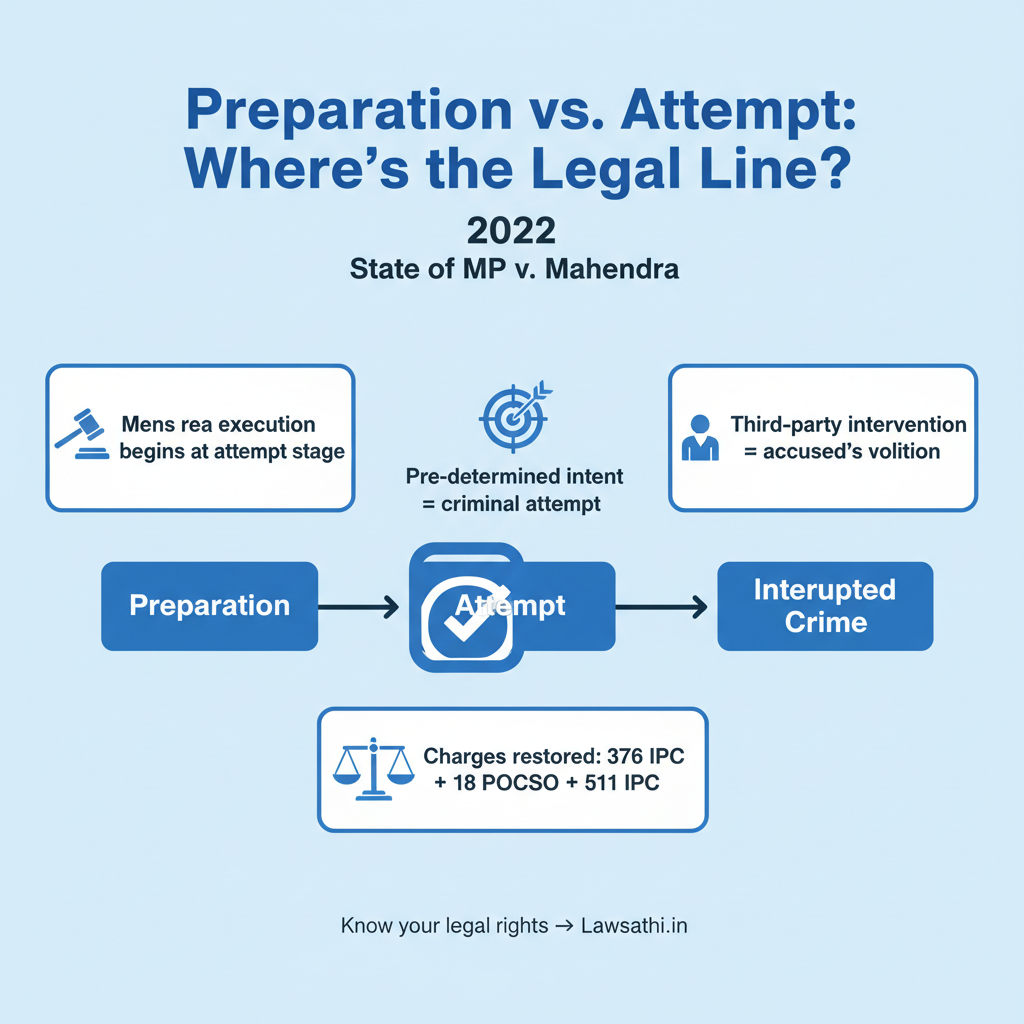
Chief Justice Surya Kant, who authored the judgment, referred to the precedent established in State of Madhya Pradesh v. Mahendra alias Golu (2022). This earlier judgment had clarified that an attempt is the execution of mens rea after preparation. The Supreme Court emphasized that the accused stopped their actions only because witnesses arrived at the scene.
Understanding the Preparation vs. Attempt Distinction
The Supreme Court sets aside Allahabad HC order by clarifying a crucial legal principle. Specifically, the Court observed: “A bare perusal of these allegations leaves no modicum of doubt that the case sought to be made out is that the accused persons proceeded with a pre-determined intent to commit an offence under Section 376 of the IPC on her.”
Furthermore, the judgment stated: “The mens rea involved had begun to be executed.” The only reason the crime was not completed was the intervention of third-party witnesses. Therefore, the act clearly crossed from mere “preparation” to an “attempt” to commit rape. This distinction was detailed in LiveLaw’s judgment analysis.
Restoration of Original Charges
As a result, the Supreme Court restored the summoning order passed by the Trial Court. Consequently, the original charges under Section 376 IPC with Section 18 POCSO Act have been reinstated. The trial will now proceed on the premise that the accused must face trial under Section 376 along with Section 511 IPC and Section 18 of POCSO.
However, the Supreme Court clarified an important point. The observations in the judgment should not be considered as an opinion on the guilt or innocence of the accused. Therefore, the Trial Court must still evaluate the evidence and determine guilt independently.
New Guidelines Initiated for Sexual Offence Trials
Constitution of the National Judicial Academy Committee
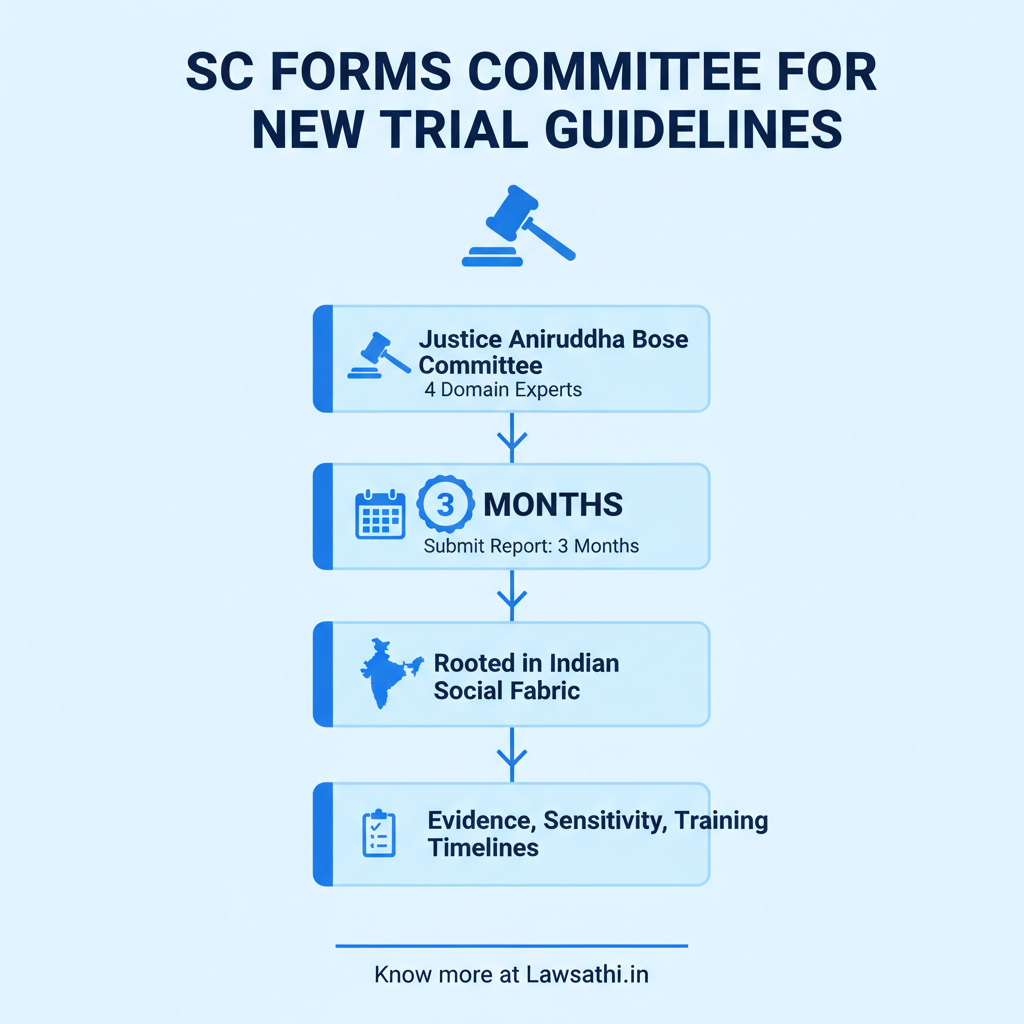
The most significant outcome of this judgment extends beyond setting aside the specific order. Specifically, the Supreme Court constituted a committee headed by Justice Aniruddha Bose, former Supreme Court Judge and current Director of the National Judicial Academy, Bhopal. This committee comprises the Chairperson plus four domain experts, including practitioners, academicians, and social workers.
Moreover, the committee has been mandated to submit its report within three months. Its mandate involves “Developing Guidelines to Inculcate Sensitivity and Compassion into Judges and Judicial Processes in the Context of Sexual Offences and other Vulnerable Cases.”
Key Directions for the Guidelines Committee
The Supreme Court provided specific directions for the committee’s work. First, the committee must consider previous measures—both judicial and administrative—that have been implemented. Second, it must assess the on-ground results of existing measures and identify gaps.
A particularly important direction concerns linguistic diversity. The Supreme Court noted that offensive words and expressions in local dialects often go unnoticed. According to the judgment: “There are various examples of offensive words and expressions, the use of which would ordinarily constitute an offence under our penal laws, but they are openly spoken by members of our society in local dialects.”
Guidelines Rooted in Indian Social Fabric
The Supreme Court sets aside Allahabad HC order while establishing a crucial principle for the new guidelines. Specifically, the Court emphasized that guidelines must not be “loaded with heavy, complicated expressions borne from foreign languages and jurisdictions.” Instead, they must be contextualized in the real and lived experience of stakeholders in the Indian judicial process.
In fact, CJI Kant orally commented that the Supreme Court’s 2023 handbook on gender stereotypes was somewhat “Harvard-oriented.” This observation reflects the Court’s intent to make the new guidelines accessible and practical. Therefore, the guidelines must reflect Indian social ethos, values, and social fabric. This approach was reported by LiveLaw.
Draft Guidelines Title and Scope
The draft guidelines have been titled: ‘Draft Guidelines for the Approach of Judges and the Judicial System When Dealing with Cases of Sexual Offences and other Similarly Sensitive Occurrences Involving Vulnerable Victims, Complainants, and/or Witnesses.’
This comprehensive scope indicates the Supreme Court’s intention to address systemic issues. Consequently, the guidelines will likely cover: – Recording of evidence under Section 164 CrPC – Avoiding stereotypical or intrusive questions to victims – Mandatory sensitivity training protocols for trial judges – Timeline directions for completion of trials in sexual offence cases
Legal Analysis: Implications for Trial Courts & Practitioners
Impact on Cross-Examination Practices
The Supreme Court sets aside Allahabad HC order in a manner that has far-reaching implications for trial practice. Therefore, legal practitioners must now reconsider their approach to cross-examination in sexual offence cases. The existing Delhi High Court Guidelines for Recording Evidence of Vulnerable Witnesses (2024) already provide a framework for minimizing secondary victimization.
However, the new guidelines from the National Judicial Academy will likely establish national standards. Specifically, these standards will address creating safe environments for testimony. Additionally, they will cover conducting in-camera trials and utilizing video conferencing for vulnerable witnesses.
Shift from Technical to Empathetic Approach
The judgment signals a fundamental shift in judicial approach. Courts must now look beyond technical distinctions to ensure substantive justice. Furthermore, the focus must shift to the victim’s trauma and dignity rather than narrow interpretation of acts.
For trial courts, this means: – Evaluating evidence with sensitivity to victim trauma – Avoiding observations that trivialize the nature of the offence – Understanding that incomplete acts due to third-party intervention still constitute attempts
Precedent Value for Future Appeals
This judgment establishes strong precedent value for appellate courts. Specifically, High Courts must now avoid trivializing sexual offences through overly technical reasoning. Furthermore, the principle that third-party intervention preventing completion of rape does not reduce charges to mere “preparation” stands firmly established.
Public Prosecutors should note their enhanced responsibilities under this framework. Therefore, they must effectively present evidence of “mens rea” and “attempt” in appropriate cases. Additionally, proper documentation of facts showing predetermined intent becomes crucial.
Practical Guidance for Legal Practitioners
For lawyers handling sexual offence cases, several practical steps become essential:
For Prosecution Counsel: – Document all evidence thoroughly, including acts showing predetermined intent – Reference precedents like State of Madhya Pradesh v. Mahendra alias Golu (2022) – Advocate for victim dignity throughout proceedings
For Defense Counsel: – Understand the heightened sensitivity requirements – Avoid cross-examination strategies that may be seen as victim-blaming – Focus on factual disputes rather than character attacks
For All Practitioners: – Stay updated on the National Judicial Academy guidelines expected within three months – Review existing vulnerable witness guidelines from Delhi High Court – Prepare for potential changes in trial court procedures
Conclusion: Strengthening the Justice Delivery System
The Supreme Court sets aside Allahabad HC order in a manner that reinforces fundamental principles of justice. Specifically, the Court emphasized that adjudication in sexual offence matters must be rooted not only in law but also in empathy. As the judgment stated: “Our decisions as participants in the legal process… must reflect the ethos of compassion, humanity, and understanding.”
This judgment represents more than correction of a single erroneous order. Rather, it initiates systemic reform in how trial courts handle sexual offence cases. The National Judicial Academy Committee’s guidelines, expected within three months, will provide concrete direction for trial judges across India.
For the legal community, this judgment serves as a reminder. Courts cannot deliver “complete justice” if they remain “inconsiderate” to the vulnerabilities of litigants. Therefore, the judiciary must balance technical legal reasoning with human compassion. This principle should guide all future proceedings in sexual offence cases.
Key Timeline for Practitioners
– March 17, 2025: Allahabad HC passes controversial order – March 26, 2025: Supreme Court takes suo motu cognizance and stays key paragraphs – December 8, 2025: Supreme Court stays entire judgment with interim clarification – February 10, 2026: Final judgment delivered, NJA Committee constituted – May 2026 (Expected): National Judicial Academy Committee to submit guidelines report
Legal practitioners handling sexual offence cases should monitor these developments closely. Furthermore, the forthcoming guidelines will significantly impact trial procedures across India. Those who prepare now will be better positioned to serve their clients effectively.
Stay ahead with the latest legal updates. Use LawSathi’s AI-powered platform to track landmark judgments and manage your criminal litigation practice efficiently.