The legal landscape for personal liberty in India shifted significantly on January 11, 2026. On this day, the Supreme Court delivered a landmark judgment in the Delhi Riots “larger conspiracy” case. Therefore, this ruling has fundamentally redefined the UAPA bail framework Supreme Court standards. These new rules apply to defense lawyers and accused individuals across the country.
Introduction: The Landmark Shift in UAPA Bail Jurisprudence
The Supreme Court recently decided a batch of special leave petitions involving high-profile activists. These included Umar Khalid, Sharjeel Imam, and Gulfisha Fatima. However, the verdict was not uniform for all petitioners. Instead, the Court established a “split framework” for bail based on the specific role of the accused.
A New Hierarchy of Culpability
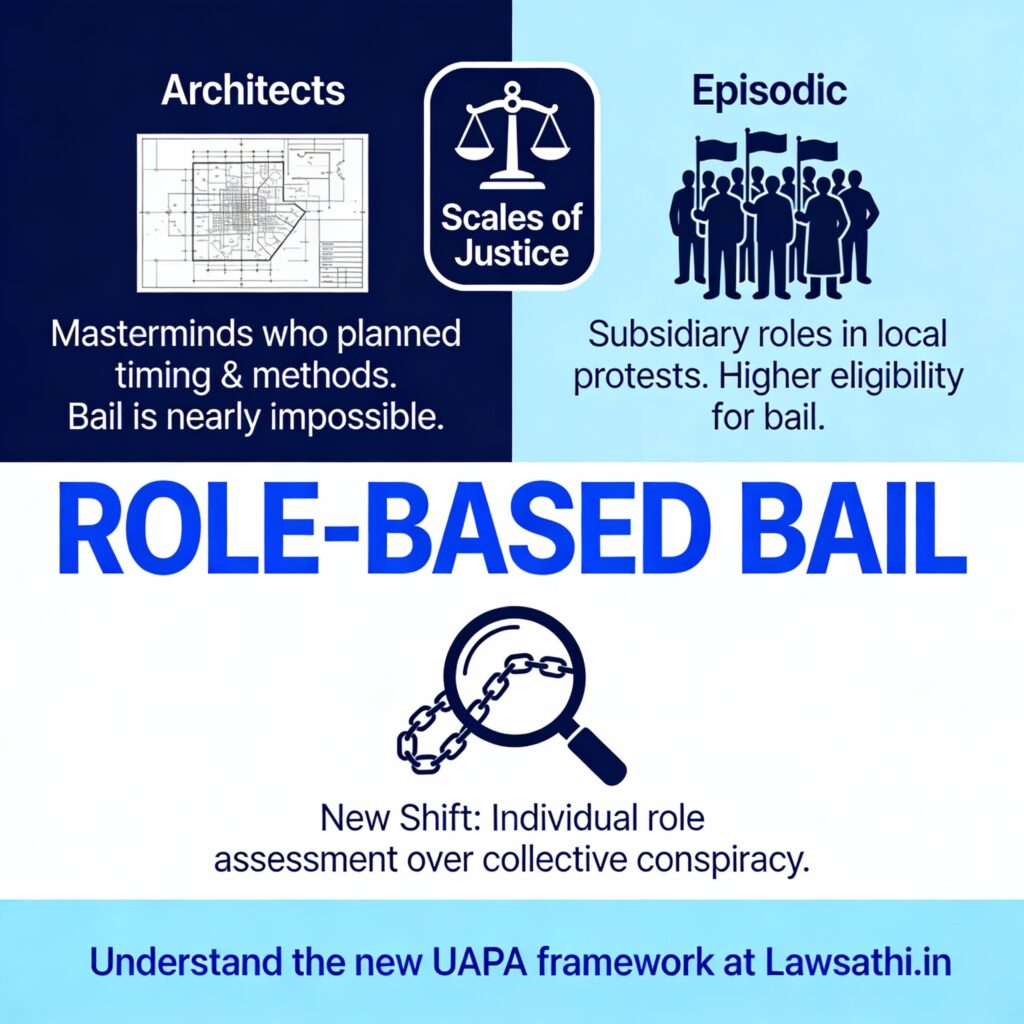
In this 2026 ruling, the Court denied bail to Umar Khalid and Sharjeel Imam. In contrast, it granted bail to five others, including Gulfisha Fatima and Meeran Haider. This suggests a new judicial trend. Furthermore, the Bench moved away from examining the conspiracy as a single, collective unit.
Therefore, the Court now distinguishes between “architects” of a crime and subsidiary participants. This shift fundamentally changes how defense lawyers must approach UAPA cases. In fact, the “delay in trial” argument is no longer a guaranteed path to freedom.
Evolving Standards of Liberty
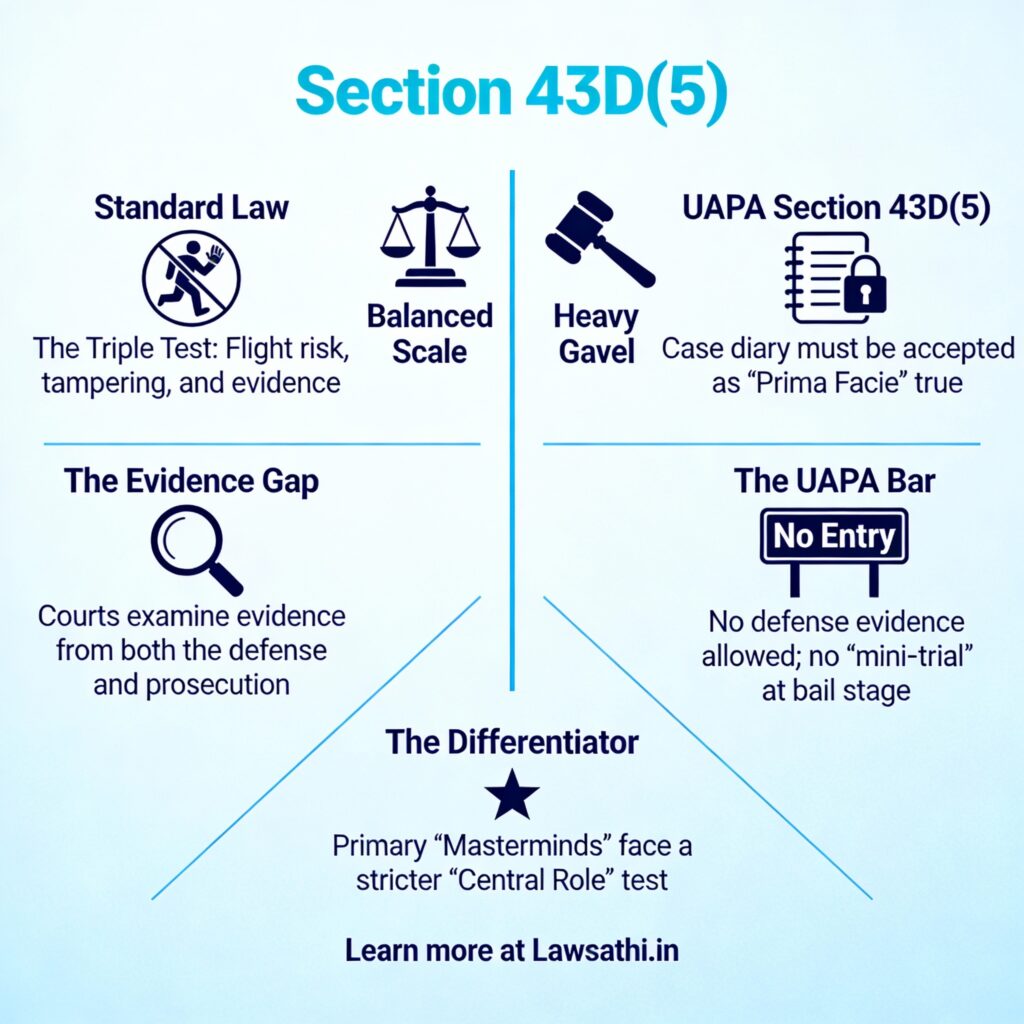
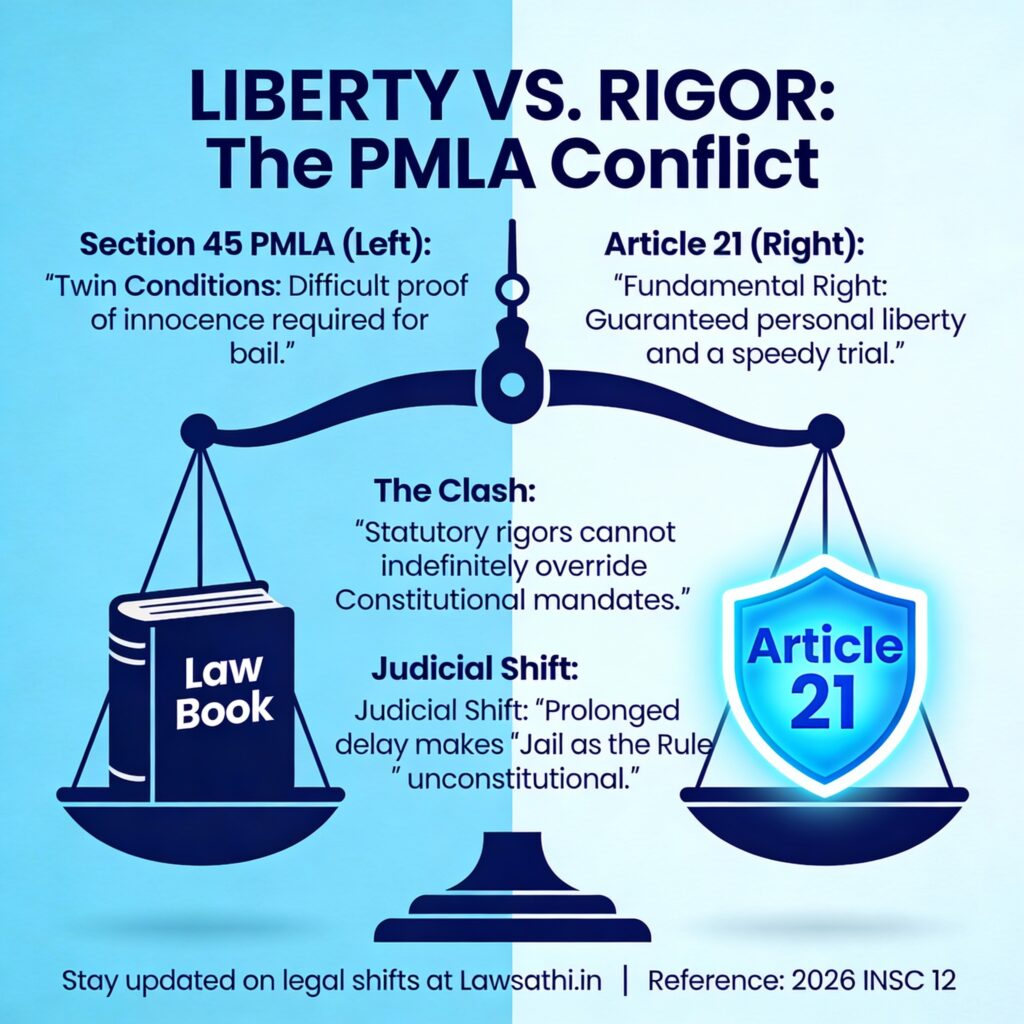
The evolution of bail standards under the Unlawful Activities (Prevention) Act has reached a restrictive peak. Previously, lawyers relied on Article 21 to argue against prolonged pre-trial detention. However, the Court now views the statutory scheme of UAPA as a clear legislative judgment. Consequently, the balance has shifted closer toward national security interests.
Understanding Section 43D(5) and the ‘Prima Facie’ Hurdle
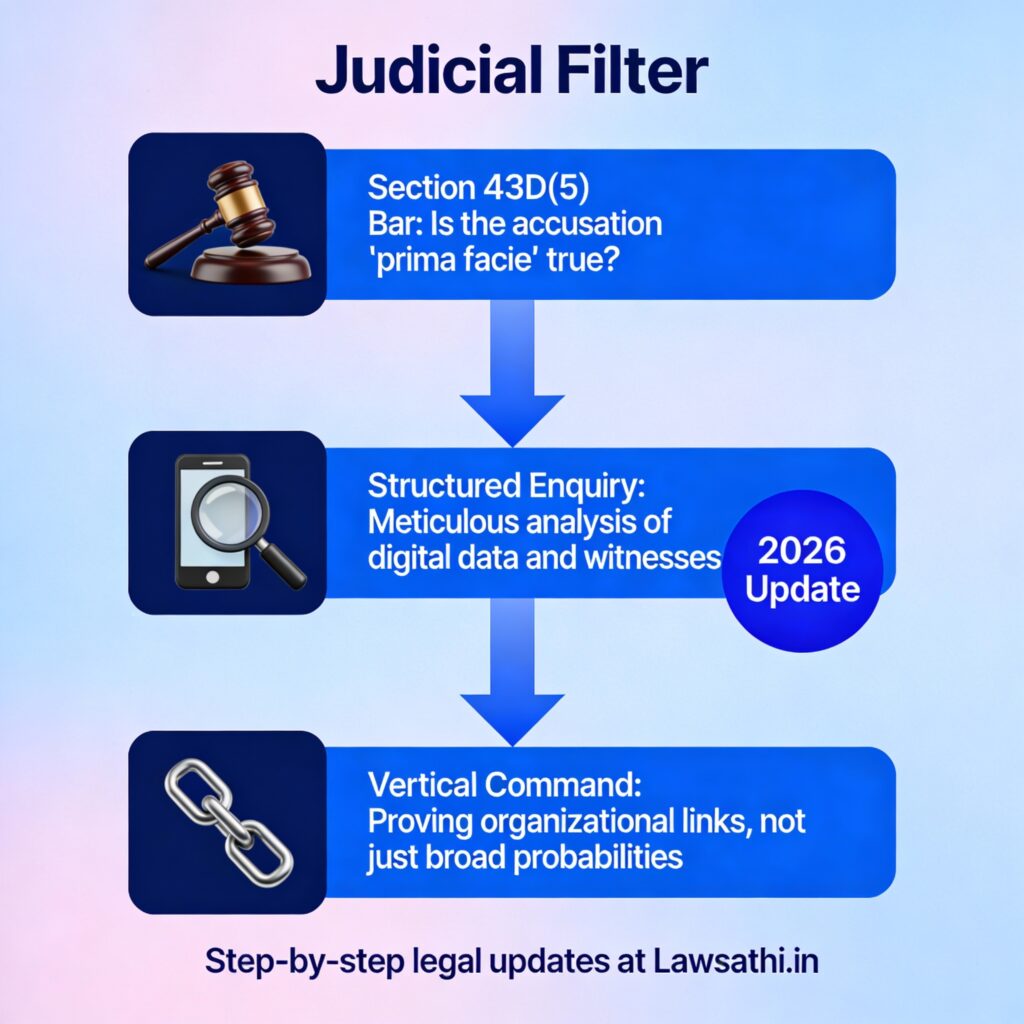
The legacy of the Zahoor Ahmad Shah Watali (2019) case remains a central pillar of UAPA law. Specifically, Section 43D(5) prohibits bail if the court finds “reasonable grounds.” These grounds must suggest that the accusation is prima facie true. The Supreme Court’s 2026 ruling adds a more rigorous “structured enquiry” to this process.
Beyond Broad Probabilities
Earlier interpretations often limited judicial scrutiny to the “broad probability” of the prosecution’s case. Now, judges are performing a more meticulous analysis. For example, the Court in the Umar Khalid case scrutinized witness statements and digital communications with high precision. Moreover, they looked for a “vertical chain of command” within the evidence.
Architectural vs. Episodic Roles
The Court now differentiates between an “architectural” role and an “episodic” role. An architect plans the timing and method of an event. On the other hand, an episodic participant merely joins a local protest. Specifically, if a lawyer’s client is labeled an “architect,” the Section 43D(5) bar becomes almost insurmountable. This is reflected in recent Bar and Bench reports.
The New ‘One-Year’ Rule: A Minimum Waiting Period for Liberty?
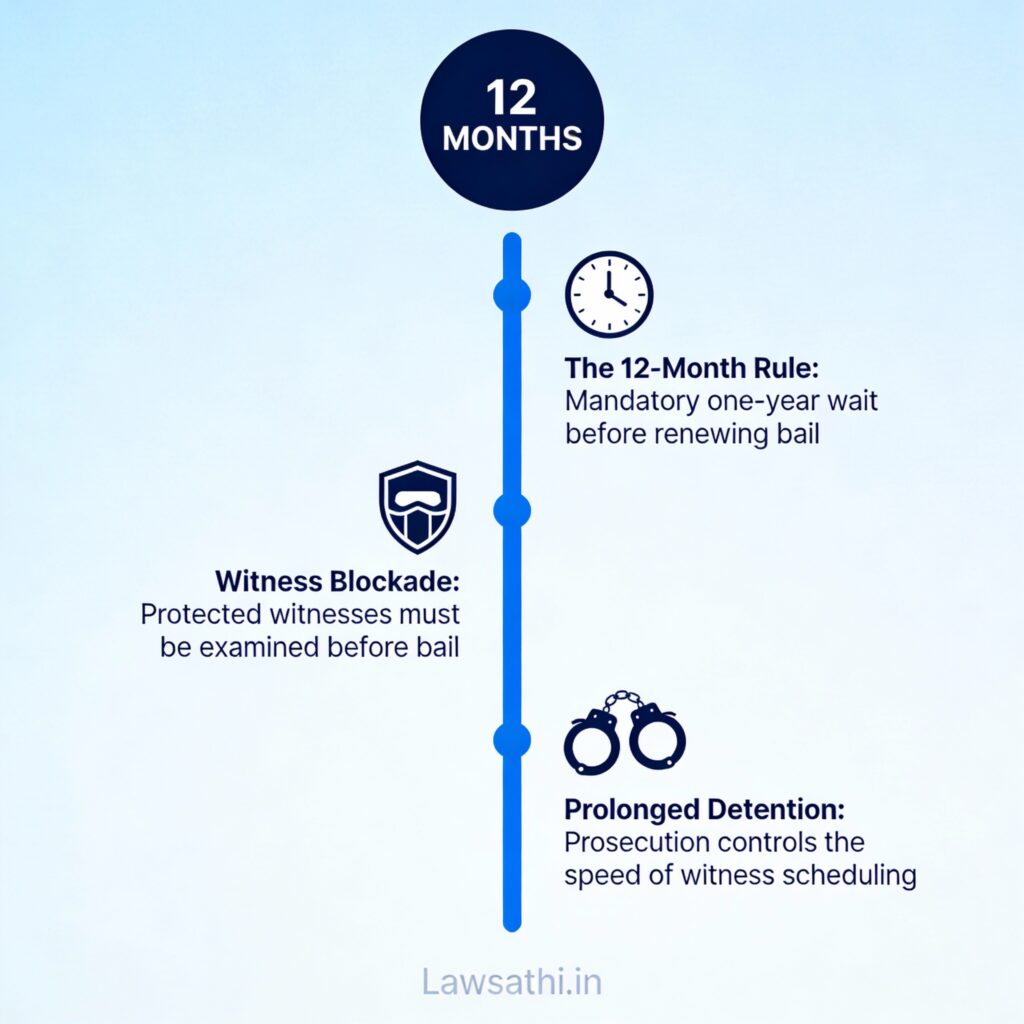
Perhaps the most controversial part of the judgment is the introduction of a temporal floor. The Court directed that specific accused persons can only renew their bail applications after one year. This “one-year” rule applies to those deemed “ideological drivers.”
Preventing Repetitive Litigation
The Bench, including Justice Aravind Kumar and Justice NV Anjaria, designed this rule to prevent “repetitive litigation.” They believe the trial should reach a crucial stage before liberty is reconsidered. As a result, some accused must wait another twelve months to apply again. This applies even after they have spent five years in jail.
Implications for Incarceration
This directive effectively sanctions a mandatory minimum period of further incarceration. It applies as long as the initial prima facie test is met. Furthermore, this persists even if the trial is moving slowly. For defense teams, this means the UAPA bail framework Supreme Court provides very few immediate exits for high-profile clients.
Protected Witnesses: The Requirement for Examination Before Bail
The role of protected witnesses has become a significant gatekeeper for liberty. The Supreme Court now views the examination of these witnesses as a prerequisite for adjudicating bail. Specifically, the Court signaled that their testimony is vital. It helps judges in identifying the true “masterminds.”
The Challenge for the Defense
This creates a difficult situation for defense lawyers. For instance, the prosecution often controls the speed of the trial. Therefore, the defense must wait in custody until the State produces these hidden witnesses. Unfortunately, this wait can last months or even years.
Impact on Right to a Speedy Trial
Courts generally agree that Article 21 protects the right to a speedy trial. However, in UAPA cases, the Supreme Court has noted that the law prioritizes national security. Consequently, a lack of transparency regarding witnesses makes it harder to challenge the prosecution’s narrative. This is especially true during the early stages of the trial.
Strategic Implications for Criminal Defense Lawyers
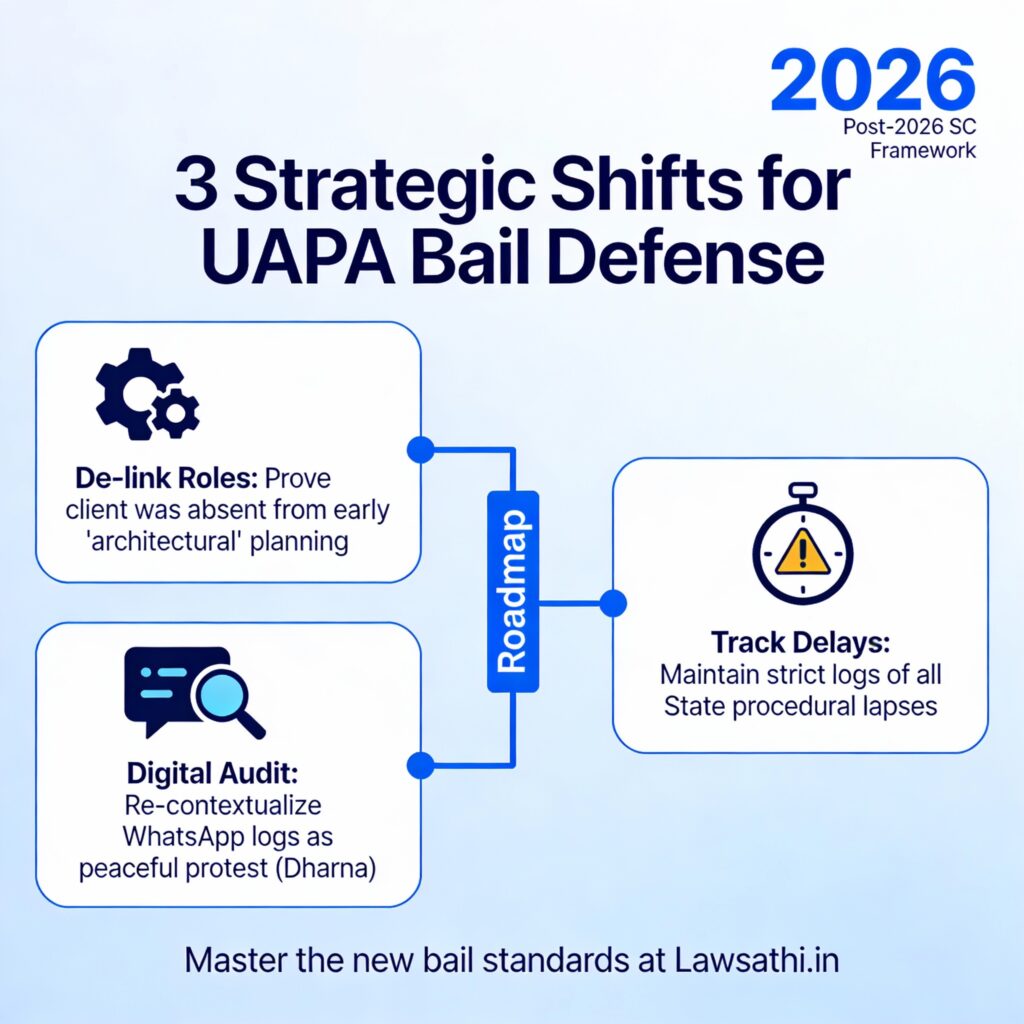
Given this new framework, defense strategies must evolve immediately. Lawyers should no longer rely solely on general “civil rights” arguments. Instead, they must focus on “role-de-linking.” Specifically, this involves proving that a client was not part of the “architectural” planning stage.
Focusing on Procedural Delays
The Court has stated that delay is not a “trump card.” However, it admits that extreme delay triggers heightened judicial scrutiny. Therefore, lawyers should document every single systemic trial delay. For example, if thousands of pages of documents are not served on time, this becomes a critical procedural ground.
Digital Evidence Defense
The 2026 judgment placed heavy emphasis on digital communications. Specifically, the Court differentiated between a conventional dharna and a chakka jam. They treated the latter as “disruptive by design.” Consequently, defense teams must offer counter-analyses of WhatsApp logs. They must work to show a total lack of disruptive intent.
Conclusion: The Future of Personal Liberty in National Security Cases
The UAPA bail framework Supreme Court has entered a new, more restrictive era. By splitting the accused into tiers based on their “role,” the Court has changed the path to liberty. It has made it easier for subsidiary participants to get bail. However, it has simultaneously made it much harder for “ideological drivers.”
The balance between national security and individual rights remains a delicate issue. While some see this as a necessary step for law and order, others worry about potential for indefinite detention. Most importantly, defense lawyers must adapt to these “structured enquiries.” This is the only way to protect their clients’ right to liberty effectively.
Managing complex UAPA cases requires meticulous documentation. Therefore, track your deadlines and research with care. Use LawSathi’s AI-powered research and case management tools to stay ahead of evolving legal precedents. Book a demo today.