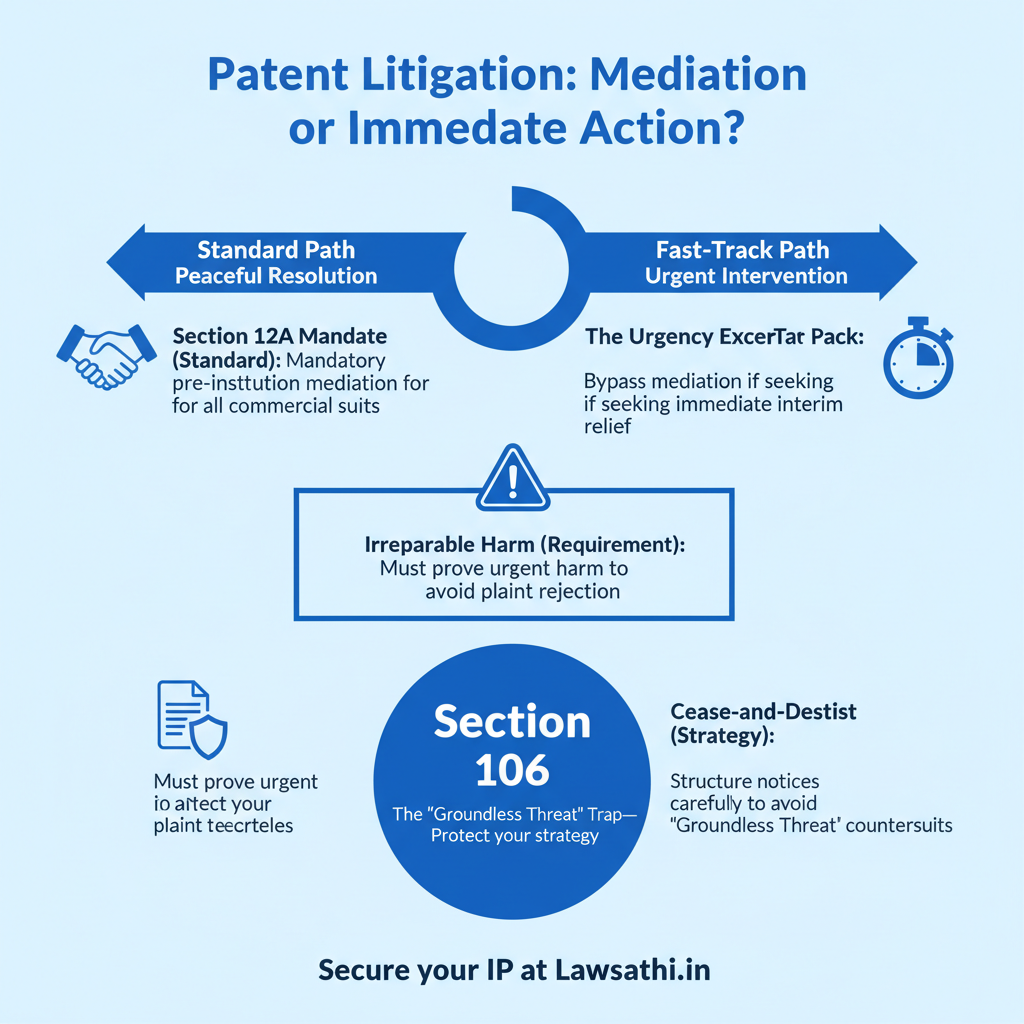
Protecting intellectual property has become vital for R&D-driven industries. In today’s competitive market, innovation is the primary driver of growth. Therefore, understanding how to effectively file a patent infringement suit in India is a critical skill. Section 48 of the Patents Act 1970 grants patentees exclusive rights. Specifically, it prevents unauthorized third parties from making, using, or selling their inventions. However, the legal road to enforcing these rights involves navigating complex procedural hurdles.
The Changing Burden of Proof
In recent years, the Indian legal landscape has shifted significantly. We have seen a movement towards much stronger IP enforcement across the board. Specifically, Section 104A of the Patents Act has changed the “burden of proof” for process patents. In many cases, the defendant must now prove they used a different process. Consequently, high-stakes litigation often revolves around technical data and complex claim constructions.
Rising Importance of IP Enforcement
Moreover, the creation of specialized Intellectual Property Divisions (IPD) signifies a faster judicial approach. For instance, the Delhi High Court has been at the forefront of implementing IPD rules for streamlined adjudication. As a result, lawyers must be faster and more precise in their filings. Furthermore, they must adapt to these digital-first rules to stay ahead of the competition.
Jurisdictional Framework: Where to File the Suit
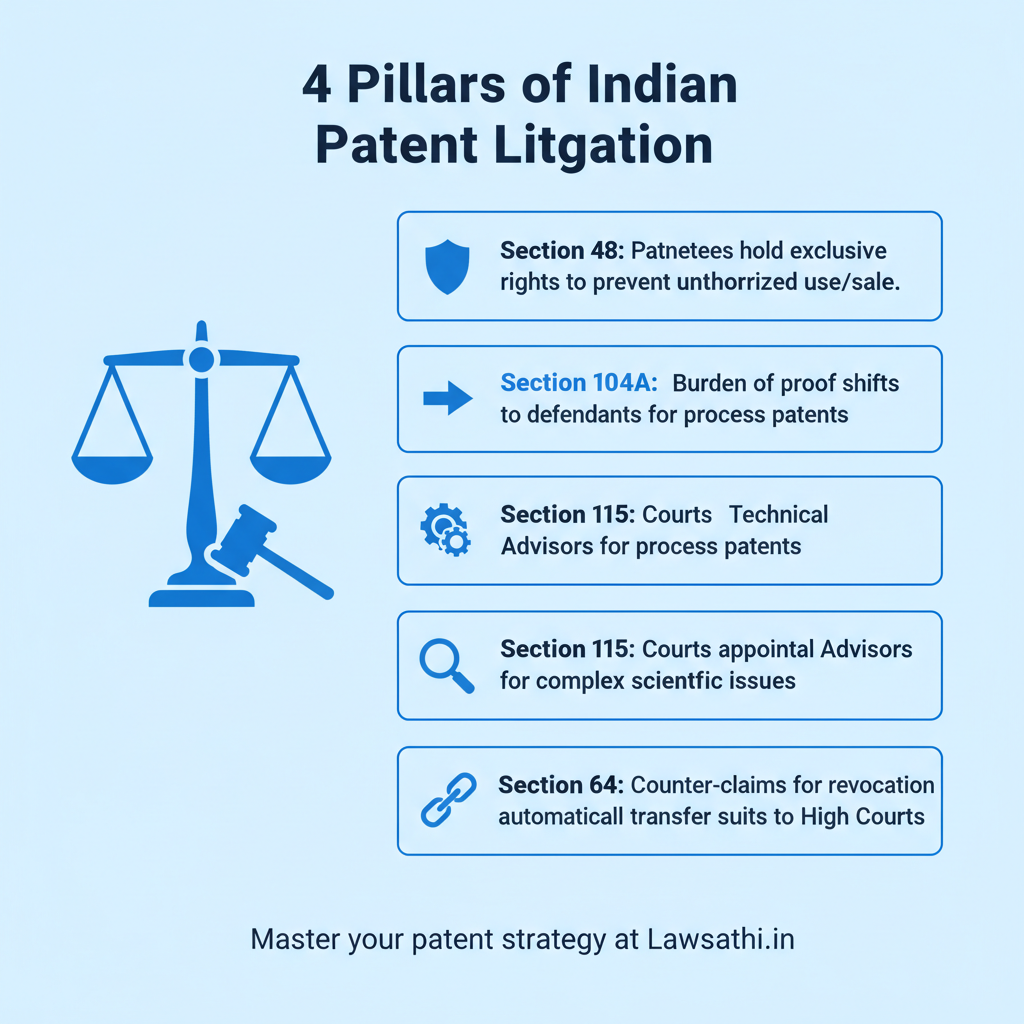
Choosing the right forum is the first major step in any patent infringement suit in India. According to Section 104 of the Patents Act, you cannot file in a court inferior to a District Court. This requirement ensures that senior judicial officers handle these technically complex matters. Additionally, the Commercial Courts Act of 2015 now governs most patent disputes.
Commercial Courts and Pecuniary Limits
Specifically, patent suits are classified as “commercial disputes” under this Act. Therefore, you must meet the specified pecuniary value threshold to access these specialized courts. In cities like Delhi, Mumbai, Chennai, and Kolkata, the High Courts have “Ordinary Original Civil Jurisdiction.” Consequently, most high-value patent litigation begins directly in these High Courts to leverage their expertise.
Territorial Jurisdiction and Cause of Action
Furthermore, territorial jurisdiction follows the rules set by Section 20 of the Code of Civil Procedure (CPC). You can generally file where the defendant resides or where the cause of action arises. For example, a defendant might sell an infringing product on an e-commerce platform. If that platform is accessible in Delhi, the Delhi High Court may exercise jurisdiction.
The Pre-Suit Phase: Mandatory Mediation and Cease-and-Desist
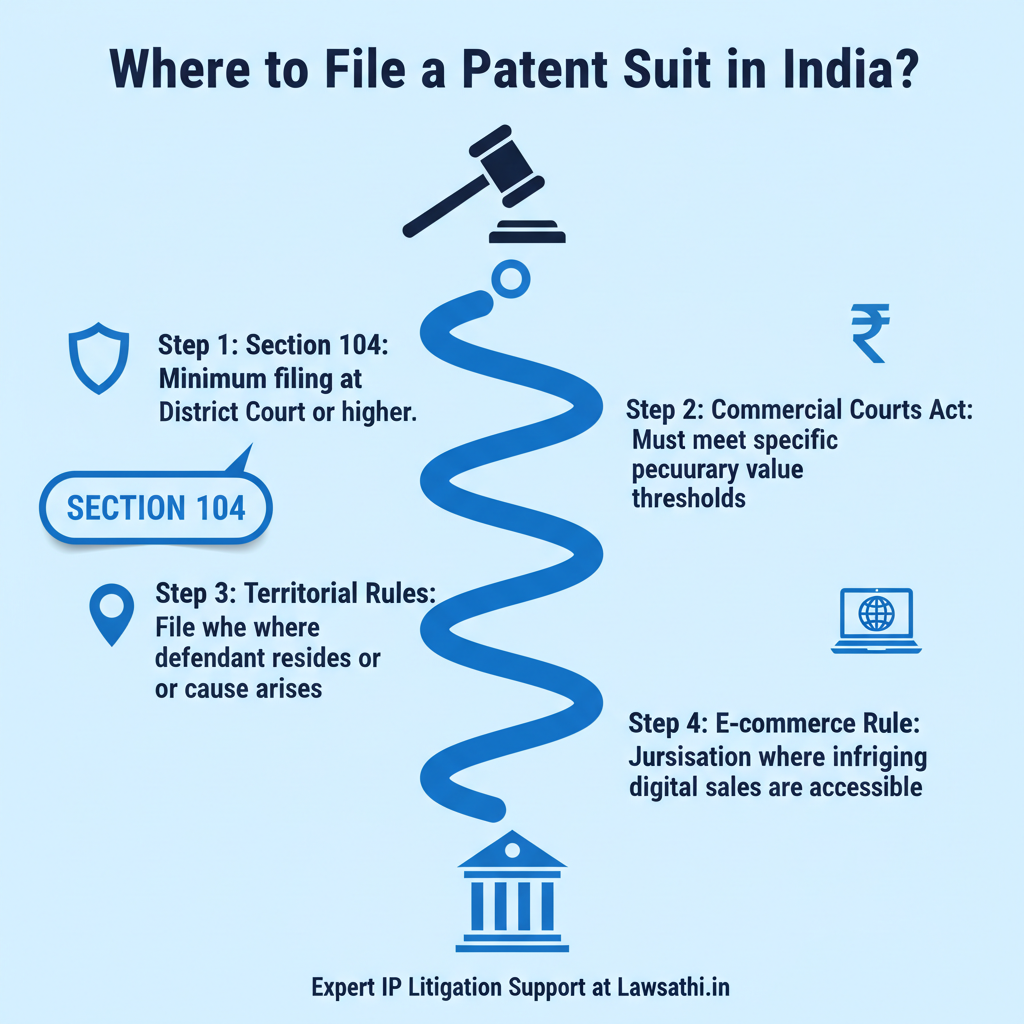
Before approaching the court, you must consider the requirements of Section 12A of the Commercial Courts Act. This section demands mandatory pre-institution mediation for most commercial suits. However, a significant exception exists if you require “urgent interim relief.” In patent cases, most plaintiffs seek immediate injunctions to stop ongoing market damage.
Proving Urgency to Bypass Mediation
To bypass mediation, you must demonstrate a genuine need for immediate judicial intervention. For instance, the Supreme Court has ruled that ongoing IPR infringement often justifies skipping mediation. Nevertheless, failing to prove this urgency can lead to the rejection of your plaint. Therefore, your initial pleadings must clearly articulate the irreparable harm caused by delay.
Avoiding Groundless Threat Countersuits
Similarly, you must draft Cease-and-Desist notices with extreme caution. Under Section 106 of the Patents Act, a person can sue you for making “groundless threats.” If your notice is too aggressive without a solid basis, the court may grant an injunction against you. Thus, you should always ensure your patent is valid. Moreover, you must document the infringement clearly before sending formal letters.
Interim Relief Strategies: Protecting Rights Early
Victory in a patent infringement suit in India often happens at the interim stage. Because full trials can take years, an interim injunction is your most powerful tool. Courts apply the “Triple Test” to decide these applications. First, you must show a prima facie case. Second, you must prove the balance of convenience favors you. Finally, you must demonstrate that you will suffer irreparable loss.
Ex-Parte Orders and Local Commissioners
Sometimes, the element of surprise is necessary to preserve evidence. Therefore, you can seek an ex-parte ad-interim injunction without informing the defendant first. Additionally, the court may appoint a Local Commissioner to visit the defendant’s premises. This officer can seize infringing goods and inspect manufacturing processes. As a result, this prevents the destruction of vital evidence.
Defensive Strategies: Filing Caveats
On the other hand, defendants often file “Caveats” to prevent such surprise orders. A Caveat ensures the court must notify you before passing any orders against you. For example, companies in competitive sectors like electronics use this strategy frequently. Consequently, the Delhi High Court may refuse an injunction if the defendant presents a strong defense early on.
Standard Practice: From Plaint to Decree
Once the suit begins, documentation becomes the primary challenge. Your plaint must include patent certificates, detailed claim construction, and clear proof of infringement. Furthermore, the Patents (Amendment) Rules 2025 have updated how adjudication and penalties are handled. You must stay updated on these procedural shifts. Consequently, this will help you remain competitive in the landscape.
The Role of Scientific Advisors
Since patent law involves deep science, Section 115 of the Patents Act allows the court to appoint Scientific Advisors. These experts help the judge understand complex technical questions. For example, consider a case involving a computer-related invention. In this scenario, an advisor can clarify the “technical contribution” required for patentability.
Handling Counter-Claims for Revocation
Importantly, almost every defendant will file a counter-claim for patent revocation under Section 64. If you file in a District Court and a counter-claim is raised, the law requires an automatic transfer to the High Court. This maneuver is common. Therefore, you should prepare for the possibility of your case moving to a higher forum mid-litigation.
Managing Complex Patent Documentation with AI
A single patent infringement suit in India can involve thousands of pages of data. This includes prior art, expert testimonies, and technical drawings. Consequently, lawyers often struggle to organize this high-volume information. Traditional folders and spreadsheets are no longer sufficient for modern IP firms. Moreover, missing a single deadline can be fatal to your case.
Leveraging Technology for IP Disputes
Software helps you centralize your digital dashboard. For instance, you can use AI to extract data from voluminous patent specifications instantly. Furthermore, organizing your “evidence chain” digitally ensures you never lose track of a crucial statement. This efficiency allows you to focus on high-level strategy. Specifically, you spend less time searching for documents.
Conclusion
Successfully navigating a patent suit requires a mix of expertise, planning, and management. By understanding the nuances of the law, you can better protect your client’s innovations.
Streamline your patent litigation practice with LawSathi’s AI-enabled case management. Sign up for a free demo today. Experience how we handle complex IP documentation seamlessly.