The Indian judiciary began February 2026 with a series of transformative rulings. Chief Justice Surya Kant currently leads the Bench through a high-volume period. This period involves intense service law and constitutional litigation. Consequently, staying updated on the Supreme Court latest orders Feb 2026 is essential for every advocate.
Why the First Week of February Matters
The week of February 3rd established critical precedents regarding recruitment finality. It also defined administrative jurisdiction more clearly. These decisions will impact how High Courts handle employment disputes. Therefore, legal professionals must understand the shift toward judicial restraint.
Modern Practice and Case Law Inflation
Today, the Apex Court manages a peak in litigation involving recruitment quotas. It also addresses strict tribunal limits. Manual tracking of these daily orders has become nearly impossible for busy firms. Moreover, missing a single precedent like Anurag Sharma can weaken your entire argument.
Anurag Sharma vs. General Manager: Fact Sheet and Core Legal Questions
The case of Anurag Sharma vs. General Manager emerged from a complex dispute. It involves a petitioner who contested a selection process. Specifically, he was bypassed for a senior administrative rank. The dispute centered on whether the General Manager weighed technical qualifications properly.
Primary Legal Questions Raised
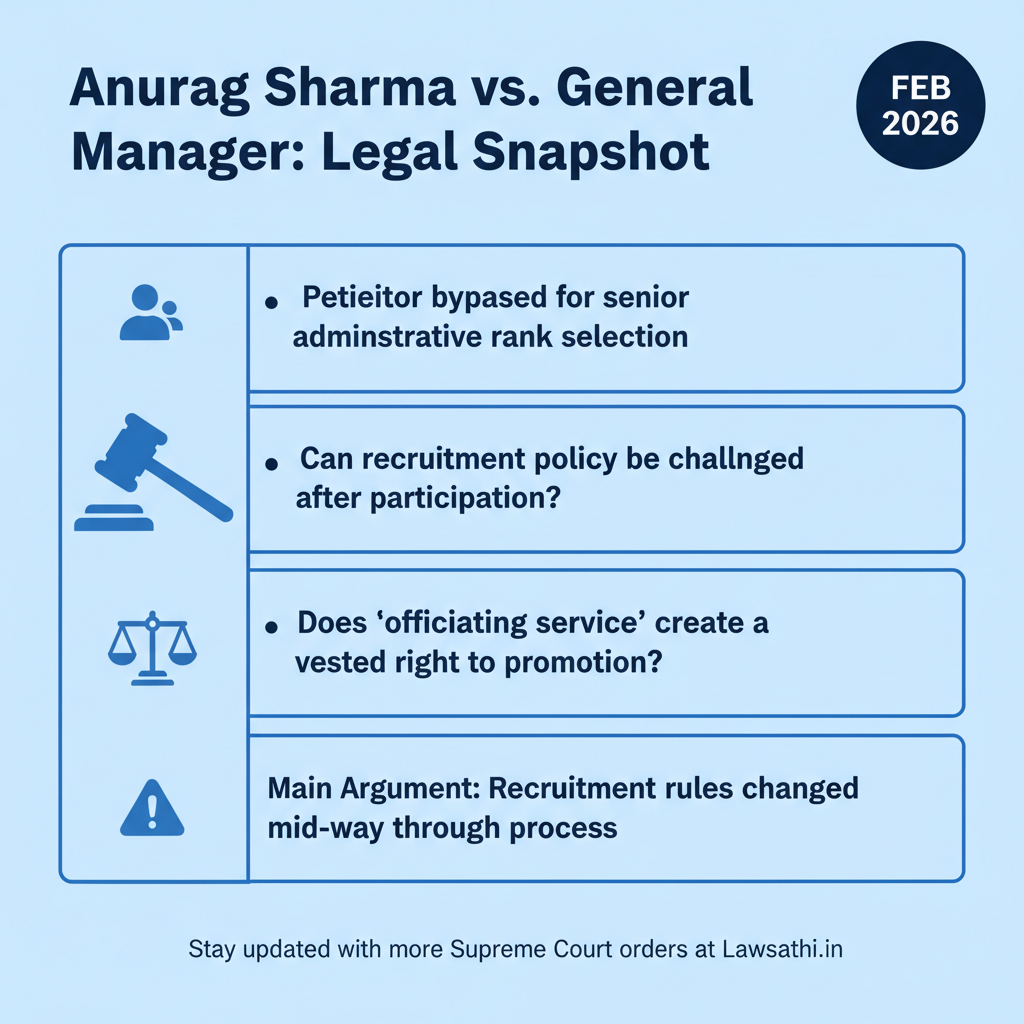
First, the Court examined if a candidate can challenge policies after participating. Second, it addressed “officiating service” in a higher rank. The Court questioned if this creates a vested right to promotion. These questions are vital for thousands of public sector employees.
Arguments Presented by the Petitioner
Anurag Sharma argued that the rules changed midway through the process. He contended that his prior experience should count as “approved service.” Additionally, he claimed the management’s decision was arbitrary. He argued this violated his rights under Article 16 of the Constitution.
The Verdict: Dissecting the Supreme Court’s Ratio Decidendi
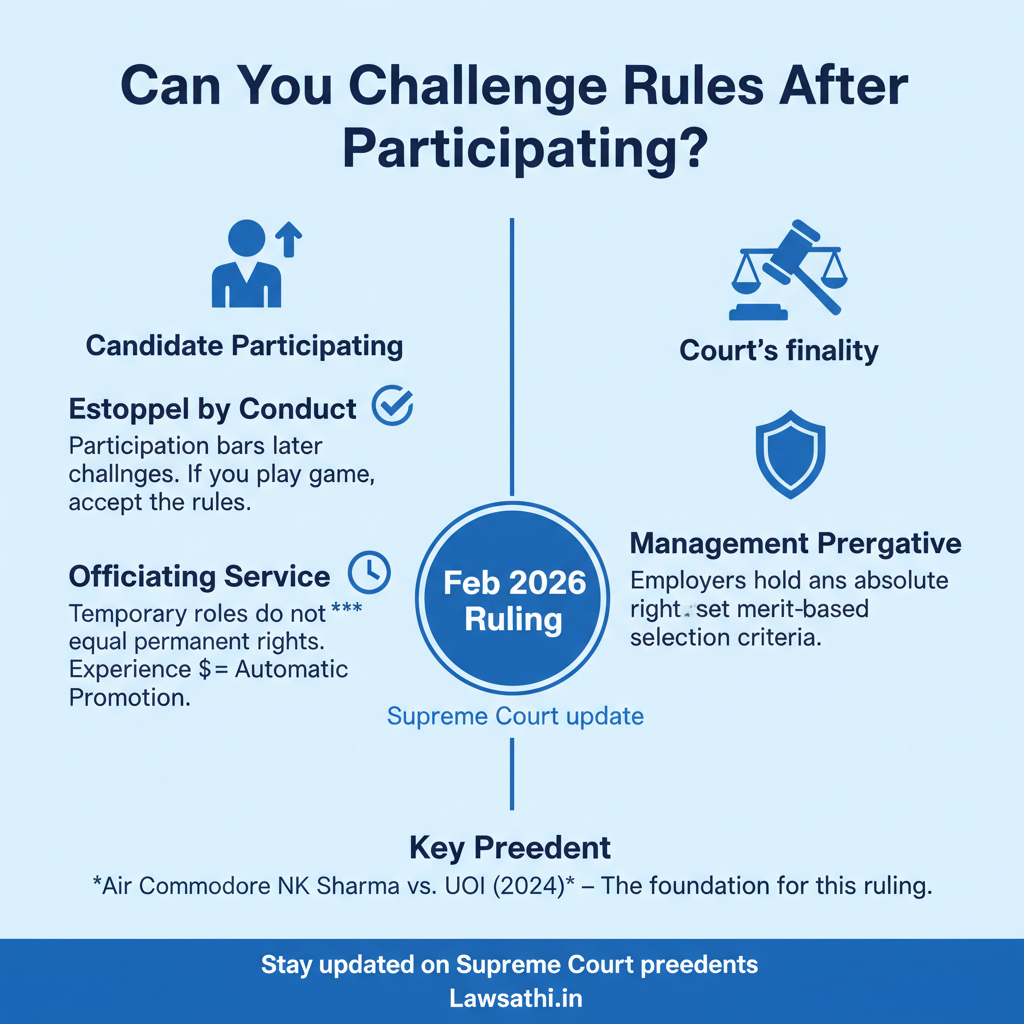
On February 03, 2026, the Supreme Court delivered a clear order. The Bench heavily relied on the principle of “Estoppel by Conduct.” Consequently, the court dismissed the petition. It reinforced that candidates cannot complain about rules after they participate.
Interpretation of Service Rules
The Court analyzed specific Service Rules for this case. These were analogous to the CSIR Recruitment Rules. Most importantly, the judges noted that “officiating service” is temporary. Therefore, it does not grant a legal right to a permanent position.
Balancing Employer and Employee Rights
The Court prioritized “Management Prerogative” in setting merit-based criteria. For example, the judgment suggests that institutions must have freedom of choice. They must be able to choose the best-suited candidates. Therefore, if the criteria are applied uniformly, the court will not interfere.
Precedents Cited in the Order
The Bench cited Air Commodore NK Sharma vs. UOI as a foundation. This 2024 precedent established that voluntary participation bars later challenges. In fact, this ruling is now a cornerstone of the Supreme Court latest orders Feb 2026. Lawyers must cite this in future service litigation.
Impact on Service Jurisprudence and Employer-Employee Relations
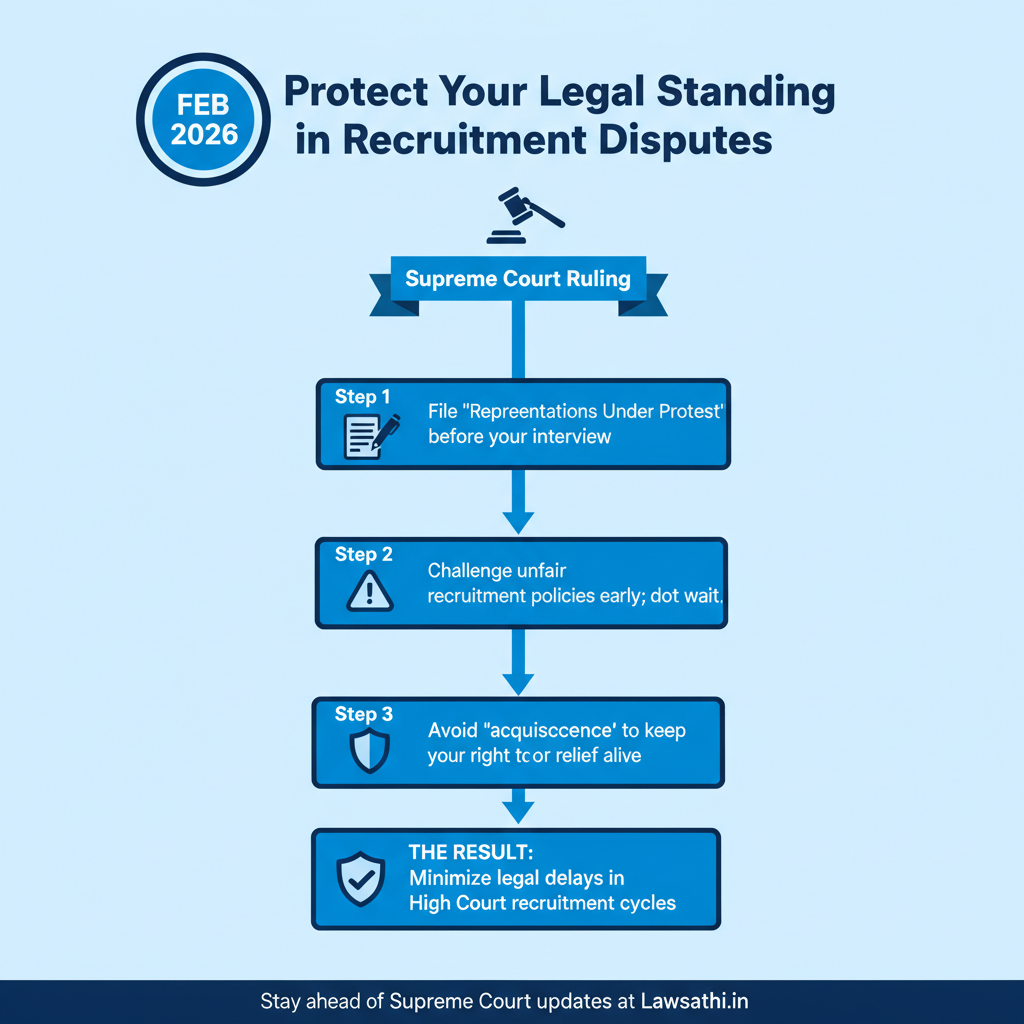
This judgment has immediate implications for HR policies in PSUs. General Managers are now shielded against “post-facto” litigation. As a result, any policy challenge must occur early. Specifically, it must happen before the selection process begins according to Supreme Court latest orders.
Binding Nature on High Courts
The order acts as a strict guide for High Courts. This is especially true in Kerala and Rajasthan. These regions have seen many stays on recruitment lists recently. However, this February 2026 ruling effectively limits such interventions. It ensures that recruitment cycles are not indefinitely delayed.
Practical Advice for Trial Lawyers
Practitioners should advise clients to file “Representations under Protest.” They must do this before appearing for interviews. This is necessary if they suspect unfair criteria. Following this, participation will not constitute “acquiescence.” Without a protest, the doors to relief may remain closed.
Other Notable Supreme Court Orders: Feb 1–Feb 7, 2026
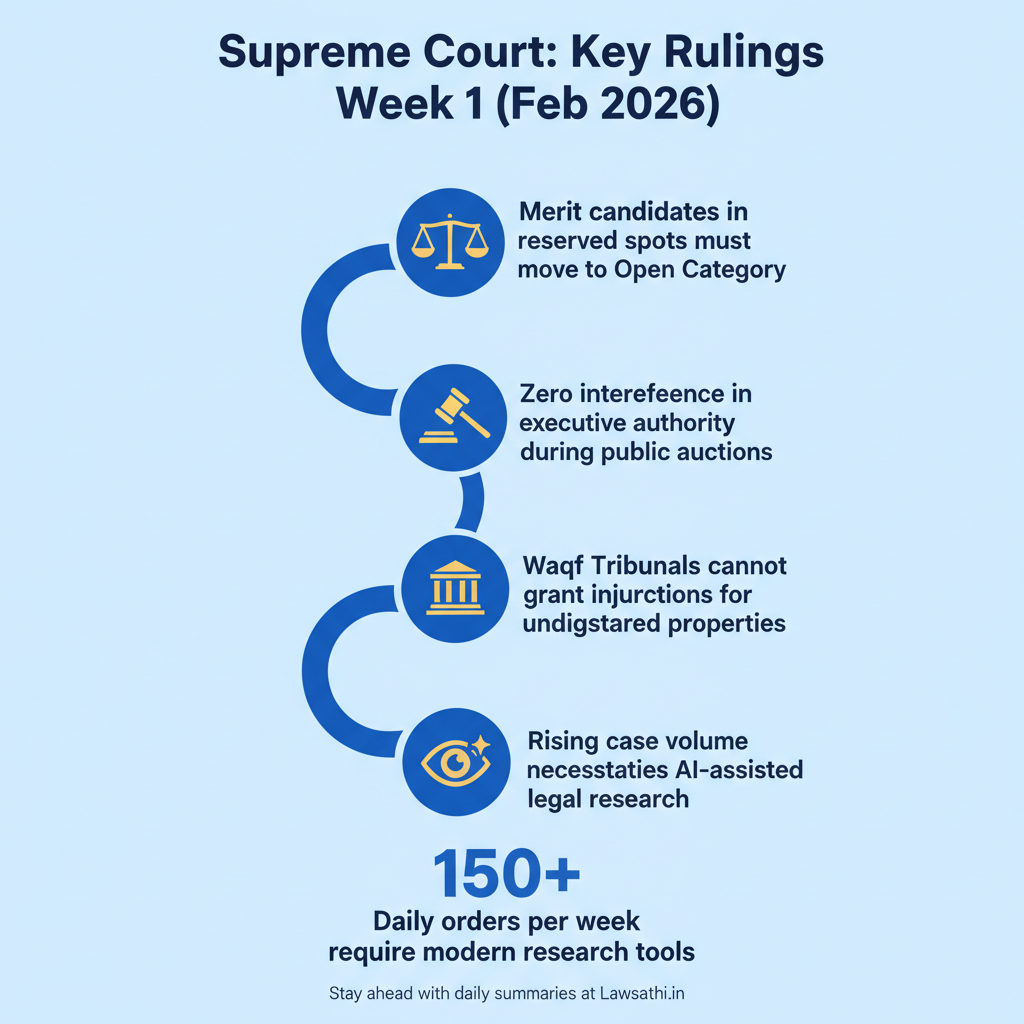
Beyond service law, the first week of February saw several landmark rulings. For instance, the Court clarified reservation norms in Airport Authority of India vs. Sham Krishna B. It held that high-scoring reserved candidates must move to the “Open Category.”
Trends in Judicial Restraint
The Court also showed a move toward restraint in commercial matters. In Viney Kumar Sharma vs. Improvement Trust, the Bench refused to interfere with public auctions. Furthermore, the Court emphasized executive authority. It stated that administrative complexities are best handled by that branch.
Limits on Tribunal Jurisdiction
In Habib Alladin vs. Mohammed Ahmed, the Court defined the Waqf Tribunal. Specifically, the Tribunal cannot decide on injunctions for unregistered properties. This decision provides much-needed clarity on the Waqf Act. As a result, jurisdictional overlaps should decrease.
How Legal Professionals Can Stay Ahead of Case Law Inflation
Tracking the Supreme Court latest orders Feb 2026 is a daunting task. In early 2026, the Court uploaded over 150 daily orders every week. Therefore, manual research is no longer a viable option. Lawyers must transition to AI-assisted legal intelligence instead.
The Role of LawSathi in Practice Management
LawSathi provides automated summaries that give you the Ratio Decidendi instantly. For example, you can see how Justice Satish Chandra Sharma interprets service rules. Additionally, the platform links cause lists to your digital files. This integration saves hours of work every week.
Embracing AI for Legal Research
Modern tools help you avoid “precedent blindness” during busy days. In fact, LawSathi’s AI can flag cases like Anurag Sharma immediately. Consequently, you can provide more accurate advice to your clients. This efficiency is what defines a successful practice today.
Conclusion
The ruling in Anurag Sharma vs. General Manager reinforces “Estoppel by Conduct.” Most importantly, it clarifies that recruitment finality is essential. These Supreme Court latest orders Feb 2026 suggest a push toward efficiency.
Stay ahead of every Supreme Court update. Use LawSathi’s AI-powered research assistant to summarize latest orders in seconds. Start your free trial today!