The legal landscape in India changed significantly on July 1, 2024. The traditional Indian Penal Code (IPC) has now been replaced. Today, understanding how-to-file-a-defamation-lawsuit-in-india-under-bharatiya-nyaya-sanhita-(bns):-procedural-steps-and-essential-documentation is vital for every legal practitioner.
Understanding the New Legislative Framework
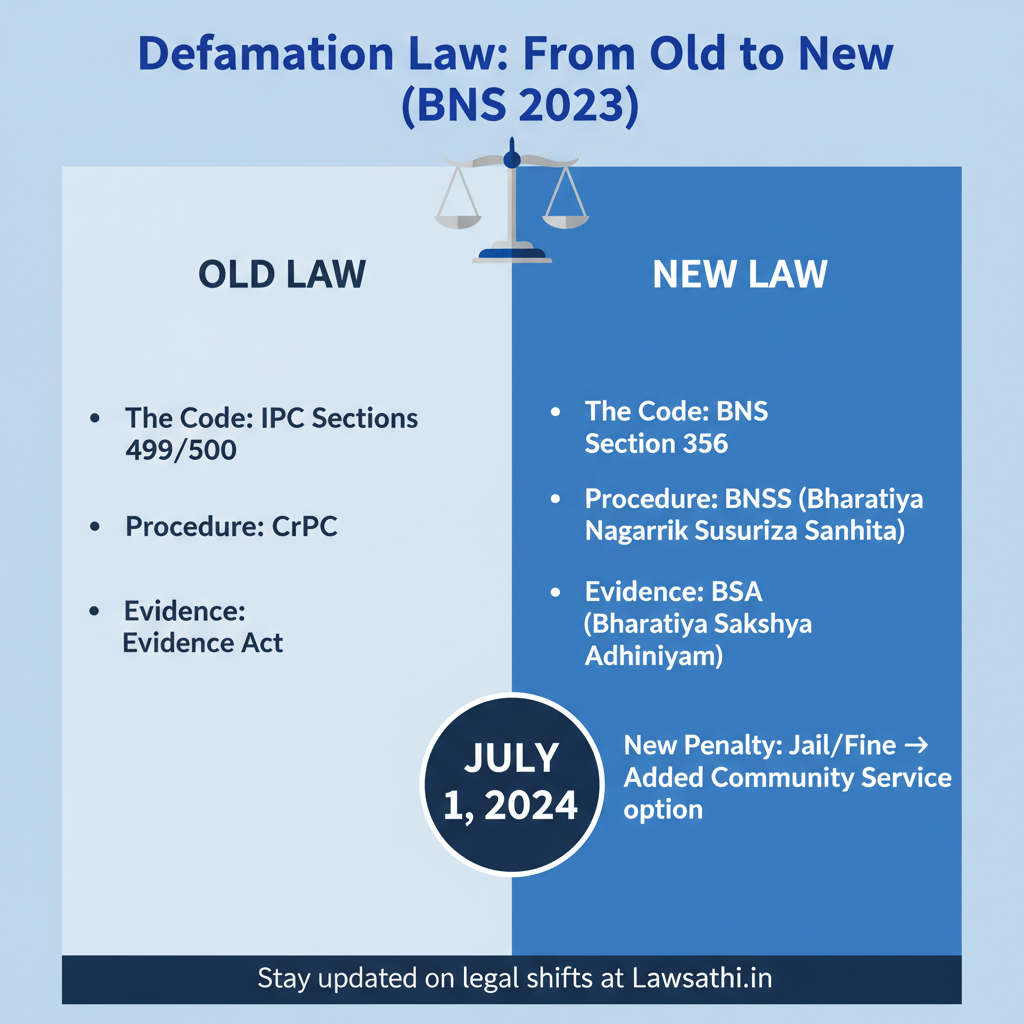
As of the current date, the Bharatiya Nyaya Sanhita (BNS) governs criminal offences. Similarly, the Bharatiya Nagarik Suraksha Sanhita (BNSS) handles procedural law. Furthermore, the Bharatiya Sakshya Adhiniyam (BSA) now regulates the law of evidence in Indian courts.
The New Home of Defamation: Section 356
Criminal defamation is now codified under Section 356 of the BNS. This provision replaces the old Sections 499 and 500 of the IPC. Consequently, the core definition of defamation remains largely consistent with previous jurisprudence.
Specifically, the law defines defamation as making or publishing any imputation concerning a person. You must prove the intent was to harm their reputation. Alternatively, you must show the accused had reason to believe such harm would occur.
Key Changes and Punishments in BNS
Section 356(2) of the BNS prescribes the punishment for this offence. An offender may face simple imprisonment for up to two years or a fine. In some cases, the court may award both.
The Introduction of Community Service
Interestingly, the BNS introduces “Community Service” as a new form of punishment. This represents a progressive shift in Indian criminal law. Therefore, for minor or first-time offences, a court might order social work instead of jail time.
Furthermore, the law now explicitly covers digital platforms. According to the Handbook on Bharatiya Nyaya Sanhita, electronic records serve as primary evidence. This includes social media posts, emails, and voice messages.
Procedural Steps under the BNSS
Filing a defamation case requires a specific procedural path. Criminal defamation remains a non-cognizable and bailable offence. As a result, the police cannot arrest an individual without a warrant.
Filing a Private Complaint
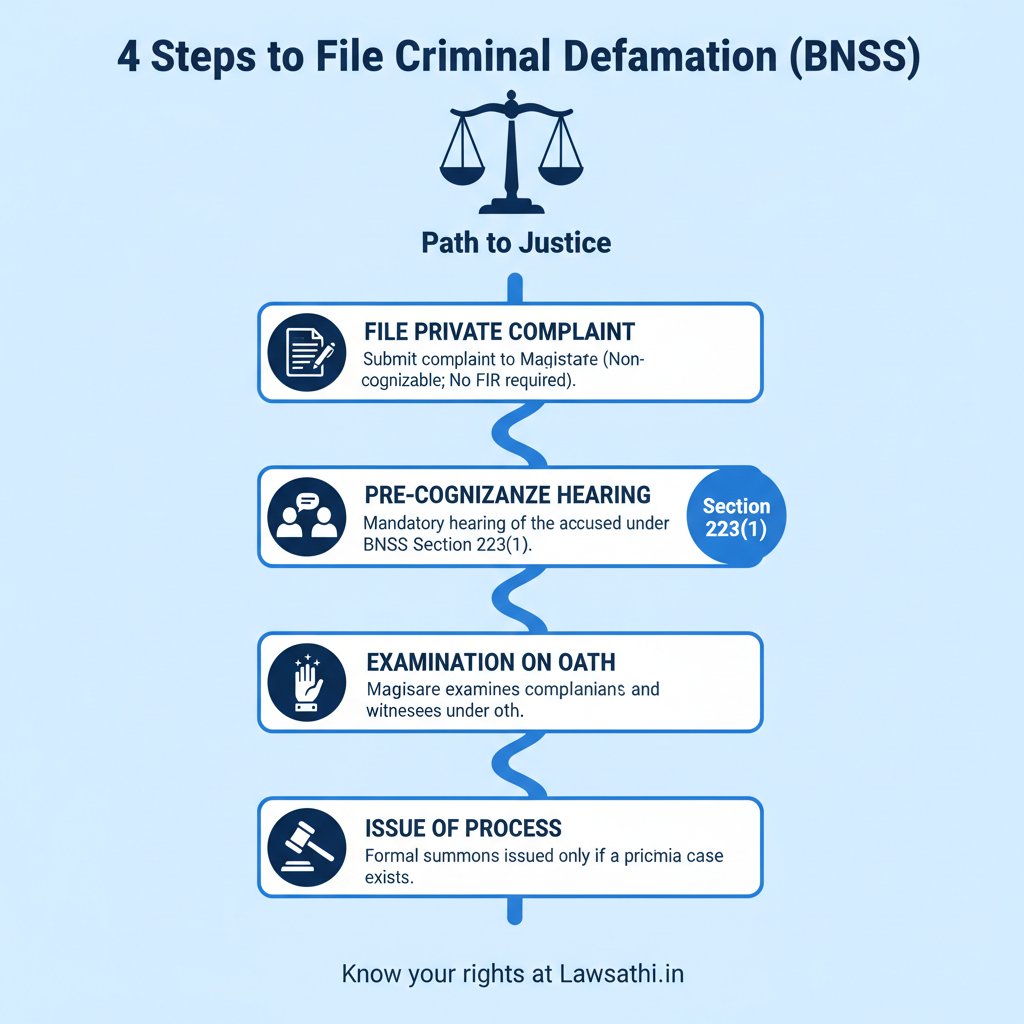
First, you cannot initiate a criminal defamation case through a standard FIR. Instead, the aggrieved party must file a private criminal complaint. This must be submitted before a Judicial Magistrate.
Specifically, Section 223 of the BNSS outlines the procedure for taking cognizance. For example, a lawyer in Delhi must draft a formal complaint detailing the defamatory remarks.
The Mandatory Pre-Cognizance Hearing
The BNSS introduced a critical new requirement in Section 223(1). Now, the Magistrate must give the accused an opportunity to be heard. Most importantly, this must happen before the court takes official cognizance of the case.
Previously, magistrates could issue summons based only on the complainant’s statement. However, the Bombay High Court recently emphasized that this hearing is mandatory. In fact, this change aims to filter out frivolous or vexatious litigation.
Examination and Issue of Process
After the initial hearing, the Magistrate examines the complainant on oath. They will also examine any witnesses present. Consequently, this step verifies if a prima facie case actually exists.
If the Magistrate is satisfied, they will “issue process.” This means the court sends a formal summons to the accused. Therefore, the accused must then appear in court to stand trial for the allegations.
Essential Documentation for Your Lawsuit
Preparation is the key to success in any defamation matter. You must gather all necessary documents before approaching the court. If you fail to do this, the court may dismiss the case early.
Proving Publication and Intent
First, you need certified copies of the defamatory content. For instance, provide newspaper clippings or transcripts of speeches. If the defamation happened online, you must act quickly to preserve the data.
Preserving Digital Evidence
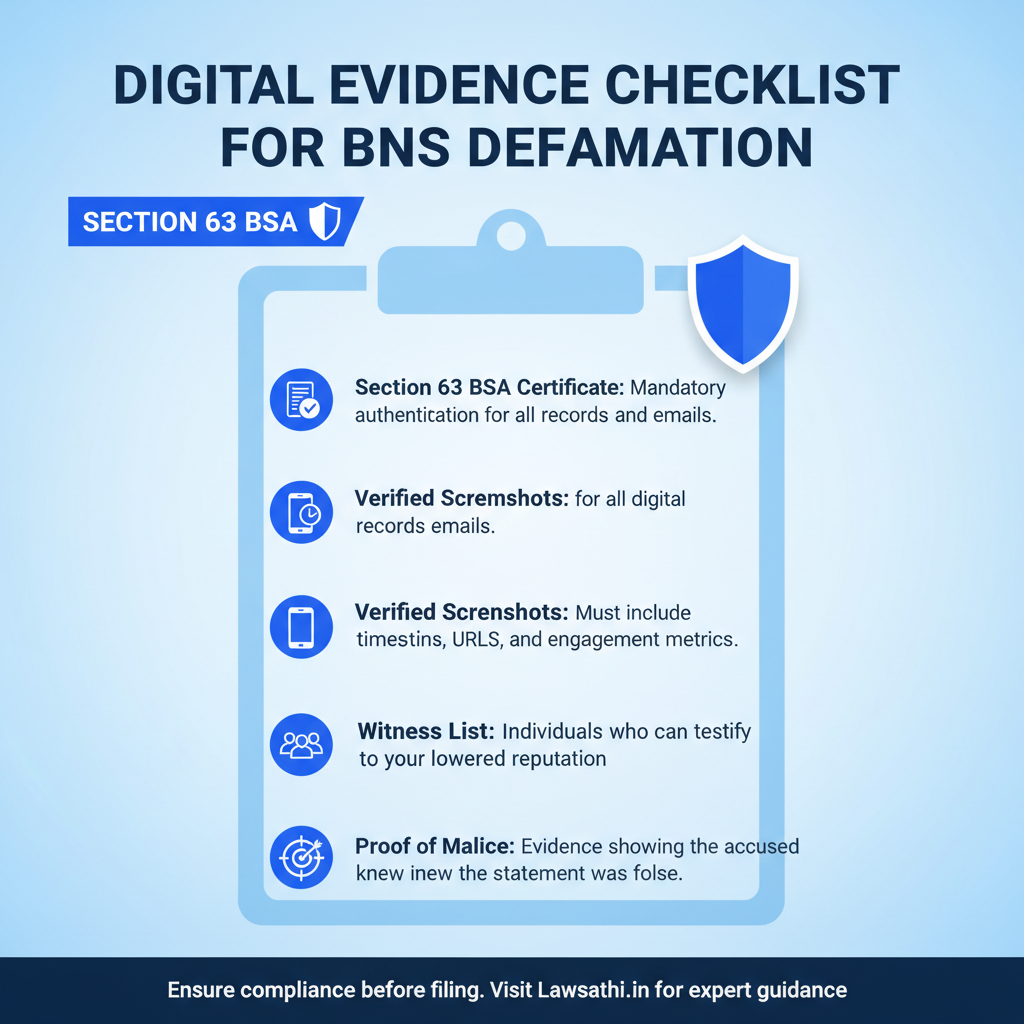
Second, you must provide evidence of “publication.” In legal terms, this means the statement reached a third party. Therefore, screenshots must show timestamps, URLs, and engagement metrics. Specifically, you should record likes, shares, or comments.
Digital Evidence and BSA Certificates
The Bharatiya Sakshya Adhiniyam (BSA) has strict rules for digital proof. You must submit a certificate under Section 63 of the BSA.
In short, this certificate replaces the old Section 65B Certificate from the Evidence Act. It authenticates digital records as reliable evidence. Moreover, without this document, the court will likely reject your screenshots or emails.
Witness Lists and Proof of Reputation
Additionally, you should prepare a strong witness list. These people must testify that the statement lowered the complainant’s reputation. For example, a business associate might testify that they stopped working with the victim.
Establishing Malice and Bad Faith
Finally, you must demonstrate “bad faith” or malice. You should show that the accused knew the statement was false. Alternatively, show they acted with reckless disregard for the truth. This helps establish the criminal intent required under BNS.
Strategic Considerations for Lawyers
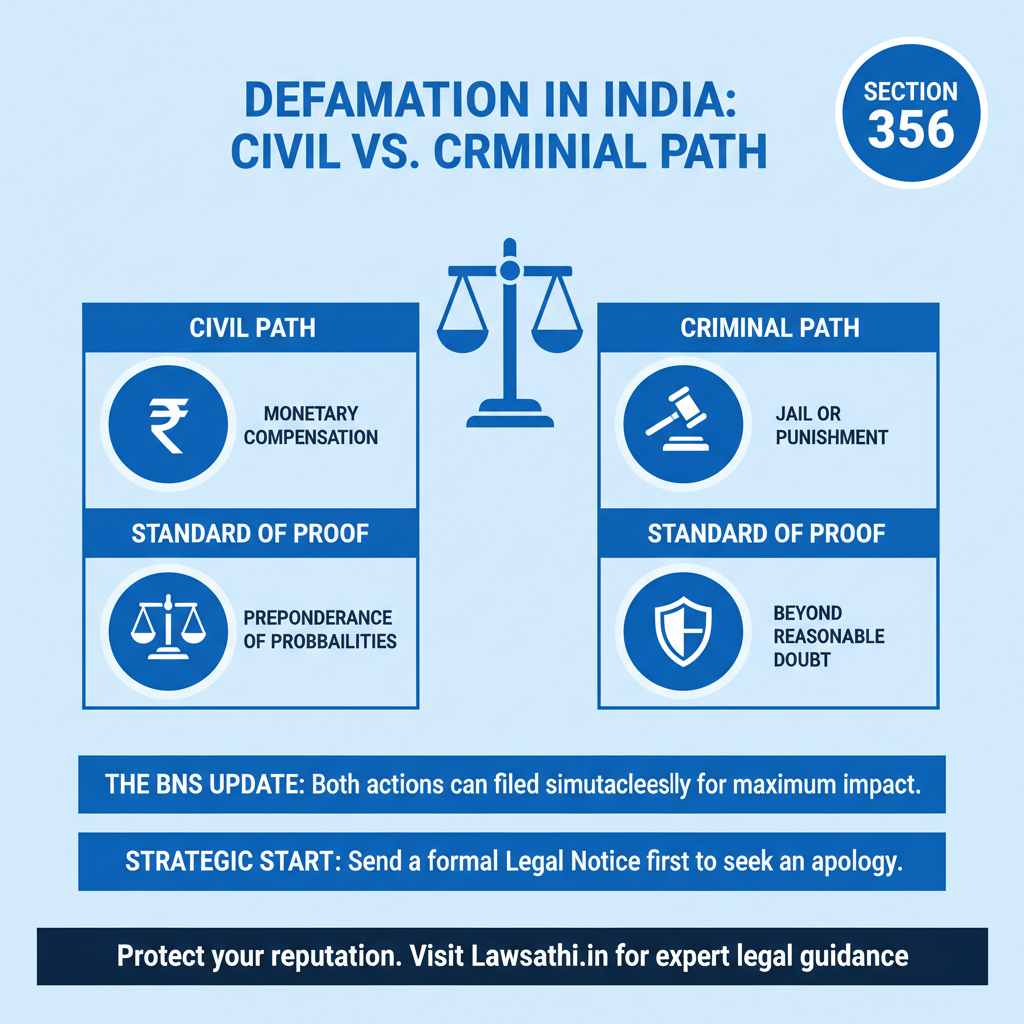
When advising clients, you must decide between civil and criminal remedies. A civil suit focuses on monetary compensation for damages. In contrast, a criminal complaint under BNS seeks punishment for the offender.
Pursuing Parallel Remedies
Most importantly, a victim can pursue both remedies simultaneously. Therefore, you can file a civil suit in a District Court and a criminal complaint in a Magistrate Court. However, each path requires different standards of proof.
Standards of Proof and Strategies
Specifically, criminal cases require proof “beyond a reasonable doubt.” Civil cases typically rely on the “preponderance of probabilities.” Consequently, your strategy must align with the specific goals of your client.
The Role of Legal Notices
While not mandatory, issuing a legal notice is a wise first step. It gives the accused a chance to retract the statement or apologize. In many cases, a well-drafted notice can resolve the dispute without a long trial.
Conclusion
Mastering how to file a defamation lawsuit in India under BNS is essential in the new era. Always remember to comply with the mandatory hearing under Section 223 of the BNSS.
Furthermore, ensure your digital evidence is backed by a Section 63 BSA certificate. Managing these complex procedural changes can be difficult for busy law firms. Therefore, you need a system that tracks these new sections and keeps your documentation organized.
Streamline your legal practice today. Try LawSathi free for 15 days.